
Write something

Apr 17 •
Absorption and Deliveries - How is Kansas City Doing?
Now that we are through Q1 of 2026, how are things looking for KC multifamily absorption and deliveries? The relationship between absorption and deliveries is a key one, along with "new starts." Absorption refers to the number of units that became occupied or vacant relative to the previous measurement. It is the net change in occupied units. If Kansas City had 100,000 occupied apartments as measured at the end of 2024 and 105,000 occupied apartments at the end of 2025, absorption would be 5,000 net units over that time frame. You can have negative absorption when the total occupied units goes down; 100,000 units occupied to 95,000 units occupied. In general, it is a reference point for demand in a market and can tell one side of the "what can we expect for occupancy in this MSA, county, or suburban district?" story. The other side of that story is told by deliveries. Deliveries refers to the number of completed new construction units that are ready to begin being leased and occupied over a given time frame. If there are 110,000 rentable apartments in a city at the end of 2024, and there are 117,000 rentable units at the end of 2025, this would mean that 7,000 new units have been added to that available supply over that 12-month time frame. Deliveries equal 7,000, or 6.4% of existing inventory (Deliveries % = Delivered Units / Initial Inventory). Absorption and deliveries are the supply and demand markers (along with many other variables that serve as leading and lagging indicators, but are still part of the same story) for multifamily in an MSA. If 5,000 units are delivered across a 12-month period and 5,000 units are absorbed, then occupancy rates will remain relatively stable for that time frame, all things being equal. If 10,000 units are delivered and only 5,000 are absorbed, then occupancy will trend down on average for that area because there was more new product added than there was immediate demand for. Usually when this happens, especially multiple quarters in a row, average rents will begin to stagnate or even decrease to facilitate more demand. Cheaper apartments means more people can afford them, which means more people will move into them instead of getting a mortgage or living in another city, which means occupancy rates will climb.

Apr 8 •
🚀 Free Professional Website – Serious Businesses Only
An expert web designer is offering premium websites FREE to selected online stores & small businesses to strengthen his portfolio. You only cover domain & hosting. Limited availability. Ready to launch now? WhatsApp: [+447766894807] Email: [[email protected]]
0
0

Jan 10 •
Understanding the Two-State Dynamic Playing Out in Kansas City Right Now
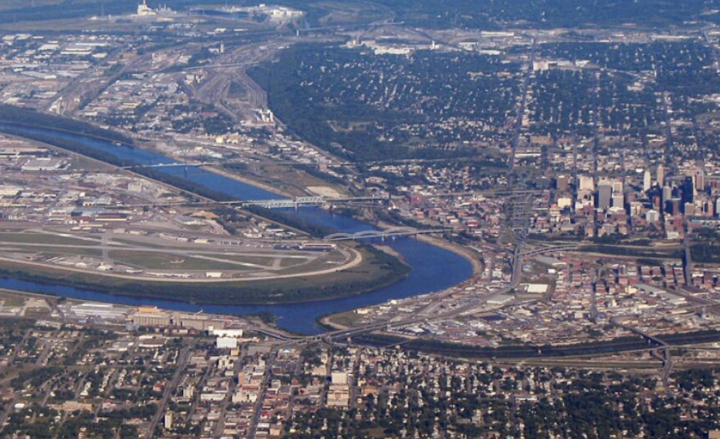
Kansas City operates as a single economic region, but it functions across two different state systems — each with its own tax structures, incentive tools, and development priorities. When those systems begin pulling in different directions, the effects don’t appear overnight. They show up through where employers commit, where capital flows, and how people reorganize their daily lives. That two-state dynamic is becoming relevant again. Why This Metro Behaves Differently In most cities, relocating a headquarters or major asset means crossing hundreds of miles and rebuilding a workforce. In Kansas City, it can mean crossing a street. That distinction matters. It allows: - Companies to reposition without disrupting their labor pool - Municipalities to compete aggressively without geographic friction - Employees to adapt incrementally rather than uprooting entirely As a result, movement inside this metro tends to be gradual, but durable. We’ve Seen This Before — and We’re Seeing It Again This isn’t hypothetical. Kansas City has already experienced meaningful internal repositioning. One of the most visible examples is Lockton, which committed to relocating its headquarters to the Kansas side. That decision wasn’t about leaving the metro — it was about optimizing within it. More recently, similar conversations are happening around large-scale anchor institutions, not just office users. There have been serious discussions around: - The Kansas City Royals potentially locating a new stadium and surrounding mixed-use development on the Kansas side, including sites tied to the Aspiria campus - The Kansas City Chiefs exploring the possibility of moving from Arrowhead Stadium to the Legends Outlets Kansas City area in Wyandotte County Whether or not every proposal materializes is less important than what these discussions signal. These are not fringe ideas — they are serious evaluations of incentives, infrastructure, and long-term alignment. What Happens When Incentives Start to Matter Again
Dec '25 •
Multifamily Supply Overhang Begins to Ease
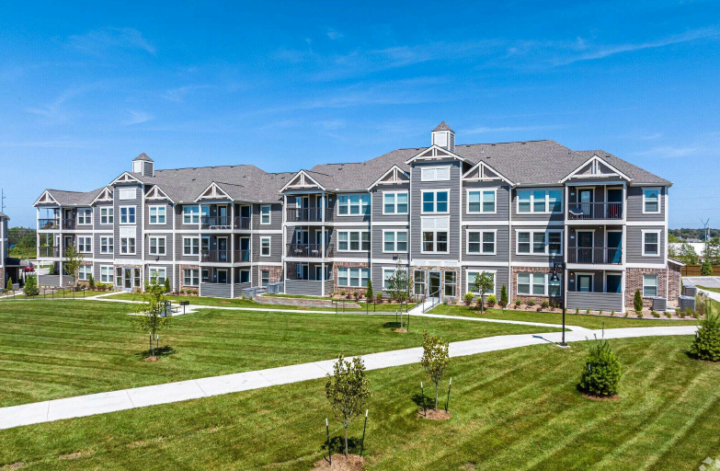
📊 Multifamily Update: The Supply Wave Is Finally Starting to Ease One of the biggest questions investors have been asking the past 18–24 months is: When does the supply pressure let up? We’re now starting to see the first real signs of that shift. According to new CoStar data, the national multifamily market is actively working through the historic wave of deliveries from 2022–2025. While vacancies remain elevated in newly delivered properties, the overhang itself is shrinking as absorption improves and new deliveries slow MultifamilyUnits. Key national takeaways: - Roughly 353,000 recently delivered units still need to lease up to reach equilibrium, but that number is declining MultifamilyUnits. - The drawdown of excess vacant inventory accelerated in Q4, with over 100,000 units absorbed year-to-date MultifamilyUnits. - Demand for higher-quality, stabilized assets remains strong, with properties built 2017–2021 operating below the national vacancy average MultifamilyUnits. - The challenge today is volume timing, not renter demand. In short: the market is digesting supply, not breaking under it. 📍 Kansas City Focus: A Faster Reset Than Most Markets Kansas City is actually ahead of many metros in this cycle. CoStar data shows that KC’s apartment construction pipeline has shrunk to its lowest level in nearly a decade, driven by higher borrowing costs, tighter equity requirements, and slower rent growth KCMultifamily. Kansas City highlights: - Only ~5,300 units currently under construction, representing just 2.9% of total inventory, the lowest level since 2018 KCMultifamily. - This is down sharply from the 2021 peak, when nearly 9,000 units were underway KCMultifamily. - 2026 deliveries are projected at ~2,900 units, the lowest annual total since 2019, aligning new supply much more closely with demand KCMultifamily. - Several submarkets, including parts of Cass County, now have zero units under construction. What this means: - KC is likely to see supply pressure ease sooner than many Sun Belt markets - Stabilized assets should benefit first - Rent growth doesn’t need to surge for fundamentals to improve — simply less competition helps
3
0
Dec '25 •
🚨 Multifamily Market Update — December 2025
📉 Rents & Vacancy - National rents continue to soften — 4th straight month of declines, now averaging $1,740. - Vacancy rates are hitting record highs across many metros due to heavy new supply. - Early 2025 showed a brief rent uptick, but momentum faded quickly. Sources: - Rent declines & vacancy spike:https://www.credaily.com/briefs/multifamily-rents-slide-as-demand-lags-supply-in-key-us-markets/?utm_source=chatgpt.com - Rent growth snapshot:https://www.multihousingnews.com/rent-growth-20/?utm_source=chatgpt.com - Vacancy hitting record highs:https://www.credaily.com/briefs/rent-decline-deepens-as-vacancy-rates-hit-record-high/?utm_source=chatgpt.com 🏗 Development Trends - Construction starts are down ~74% from 2021 peaks, signaling a major slowdown. - Developers shifting toward middle-income and affordable housing as luxury oversupply weighs on absorption. - Colorado issues its first Middle-Income Housing Tax Credit (MIHTC) — a sign of national policy direction. Sources: - Development slowdown (CBRE 2025 Outlook):https://www.cbre.com/insights/books/us-real-estate-market-outlook-2025/multifamily?utm_source=chatgpt.com - Supply snapshot (Arbor):https://arbor.com/blog/u-s-multifamily-market-snapshot-november-2025/?utm_source=chatgpt.com - MIHTC announcement:https://yieldpro.com/2025/12/mihtc/?utm_source=chatgpt.com 🏢 Investor Behavior - Investors are cautiously coming back as values begin to stabilize. - Sales volume fell 28% YoY, showing many are still hesitant to transact. - Sellers continue to chase 2021-style peak pricing despite softer fundamentals. - Toll Brothers is exiting multifamily, selling its portfolio to Kennedy Wilson for $347M.
2
0
1-27 of 27

skool.com/multifamily
All things Multifamily, otherwise known as Apartment Buildings: investing, managing, owning, financing, raising capital, partnerships, legal, debt.
Leaderboard (30-day)
1

+1
2

+1
Powered by