
Write something

22h •
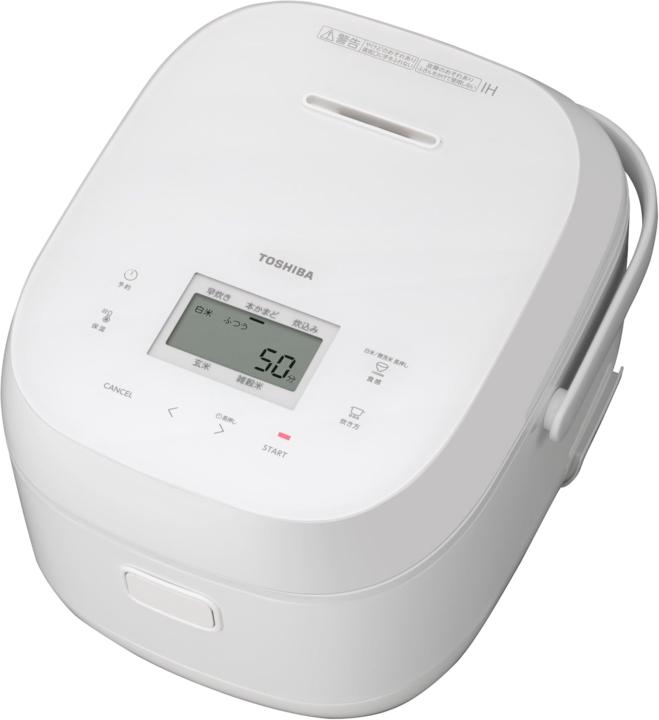
⚡ RADAR SIGNAL — THE ENTRY-LEVEL TOSHIBA WHOSE VALUE IS HIDDEN INSIDE THE POT
Not every market asymmetry begins with a lower price. Sometimes the signal appears when one market treats advanced engineering as ordinary, while another would classify the same level of specialization as premium. The Toshiba RC-10HW is an entry-level JDM rice cooker. I purchased this model new in Japan for approximately ¥14,000, and I use it myself. From the outside, it looks like a conventional household appliance. The result does not. The difference cannot be explained by software alone. The RC-10HW works as an integrated cooking system: the software controls the process, the IH system generates and modulates the heat, and the inner pot determines how that heat reaches the rice. Its inner pot has a 2 mm base, an exterior coating designed to improve thermal radiation, and an interior coating that combines binchōtan carbon and diamond particles. This matters because the pot is not simply a container placed above a heating element. In an IH system, the inner pot becomes an active part of the heating architecture. Toshiba then coordinates that physical structure with specialized programs. The Honkamado course controls soaking and heating to produce a softer and more refined grain structure. The machine also uses heating elements in both the lid and body to reduce condensation while keeping cooked rice warm. The goal is not merely to reach the point where the rice is technically cooked. It is to control: - water absorption; - temperature progression; - moisture retention; - texture; - natural sweetness; - consistency between batches; - and preservation after cooking. The importance of the pot becomes visible in an unusual commercial detail. At the time of this detection, Toshiba’s official replacement inner pot was listed at approximately ¥9,460. That was roughly 62% of the official price of the complete rice cooker. This does not prove the manufacturing cost of the pot. Replacement parts have their own pricing structure. But it reveals how Toshiba positions the component:
2
0
23h •
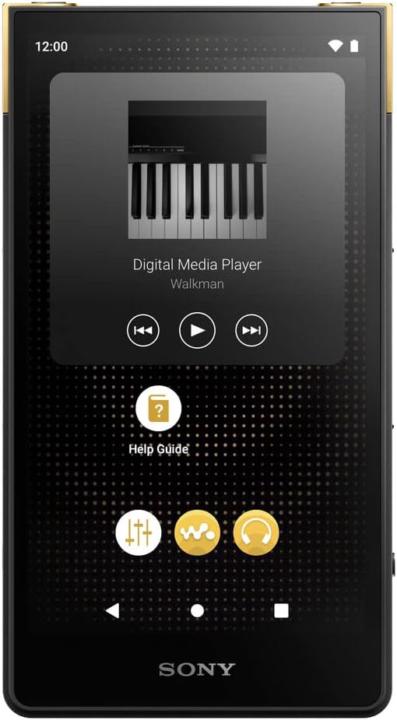
⚡ RADAR SIGNAL — THE SAME SONY WALKMAN, BUT NOT THE SAME POWER
The Sony Walkman NW-ZX707 64 GB carries the same model name in Japan and the United States. The exterior design is nearly identical. The storage capacity is identical. Both versions provide 3.5 mm and 4.4 mm balanced headphone outputs. A buyer looking only at the product page could reasonably conclude that they are receiving the same audio player. But Sony’s own regional specifications reveal a major functional divergence. What Sony declares in Japan Sony Japan rates the NW-ZX707 in High Gain mode at: - 50 mW + 50 mW into 16 ohms through the 3.5 mm output - 230 mW + 230 mW into 16 ohms through the 4.4 mm balanced output Sony explicitly presents this higher output as part of the player’s ability to preserve detail, bass energy, and dynamic expression across a wider listening range. What Sony declares in the United States Sony USA publishes: - 0.4–1.1 mW into 32 ohms for the 3.5 mm output - 0.4–1.1 mW into 32 ohms for the balanced output The international Sony help guide also warns that the High Gain control may not be available in certain countries or regions. At first, the numbers cannot be compared directly because Sony uses different electrical loads: Japan is rated at 16 ohms, while the American page refers to 32 ohms. So let us normalize the specifications. Converting power into output voltage Electrical output power depends on both voltage and headphone impedance. Using Sony’s published ratings: - Japan’s balanced output implies approximately 1.92 volts RMS - The upper end of the American specification implies approximately 0.19 volts RMS That is not a tiny difference. The Japanese balanced output represents approximately: 10 times the available output voltage For the same headphone, power rises with the square of voltage. Therefore, a tenfold voltage difference can represent roughly: 100 times the theoretical power capability and around 20 dB of additional electrical headroom This is an engineering normalization derived from Sony’s regional specifications—not an additional rating published by Sony—because the official measurements use different loads and reporting conditions.
2
0
3d •
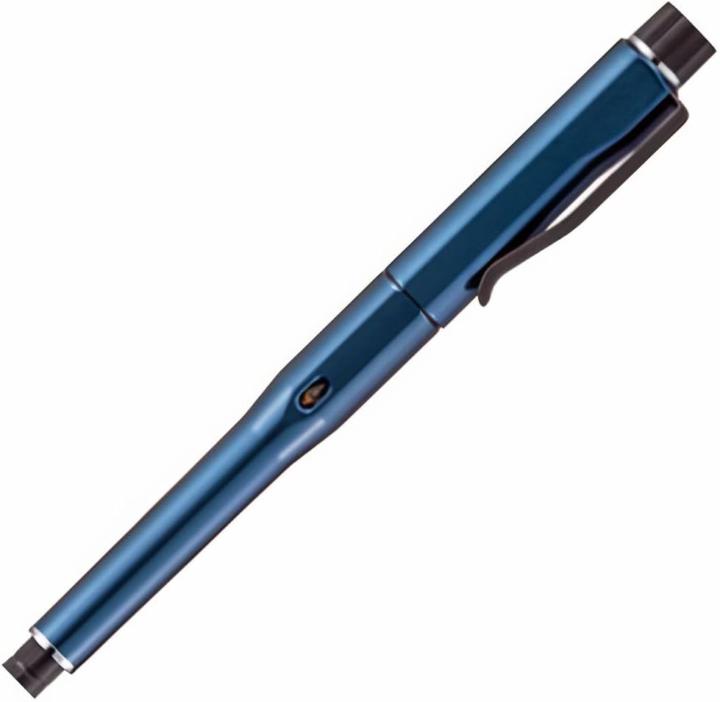
⚡ RADAR SIGNAL — Kuru Toga Dive: How Engineering Turned a Pencil into a $100 Market Signal
How can a Japanese mechanical pencil become a nearly $100 product? The answer does not begin with price. It begins inside the mechanism. The Kuru Toga Dive gradually rotates the lead while you write, helping it maintain a more consistent point. It also advances the lead automatically, lets the user regulate that advance through five settings, prepares the lead when the cap is removed, and uses a magnetic closure. Mitsubishi Pencil compressed several small automations into an everyday object, reducing the normal interruptions involved in mechanical-pencil writing. This is not a pencil created for someone looking only for the lowest possible price. It is aimed at writers, students, designers, illustrators, collectors, and premium stationery enthusiasts who value a smoother writing flow and an unusual piece of mechanical engineering. The first signal appears in the price. For a clean comparison, we selected the Kuru Toga Dive 0.5 mm in Abyss Blue, product identifier 301473000. Readers can search that exact number in both markets. On Amazon Japan, the same product can also be located through ASIN B0BY27S6YK. This avoids mixing different colors, editions, or seller listings. Its official price in Japan is ¥5,500, equivalent to approximately US$33.95 at an exchange rate of about ¥162 per dollar. The same Abyss Blue 0.5 mm version is officially listed in the United States at US$99.99. That means the official U.S. price is approximately: - 2.95 times the Japanese price - 195% higher than the Japanese price But the anomaly does not end with price. Japan also has a deeper official catalog. The Japanese lineup includes four regular colors: - Abyss Blue - Aurora Purple - Dense Green - Twilight Orange The official U.S. product page currently shows only Abyss Blue and Aurora Purple. Dense Green and Twilight Orange therefore create an additional JDM access layer within the official channels compared. The international buyer may not only pay more. They may also receive a narrower selection.
2
0
4d •
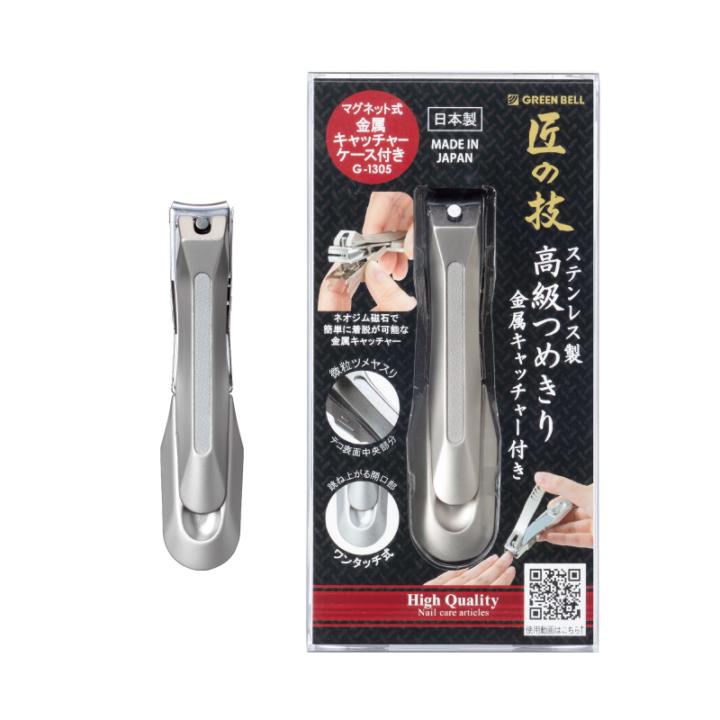
⚡ RADAR SIGNAL — Green Bell: From JDM Utility to Global Premium
THE SURPRISE Most people treat a nail clipper as a disposable object. They buy one for a few dollars, leave it in a bathroom drawer and replace it when the blades begin to feel dull, require more pressure or leave rough edges behind. Green Bell approaches the same object differently. In Japan, the nail clipper is not treated as one generic product. It exists as an entire category of cutting tools, with different blade shapes, sizes, levers, nail catchers, files and designs developed for specific hands, nails and uses. The anomaly is not simply that Japan makes a sharper nail clipper. The anomaly is that the Japanese domestic market preserves a deep category of precision tools that the international channel reduces to only a few premium references. IS THIS ONLY FOR PROFESSIONALS? A reasonable buyer may ask: Is this a professional tool for manicurists, or does it make sense for an ordinary person? The answer lies somewhere between both ideas. A Green Bell nail clipper is not necessarily a salon instrument. It is a domestic tool built with some of the same priorities that professionals value: — Controlled pressure — Stable cutting geometry — Defined blade material — A clean finishing stage — Different tools for different types of nails The comparison is similar to a Japanese kitchen knife. A professional chef may exploit its full performance, but the knife is not useless in the hands of someone who cooks at home. In fact, the ordinary user may value control even more because most people cut their own nails without a manicurist correcting the angle, pressure or final shape. However, precision must not be confused with a medical guarantee. A sharp nail clipper does not automatically prevent ingrown toenails. Medical guidance focuses mainly on technique: toenails should be cut straight across, not rounded deeply at the corners and not cut too short. A better tool cannot replace that technique. What it can offer is greater mechanical control while the user performs it.
2
0
Mar 16 •
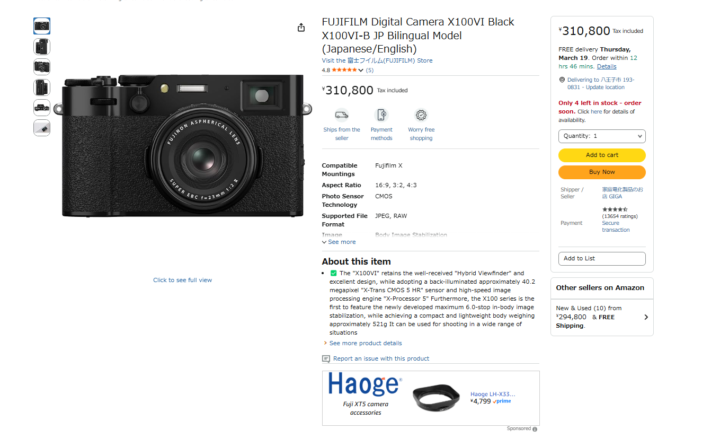
⚡ RADAR SIGNAL — Fujifilm X100VI (Global Scarcity vs Japan Market)
The Fujifilm X100VI has become one of the most difficult cameras to obtain in the global photography market. Across the United States and Europe, the camera is frequently sold out, forcing buyers into secondary markets just to secure one. This is where the phenomenon begins. 🌍 The Global Panic Market Because of limited supply and massive demand, the X100VI has developed what can only be described as a panic resale market. On resale platforms and secondary retailers, new units frequently appear between: $2,500 — $2,800 USD These prices are not driven by production cost. They are driven by scarcity and hype, amplified by social media and the sudden global popularity of the X100 series among photographers and creators. Buyers are chasing availability, not rational pricing. 🇯🇵 What the Radar Detected in Japan While scanning the Japanese domestic market, the Radar detected new units listed around: ¥310,800 Using the current exchange environment near: ¥159.565 / USD This places the camera around: ≈ $1,950 USD 📊 The Real Market Difference Global panic market$2,500 — $2,800 Radar price in Japan (new unit) ≈ $1,950 Potential difference: $550 — $850 🇯🇵 The JDM Layer Japanese-market cameras belong to the JDM (Japanese Domestic Market) distribution channel. These units are part of the same Made in Japan production line, assembled in Fujifilm’s facilities in Japan. Among photographers and collectors, Made in Japan cameras often carry a stronger resale perception in the international used market. Historically, cameras associated with Japanese assembly lines can command 10–15% higher resale value depending on model and condition. 🌐 Language Limitation (and the Reality) Japanese-market units typically ship with Japanese and English menus. For most international users, English menus are already sufficient. Fujifilm Japan offers an official language expansion service for approximately ¥5,500 (≈ $35 USD at ¥159.565/USD) when the camera is serviced within Japan.
2
0
1-6 of 6
powered by
skool.com/japan-market-radar-1793
Price signals from Japan: JDM electronics, gadgets and collectibles often cheaper than global markets. Radar tracking real opportunities.
Suggested communities
Powered by