Activity
Mon
Wed
Fri
Sun
Aug
Sep
Oct
Nov
Dec
Jan
Feb
Mar
Apr
May
Jun
Jul
What is this?
Less
More
Owned by Ricardo
Price signals from Japan: JDM electronics, gadgets and collectibles often cheaper than global markets. Radar tracking real opportunities.
Japan Market Intelligence. A premium community analyzing signals and structural opportunities inside the Japanese domestic market.
Memberships
Skoolers
163.9k members • Free
18 contributions to Japan Market Radar

15h •
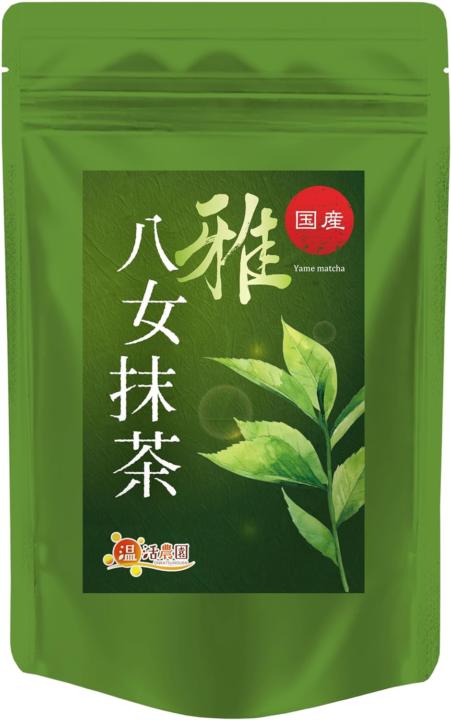
⚡ RADAR SIGNAL — UJI OWNS THE NAME. YAME HIDES ANOTHER MATCHA EXPERIENCE.
For much of the international market, premium Japanese matcha appears to have one geographical center: Uji, Kyoto. That reputation is legitimate. Uji is deeply connected to the history of Japanese tea, shaded cultivation and the development of matcha culture. But strong recognition can also create a blind spot. Japan contains other tea-producing regions with their own agricultural conditions, technical traditions and sensory identities. One of the clearest examples is Yame, in Fukuoka Prefecture. The product detected is the Onkatsu Farm Yame Matcha Miyabi, 30 grams. Its listing identifies the leaves as 100% Yame-grown and shows a domestic price of ¥1,656, approximately US$10.20. The first asymmetry is not the price. It is perception. Uji has become internationally synonymous with premium matcha. Yame possesses considerable authority inside Japan, but far less recognition outside it. This does not make Yame a cheaper imitation of Kyoto. It represents another Japanese terroir. Yame is associated with mountainous terrain, morning mist and significant temperature differences between day and night. These conditions are commonly linked to teas with pronounced umami, rounded sweetness, body and controlled astringency. Uji teas are often appreciated for elegance, clarity and refined vegetal character. Yame is frequently discussed through a different vocabulary: density, softness, sweetness and deeper umami. These are not absolute rules. Cultivar, harvest, shading and processing can change the result dramatically. But that is precisely the point. Two products can belong to the same Japanese category while expressing different regions, production cultures and sensory expectations. Yame agricultural authority is also measurable. In 2025, the region received Japan’s national producing-area award in the gyokuro category for the twenty-fifth consecutive year. That recognition belongs to Yame’s gyokuro producers—not individually to this bag of Matcha Miyabi. However, it reveals the technical environment surrounding the product: a region with decades of specialization in shaded teas, where aroma, color, sweetness and umami are treated as agricultural outcomes rather than marketing language.
2
0
21h •
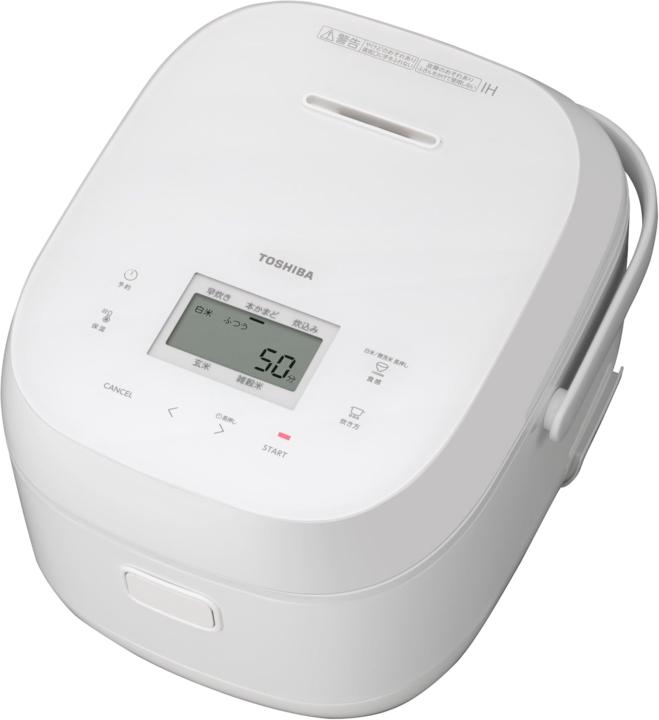
⚡ RADAR SIGNAL — THE ENTRY-LEVEL TOSHIBA WHOSE VALUE IS HIDDEN INSIDE THE POT
Not every market asymmetry begins with a lower price. Sometimes the signal appears when one market treats advanced engineering as ordinary, while another would classify the same level of specialization as premium. The Toshiba RC-10HW is an entry-level JDM rice cooker. I purchased this model new in Japan for approximately ¥14,000, and I use it myself. From the outside, it looks like a conventional household appliance. The result does not. The difference cannot be explained by software alone. The RC-10HW works as an integrated cooking system: the software controls the process, the IH system generates and modulates the heat, and the inner pot determines how that heat reaches the rice. Its inner pot has a 2 mm base, an exterior coating designed to improve thermal radiation, and an interior coating that combines binchōtan carbon and diamond particles. This matters because the pot is not simply a container placed above a heating element. In an IH system, the inner pot becomes an active part of the heating architecture. Toshiba then coordinates that physical structure with specialized programs. The Honkamado course controls soaking and heating to produce a softer and more refined grain structure. The machine also uses heating elements in both the lid and body to reduce condensation while keeping cooked rice warm. The goal is not merely to reach the point where the rice is technically cooked. It is to control: - water absorption; - temperature progression; - moisture retention; - texture; - natural sweetness; - consistency between batches; - and preservation after cooking. The importance of the pot becomes visible in an unusual commercial detail. At the time of this detection, Toshiba’s official replacement inner pot was listed at approximately ¥9,460. That was roughly 62% of the official price of the complete rice cooker. This does not prove the manufacturing cost of the pot. Replacement parts have their own pricing structure. But it reveals how Toshiba positions the component:
2
0
22h •
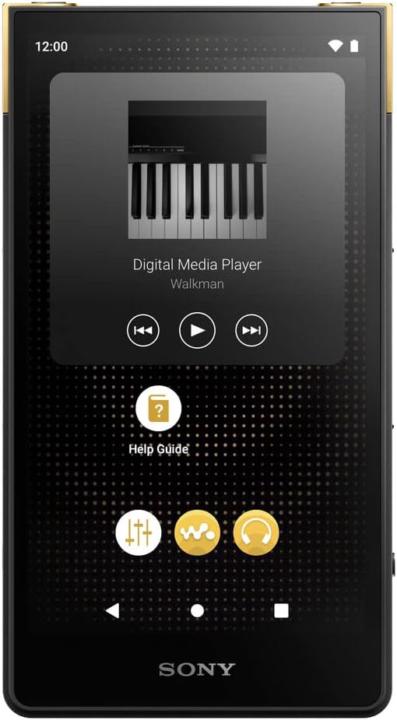
⚡ RADAR SIGNAL — THE SAME SONY WALKMAN, BUT NOT THE SAME POWER
The Sony Walkman NW-ZX707 64 GB carries the same model name in Japan and the United States. The exterior design is nearly identical. The storage capacity is identical. Both versions provide 3.5 mm and 4.4 mm balanced headphone outputs. A buyer looking only at the product page could reasonably conclude that they are receiving the same audio player. But Sony’s own regional specifications reveal a major functional divergence. What Sony declares in Japan Sony Japan rates the NW-ZX707 in High Gain mode at: - 50 mW + 50 mW into 16 ohms through the 3.5 mm output - 230 mW + 230 mW into 16 ohms through the 4.4 mm balanced output Sony explicitly presents this higher output as part of the player’s ability to preserve detail, bass energy, and dynamic expression across a wider listening range. What Sony declares in the United States Sony USA publishes: - 0.4–1.1 mW into 32 ohms for the 3.5 mm output - 0.4–1.1 mW into 32 ohms for the balanced output The international Sony help guide also warns that the High Gain control may not be available in certain countries or regions. At first, the numbers cannot be compared directly because Sony uses different electrical loads: Japan is rated at 16 ohms, while the American page refers to 32 ohms. So let us normalize the specifications. Converting power into output voltage Electrical output power depends on both voltage and headphone impedance. Using Sony’s published ratings: - Japan’s balanced output implies approximately 1.92 volts RMS - The upper end of the American specification implies approximately 0.19 volts RMS That is not a tiny difference. The Japanese balanced output represents approximately: 10 times the available output voltage For the same headphone, power rises with the square of voltage. Therefore, a tenfold voltage difference can represent roughly: 100 times the theoretical power capability and around 20 dB of additional electrical headroom This is an engineering normalization derived from Sony’s regional specifications—not an additional rating published by Sony—because the official measurements use different loads and reporting conditions.
2
0
23h •
KYOTEN WAS BORN IN JAPAN — BUT ITS STRUCTURE CAN BE SEEN FAR BEYOND JAPAN
Most readers enter Japan Market Radar through a product. A Japanese pencil, watch, game or tool appears at a very different price outside its domestic market. The contrast attracts attention, but the product is only the visible surface. The deeper question is: What structure allows the same value to be perceived, accessed or priced differently between markets? My name is Ricardo Takeshita Nishimura, author of KYOTEN: Strategic Intelligence for Structural Market Asymmetry. Japan Market Radar shows the public application of this doctrine through products and verifiable market evidence. But KYOTEN was never created only to identify products that can be purchased in Japan. Japan is the laboratory where the doctrine was developed—not the limit of its application. A powerful example appears in Latin American agriculture. Two nearby regions may produce the same crop. The product may look identical, serve the same market and even travel through similar distribution channels. Yet differences in altitude, temperature, rainfall and local microclimates can cause those regions to harvest at different moments. The product remains the same. The timing does not. When one region finishes its harvest while another is only beginning, a temporary imbalance may appear between supply and demand. The strategic value is no longer hidden inside the product itself, but inside the calendar, the geography and the moment when each market becomes accessible. This changes the central question. It is no longer simply: “Where is the product cheaper?” It becomes: “Where does the structural difference appear, what maintains it, and when does it become valuable?” That is the broader reach of KYOTEN. The doctrine can begin with a Japanese product, but it is ultimately concerned with structural differences between regions, production systems, market channels, access conditions and timing. Japan Market Radar makes those structures visible through products. The Latin American agricultural example demonstrates that the same lens can reveal value even when Japan is not part of the transaction.
2
0

23h •
THE METHOD BEHIND JAPAN MARKET RADAR
Japan Market Radar is not an anonymous collection of price differences, and it is not a feed created by asking an AI to find products that look cheaper in Japan. My name is Ricardo Takeshita Nishimura, author of KYOTEN: Strategic Intelligence for Structural Market Asymmetry. I created this community to show the public application of a method developed through years of observing how the same product, technology or cultural object can acquire very different value across regions. A lower price is only the beginning. Two products may appear identical while hiding different specifications, accessories, languages, conditions, warranties or regional limitations. A dramatic price gap may disappear when the exact model is checked. A rare Japanese edition may look attractive but exist only in one auction. A product may be inexpensive in Japan because an invisible restriction prevents the market from correcting the difference. This is why every Radar Signal must prove its own case. The analysis begins with the Radar locating a product that may contain a meaningful regional anomaly. Prices must represent comparable conditions, currencies and versions. Official manufacturer pages, institutional archives, domestic catalogs, specialized retailers and active marketplace listings are used to establish what the product is, what makes it different and whether the price can actually be observed. The book does not replace those sources. KYOTEN provides the lens. The sources provide the evidence. Japan Market Radar shows the result. Not every attractive discovery survives. Some signals are rejected because the products are not truly equivalent. Others depend on temporary discounts, inaccessible inventory or skills that an ordinary reader could not reproduce. A large difference can be real and still fail to become a responsible public opportunity. That discipline is important because this community is not designed to create excitement at any cost. It is designed to distinguish a temporary bargain from a structural market asymmetry.
2
0

1-10 of 18
@ricardo-takeshita-5842
Japan-based. Founder of DiscoverJapanSites.
Strategic buying in Japan’s domestic market — timing, JDM insight, currency advantage.
Active 1h ago
Joined Mar 8, 2026