
Write something

Mar 5 •
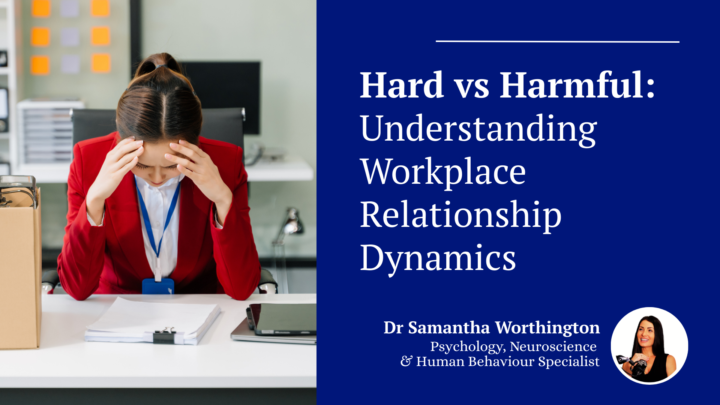
New Article in the Classroom - Hard vs Harmful: Understanding Workplace Relationship Dynamics
In my latest article, I explore a dynamic so many people feel at work but rarely talk about - the moment you realise a relationship isn’t stretching you anymore, it’s slowly wearing you down. It’s subtle. It’s easy to miss. And for high performers, it’s almost instinctive to push through it rather than pause and look at what’s actually happening. But those small shifts matter. The hesitation before a meeting. The second‑guessing. The way clarity feels harder to access after certain conversations. These aren’t weaknesses - they’re signals. They’re your nervous system trying to get your attention long before your mind catches up. Healthy workplaces don’t ignore those signals. They pay attention to them. They protect the people who hold so much together. They create environments where responsibility is shared, empathy is recognised, and excellence isn’t used as a reason to overload the very people who keep the culture steady. When that kind of protection is in place, high performers don’t just cope - they thrive. And the entire workplace rises with them. hashtag#Leadership hashtag#WorkplaceWellbeing hashtag#HighPerformance hashtag#PsychologicalSafety hashtag#EmotionalIntelligence hashtag#Neuroscience hashtag#WorkCulture hashtag#Boundaries hashtag#RelationalHealth hashtag#WomenInLeadership hashtag#TraumaInformedLeadership hashtag#NervousSystemHealth
Feb 17 •
Confabulation: The Quiet Rewrite
There’s a moment I see in almost every woman I work with. It doesn’t announce itself. It doesn’t arrive with drama or collapse. It’s quieter than that - almost easy to miss if you don’t know what you’re looking for. It’s the way her breath catches for half a second. The way her eyes shift, not in fear, but in recognition. The way her posture changes, as though something inside her has just rearranged itself. It’s the moment she realises that the story she has been told about her life - sometimes for years, sometimes for decades - doesn’t line up with the life she actually lived. Not because she’s confused or because her memory is unreliable. But because someone else has been narrating her experiences for so long that she learned to defer to their version of events instead of her own. That moment is profound. It’s the first time she sees the split between her lived reality and the reality she was conditioned to accept. And it’s often the first time she allows herself to consider that the confusion she carried wasn’t a flaw in her - it was a strategy used against her. This is the quiet recognition that something hasn’t added up for a very long time. And it’s also where we meet one of the most disorienting behaviours in narcissistic and emotionally abusive dynamics: Confabulation - the subtle, persistent rewriting of reality. Confabulation is insidious. It weaves itself into everyday conversations, and it sounds plausible, even reasonable. It doesn’t feel like manipulation at first - it feels like misunderstanding, or miscommunication, or a difference in perspective. Until one day, you realise the version of events you’ve been handed doesn’t belong to you at all. Let me show you what this looks like in real life. In Intimate Relationships, it Sounds Like This: You bring up something that hurt you - a conversation that unsettled you, a comment that lingered in your body long after it left their mouth, a moment you remember with absolute clarity because your nervous system registered it as significant.
4
0
Feb 17 •
How the Brain Forms Trauma Bonds - And Why Understanding the Science Helps You Break Free
Trauma bonds are one of the most complex and deeply confusing attachment patterns the brain can create. They keep people attached to relationships that hurt them, loyal to dynamics that diminish them, and emotionally entangled with people who repeatedly violate their trust. From the outside, trauma bonds look irrational. From the inside, they feel impossible to escape. And they don’t just happen in intimate relationships. They happen in workplaces too - in teams, with leaders, and inside organisational cultures that swing between support and sabotage. Whether it’s a partner who alternates between affection and harm, or a workplace that cycles between praise and pressure, the brain responds in remarkably similar ways. Once you understand what the brain is doing - and why - everything starts to make sense. Shame dissolves. Clarity returns. And the path out becomes visible. The Dopamine–Cortisol Loop: The Chemistry of Attachment to Chaos Trauma bonds are reinforced through a biochemical cycle that slowly trains the brain to confuse danger with connection. It often begins with a period of tension or emotional harm - a sharp comment, a withdrawal of affection, a sudden shift in tone, a moment where the nervous system senses something is off. Cortisol and adrenaline surge, pushing the body into hyper‑alertness. You start scanning for cues, bracing for impact, waiting for the next emotional blow. The system becomes tight, vigilant, and exhausted. And then, just when the distress reaches its peak, the dynamic flips. The same person who created the tension offers a moment of softness - a kind word, a warm gesture, a sudden return to calm. The nervous system, desperate for relief, absorbs this shift instantly. Dopamine floods in, soothing the discomfort and creating a temporary sense of safety. This contrast between fear and comfort is neurologically potent, and over time, the brain begins to link these two states together. It learns that the person who triggers the cortisol spike is also the one who provides the dopamine release. The “high” becomes fused with the “low,” and the nervous system starts to chase the moments of relief, even if they are inconsistent, manipulative, or painfully short‑lived.
5
0
1-3 of 3
powered by

Suggested communities
Powered by