
Write something

8d •
Do US Hispanics Prefer Spanish Websites?
A lot of them actively look for one. Recent research found that over half of US Hispanic adults seek out Spanish-language options at least sometimes when they shop online. That's not a niche. That's a majority telling you how they want to be served. And it goes deeper than the homepage. The product pages, the checkout, the support, all of it needs to hold up in Spanish. A journey that starts in Spanish and switches to English mid-stream feels like a door closing. Here's the part that should get your attention. A majority of Hispanic consumers say they're more loyal to brands that connect with them in their language. Loyalty is the expensive thing to buy and the cheap thing to lose. P.S. Wondering if your Spanish site holds up past the homepage? Send me the link, and I'll walk the full journey.
0
0

10d •
Can AI translate Spanish accurately?
This is taken too much for granted. So here's the honest version, from someone who uses these tools every day. +++ TL;DR Our rule is simple. Start with AI, finish with a native expert who lives in the culture. Use the machine for speed and volume. Use a person for everything your customer will feel. +++ For a clean, well-written paragraph, modern AI gets the meaning across surprisingly well. As a first draft, it's a real help. I'm not here to tell you the technology is bad, because it isn't. Where it falls down is the part that actually sells. ➡️ Tone ➡️ Regional fit ➡️ The emotional read of a line. AI can flag sentiment, but it can't gauge how a phrase lands in Lima versus Madrid. It also treats Spanish as a single language, defaulting to a single word form when the correct choice depends entirely on the country. That's the dialect trap, and it's where technically correct starts costing you trust. Let me give you a real example. We worked on copy describing two product models, one traditional and one innovative, as extremes that push the limits of what the product can do. The machine read "push" as physically shoving and completely lost the idea. The first half was readable. The second made no sense to a native reader. A person caught it in seconds. A company trusting the raw output would have shipped it. That's the quiet risk with AI translation. It rarely fails loudly. It fails in a way that makes your brand feel slightly off, and that's enough to lose a sale. In markets where trust is built through how you speak, that small wrongness reads as a brand that didn't care enough to get it right. This isn't a knock on the tools. It's a knock on shipping their raw output. We build trained AI into our own process, then put a native editor on top of it. So, can AI translate Spanish accurately? For the basic meaning, often yes. For connection, not on its own. In our experience, even a strong AI draft needs a human to touch a large share of the segments before it's ready for customers..
0
0
29d •
The blind spot
I keep noticing the same blind spot with companies moving into Latin America. They pour real thought into localizing the customer experience, the ads, the website, the checkout, and then they onboard their first local hires in English, through a US HR portal, reading policies written for a country those people don't even live in. My honest take is that onboarding is where belonging gets decided, long before performance does. If the training videos, the handbook, and those first-week emails all feel translated at someone instead of written for them, you lose a bit of trust you never actually see leave. People rarely quit over it out loud. They just stop leaning in. And the details are smaller than you'd expect. A benefits section that assumes US healthcare. A payroll setup that never mentions the “aguinaldo”, the legally mandated year-end bonus your Latin American team is already counting on. Internal Spanish that technically works but was clearly run through a tool, read by the exact people who spot that in a second. I want to correct myself a little here, because "just translate the handbook" isn't the lesson either. Plenty of internal content travels fine as is, and a short policy note really doesn't need much. But the onboarding flow, the manager conversations, and the moments where someone decides whether they trust you, those are worth doing properly, and it's a judgment call that usually costs far less than the turnover it prevents. So here's how I'd frame the whole thing. - Customer localization protects the revenue you're still chasing. - Employee localization protects the team you already paid to hire. Most expansion plans fund the first and assume the second will sort itself out, and by the time a resignation email shows up, you've already paid for skipping it. P.S. Hiring your first people in Latin America this year? Before onboarding starts, take a look at what they'll actually read in week one, and whose language it was written in. Visit my website for more information.

Jul 21 •
How To Expand into Latin America
How to expand my business into Latin America. You don't need a giant commitment to get started. The teams that move first usually start smaller than people expect. A common path: bring on experienced freelancers for the key roles, pay them competitively in local currency, and build a trusted core team before committing to full operations. It keeps overhead low, gives you flexibility, and lets you learn the market with people who live in it. As traction grows, you expand from that base instead of betting everything on day one. ➣ Early wins come from a few basics. ➣ Set up contracts and HR to fit local law. ➣ Train customer-facing staff on tone. ➣ Adapt your materials to the local culture instead of shipping a translated version of your home playbook. This process also allows you to determine whether you are targeting the right region, market, or demographic. You are likely there because there is a vacuum and an opportunity; this fine-tunes your aim. It's less risky than most leaders assume. The mistake is waiting for a perfect launch that never quite comes. P.S. Thinking about first steps into the region? Let's map a low-risk way in, from hiring to compliance. More info at: https://languageglobalsolutions.com
1
0

Jul 14 •
The Difference That Decides Your Revenue in Latin America
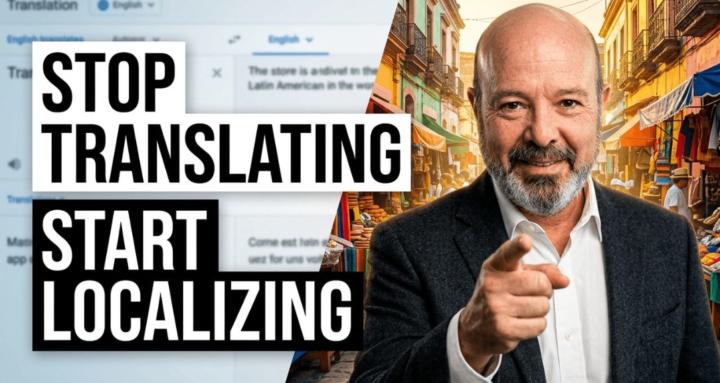
Translation vs Localization When companies entering Latin America believe they've localized when all they've really done is translate they face a challenge. The Spanish is correct, the site is live, yet the numbers still come in soft. So let's settle the translation vs localization question, because the difference is where revenue is won or lost. - Translation moves your words from one language to another. It answers a simple question: is this accurate? - Localization moves your meaning into a culture. It answers a harder one: does this feel like it belongs here? That second question is the one customers answer with their wallets. Here's what it looks like in practice. A tagline can be grammatically perfect in Spanish and still read like a manual to a shopper in Mexico City. 👉 The words are right. 👉 The warmth, rhythm, and cultural cues that make a local brand feel trustworthy are missing. The customer can't always explain why it feels off, but they feel it, and they buy from the brand that doesn't. We've watched a company relaunch the same product with regionally localized messaging and see conversion climb by double digits. The offer never changed. The fit did. It gets bigger than tone. Spanish is official in 21 countries, each with its own vocabulary and expectations. - A phrase that lands in Argentina can fall flat in Colombia. - A promotion pegged to a US calendar misses a region that celebrates on different dates. - None of that shows up as a translation error, which is exactly why it goes undiagnosed. I'll be honest about one thing. Translation isn't the enemy. It's obviously necessary. It just isn't sufficient, and treating it as the whole job is what slowly caps a brand's growth in the region. Localization is the work of adjusting tone, references, and the full experience so your brand feels native in each market. It considers how people decide, what moves them, and how they expect a business to talk to them. It's the difference between being understood and being chosen.
0
0

1-30 of 57
powered by
skool.com/global-solutions-6470
Expand and grow into Latino markets with Human Localization - Get it right! Add more clients to your biz!
Suggested communities
Powered by