
Write something
Pinned

Sep '25 •
Start here ➜ Latin American markets
This has been working to reach Latinos confidently with a few simple steps. What function of your business may need adjustments to improve in the Latin American market(s)? Which function needs adjustments for Latinos in the US? The offer? The marketing? Sale processes? Customer experience? LTV? Pricing? Knowing this, you take the right actions in the right order. If you want the help of natives for the Latin target audience... We don't pretend to be Latinos. We are Latinos. That is why we know and feel what feels right for Latinos! www.languageglobalsolutions.com
7
0

5d •
Compounding ROI over time
Is localization just an expense, or a strategic long-term investment? When done right, customer-centric localization creates evergreen value for your brand in regional markets. In this video, we break down why building localized assets—from marketing campaigns and promotional calendars to product manuals and multimedia—lays a groundwork that pays off for years to come. Instead of reinventing the wheel each campaign cycle, your team can update, adapt, and scale existing materials to generate compounding returns. Watch to learn how prioritizing local customer experience transforms localization into one of your strongest business assets! Key Takeaways - Localization Builds Reusable Foundations: When localization is approached with a customer-centric mindset, the assets created—whether product adaptations, manuals, marketing campaigns, or localized music—serve as a permanent foundation rather than a one-off expense. - Efficient Long-Term Maintenance: After the initial investment and heavy lifting are completed, ongoing efforts simply require light updates and enhancements rather than starting from scratch each year. - Exponential Returns on Investment: Because localized calendars, promotional materials, and product messaging can be repurposed and refined over time, the long-term ROI grows exponentially. Go to www.languageglobalsolution.com Click on the WhatsApp icon and get in touch for a Free Consultation call.
0
0
7d •
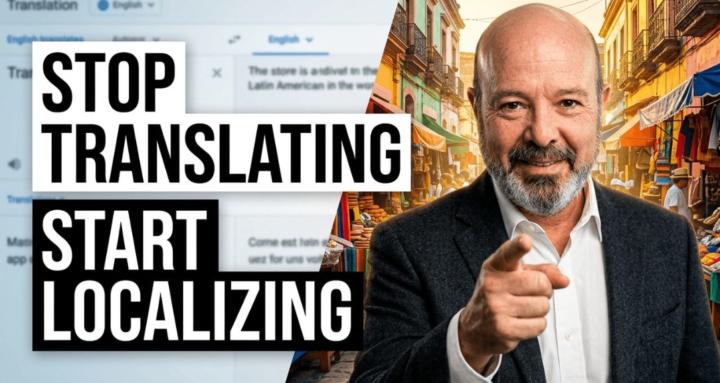
Localization Wins Every Time
Happy Tuesday! Quick 2-3 minute watch. Click >> Localization Wins Every Time Or watch below Rody
0
0
12d •
First hires in Latam
The most common reason I hear for delaying a Latin American hire is that setting up an entity looks like a six-month project with a legal bill attached. That's fair if you start there. Most companies don't need to. You can test a market with a small local team long before you commit to infrastructure. Contractors and freelancers, paid properly in local currency and working local hours, is how plenty of good companies find out whether the opportunity is real. What that buys you is a year of learning you can't get any other way, about what customers ask for and whether your product needs adjusting, all before you've signed a lease. So the mistake isn't starting small. It's starting small and then treating those people like a temporary arrangement. Pay late, run everything in English, and you'll lose the exact people who were teaching you the market. Commitment isn't measured in entities. It's measured in whether you make an effort and set up a system to make the person on the ground feel like part of the company or an outsourced line item. P.S. Forty years in the language industry, more than 20 of them across Latin America. The brands that localize properly are the ones their customers actually remember.
1
0

13d •
"Latin America" Isn't a Market. It's Twenty of Them.
Companies decide "let’s launch in Latin America next year." And I get the instinct, because it feels like one big market with one shared language, plus Portuguese for Brazil. But treating it as a single block is usually the first mistake. The region is roughly twenty countries with different buying power, different cultures, preferences, different rules, different Spanish, and very different reasons a customer would pick you. The problem is sequencing. Companies often choose their first market on gut, or on wherever they happened to find one contact, then pour the budget in and wonder why the numbers don't move. A market that looks obvious on a map can be brutal on the ground once you factor in payment habits, import rules, government policies, or how much local trust your category needs before anyone buys. I'd actually correct the usual advice here. It's not simply "go where the biggest population is." Size without fit is a trap. A smaller market where your product genuinely solves a felt problem, where you can support customers in their own Spanish, and where getting paid isn't a headache, will almost always beat a huge market you're not ready to serve properly. So before the map and the flags, I'd get honest about a few things. - Where does your offer actually fit the local reality, not the pitch-deck version of it? - Which market can you support in-language from day one without stretching the team to breaking? - And where can money move cleanly enough that a sale is really a sale? There's also a timing cost people underestimate. Every market you enter teaches you something, about pricing, about support, about what customers actually complain about, and that learning compounds. Enter three at once, and you learn three shallow lessons while burning three budgets. Enter one, and you learn it deeply enough to carry into the next. Pick one. Learn it properly. Earn the right to the next one. The companies that win the region rarely win it all at once. They win one market so well that the second is easier, and the third easier still.
0
0

1-30 of 64
powered by
skool.com/global-solutions-6470
Expand and grow into Latino markets with Human Localization - Get it right! Add more clients to your biz!
Suggested communities
Powered by