
Mar 28 (edited) • General discussion
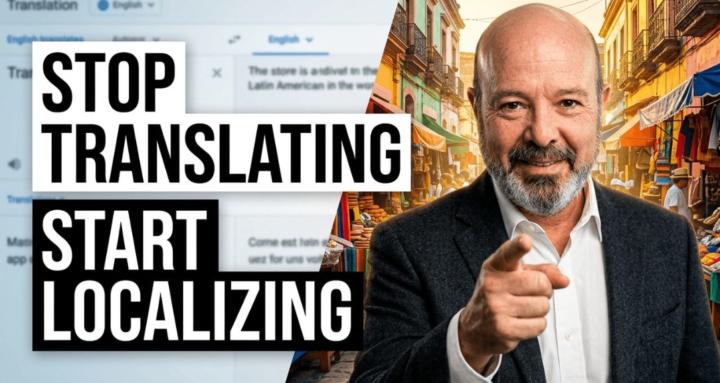
🚫 STOP allowing AI mistakes that misrepresent your brand
Spanish changes across Latin America. Same language on paper. Completely different in practice.
This is where many companies get caught out.
They assume one version of Spanish works everywhere, especially when using AI or direct translation. Sometimes it does. Many times, it fails.
The risk is not obvious. You will not always see complaints. Customers just disengage.
This is especially true when it comes to:
➡️ Idioms
➡️ Jokes
➡️ Colloquial phrases
➡️ Food products
➡️ Household items
A single word can mean something neutral in one country and be offensive in another.
Even something as simple as “bus” or “dude” can vary widely between Mexico, Argentina, Colombia, and Spain.
Yes, you can sometimes generalize across regions like Mexico, Central America, the Caribbean, and South America. But that requires expert validation, not assumption.
We review websites all the time, and the inconsistencies are often obvious to local audiences.
Grammar, tone, and voice all shift depending on region, industry, and demographics.
If you are using AI, use it wisely.
Always have native linguists validate your content before it goes live.
Because cheaper shortcuts often become expensive mistakes.
And the worst part is, you may never know why performance drops.
Happy to chat if you are planning growth in Latin America.
4
2 comments
🚫 STOP allowing AI mistakes that misrepresent your brand
powered by
skool.com/global-solutions-6470
Expand and grow into Latino markets with Human Localization - Get it right! Add more clients to your biz!
Suggested communities
Powered by