
Write something
1d •
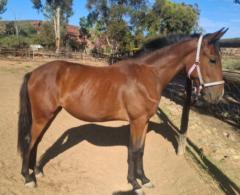
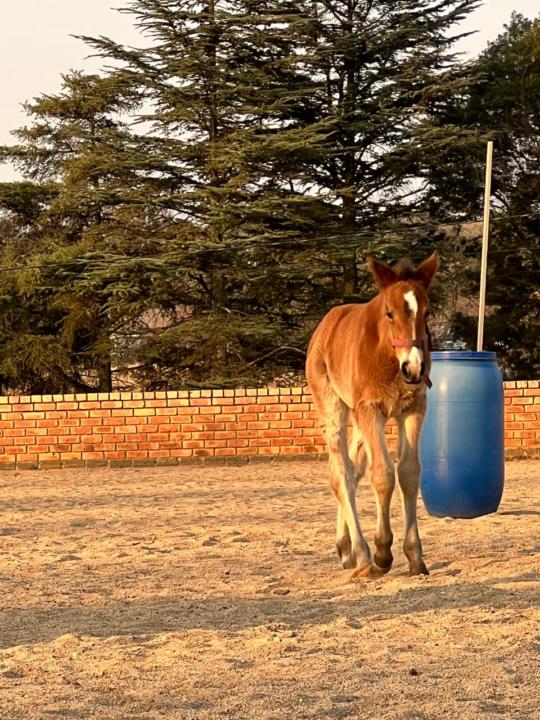
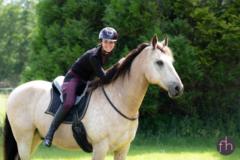
Should i test Lady for her breed or just say cross breed
Pic of baby next to mom aswell as yearling next to mom and current What would you guess her breed without reading my previous posts(Cause im unsure with how truthfull the previous owner was) Neraly 2 in thrid pic dentists confirmed standing 14.3hh officially
🔥
5d •
🐎 Loyalty Goes Both Ways…
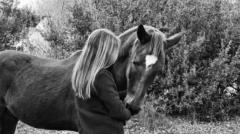
✨ The horses are already so very loyal, so I believe it is our obligation to simply be loyal back. It’s something I talk about and share a lot. Because horses don’t wake up each day questioning whether they’ll show up for us. They don’t hold grudges in the way we do. They try simply again and again…even when they don’t fully understand, even when things feel hard. That kind of loyalty is quiet, but it’s powerful. And I believe it asks something of us in return. Not perfection. Not getting everything right every time. . Just a genuine effort to understand them, not just use them. 👉 Loyalty to me means… ▪️Showing up with even on the days it would be easier not to. ▪️Taking the time to explain, instead of rushing through. ▪️Listening when something feels off, instead of pushing past it. ▪️Thinking long-term and not just about today. Because they give us their trust so freely. The least we can do, is become someone worthy of it. ❓ Share here, I love to read - what ways you are showing loyalty back to your horse right now? 🐴✨🫶

4d •
Question about motivation and learning
Hi everyone, I’d love to hear your thoughts and experiences around motivation in horses during training. Over time, I’ve noticed a consistent difference in my horse’s attitude depending on whether I include positive reinforcement (food rewards) in a session or not. I alternate between sessions with rewards and sessions without them, so it’s not something I use all the time. When I work with food rewards, I see noticeably more willingness from my horse to explore, offer responses, and actively try to figure out what I’m asking. The learning feels more proactive, almost like the horse is engaged in solving a puzzle rather than just responding. On the other hand, when I train using only pressure–release (pressure applied, in the lighest possible way, and release when the correct response happens), I sometimes feel that the motivation drops. The horse does respond, but it feels more mechanical and less enthusiastic. A clear example for me is backing up on the halter: - With pressure–release alone, the horse might shift weight back or take a single step, but often seems less engaged. - Using rewards, I’ve been able to build this up to 4–5 relaxed, intentional steps, with much more focus and curiosity from the horse. I want to emphasize that I’m intentionally using low‑value rewards (meadow hay pellets, while my horse has access to forrage ad libitum), and I’m not seeing “cookie monster” behavior, but I am seeing more interest and participation. So my question is: - Do you see this difference in motivation as well? - How do you interpret it in terms of learning theory and emotional state? - How do you personally balance pressure, release, and reinforcement to keep horses motivated without over‑reliance on rewards? Really interested in hearing different perspectives 🙏

8d •
Your thoughts or advice?
Hello everyone, I’d really appreciate some thoughts on my pony, Shady. He tends to shake/nod his head up and down when there’s interaction with a halter and he seems cross/worried/tense rather than excited. I’ve been trying the head-down exercise using very light pressure on the lead rope. If I simply touch the rope with a fingers and thumb or progress to all four fingers, he starts the head movement and will try to nip my hand too. But if I hold the rope softly and slide my hand up the rope to just under the clip/snap with two fingers, he generally stays calm and doesn’t do it. I’m wondering if this could be confusion or sensitivity? Has anyone come across this before? Does it sound like confusion, sensitivity, anxiety about cues, frustration, or something else? Also, how should I progress the head-down exercise from here without triggering the worried response or the nipping? Thanks so much 😊
17d •
Reintroducing the saddle
Blackie has always been a sweet and tolerant horse — never biting or kicking, even with kids handling him. But since he started being used as a school horse, his behaviour has changed quite suddenly. Within about two weeks, he began reacting to the girth, and now it has escalated to where even bringing a saddle pad near him always triggers biting or kicking. I’ve had him checked — no ulcers,but the physio found quite a few blockages, but those have been worked through, and physically he seems fine now. She did mention that he might associate saddling and riding with past discomfort or negative experiences, and that he could be anticipating pain. Over the past week I’ve stepped back and focused only on groundwork and rebuilding trust. He is honestly amazing in that space — he follows me without a lead, mirrors my movement, halts, backs up, and is completely relaxed being touched all over, even his belly. And lowers his head for the halter. It really feels like our connection is strong again. But the moment I bring in the saddle pad and move toward the saddle area, he becomes tense and reactive again. When I bring the saddle pad near his face he wants to bite it. We then go and do some groundwork and come back. He desensitized up to me bringing the saddle pad near his head, cheeks and ears. As soon as I go near his neck hê bites and goes for the kick. So I really want to ask: Do you think this is stubbornness, or is it genuinely fear/association? And how would you suggest I handle this going forward? Also, the riding school would like to start using him again — what would you recommend I say to them? I’m worried that rushing the process will undo the trust we’re rebuilding. She did use him whilst him biting and kicking and then just nudging him with a stick - I’m not sure that is the right way to go about this? Once the saddle is on - he is perfectly fine to ride and doesn’t buck or anything. My biggest goal is to help him feel safe with the saddle again so that I can ride him, but in a way that is calm, positive, and fair to him.
1-30 of 110
skool.com/get-good-with-horses-courses
Get good with horses through understanding, feel, and honest practice — a hands-on horsemanship space for becoming your horse’s hero.
🐴✨🫶
Leaderboard (30-day)
1
+201
2

+188
3

+112
4
+98
5
+75
Powered by