
Write something

4d •
Automated Trading Explained Without the Technical Jargon
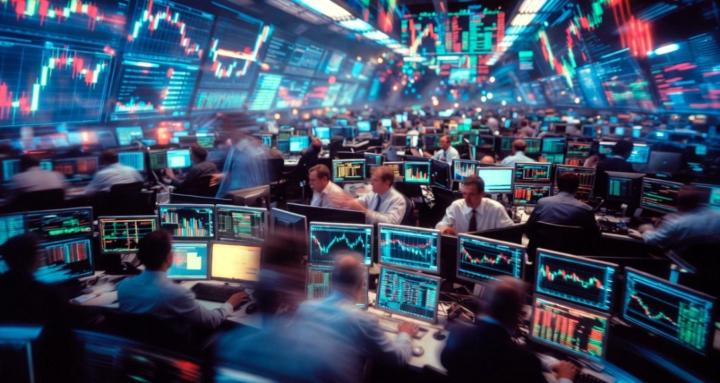
Picture two traders. The first is hunched over a wall of monitors at 9:31 in the morning, coffee going cold, eyes darting between charts, thumb hovering over the mouse. The second one has gone for a walk. Both of them have positions open in the same market. The difference between them isn't skill, and it isn't luck. The second trader simply handed the execution over to a system built to follow a set of rules exactly the same way every single time, without flinching, hesitating, or talking itself into "just one more trade." That's automated trading. And despite how intimidating it can sound, there's very little mystery to it once you strip away the vocabulary. - So what is it, really? At its heart, automated trading is just a set of instructions a computer follows to buy and sell on your behalf. Think of it like a recipe. A recipe says: if the water is boiling, add the pasta; after eleven minutes, drain it. A trading system says something similar: if the market does this, then place that order; if the trade moves against you by a certain amount, close it. The logic can get sophisticated, but the shape of it never really changes. It's always "if this, then that." The important thing to understand is that a human being writes the rulebook. The computer doesn't have opinions, and it doesn't invent strategies out of thin air. It follows the plan it was given. All the thinking, the research, and the judgment happen before a single trade is ever placed. The machine is simply the disciplined hands that carry out the plan. - Why hand it to a machine at all? Because the machine doesn't feel anything. Most trading mistakes aren't failures of knowledge. They're failures of nerve. A trader sees a position dip and panics out of it right before it recovers. Or a trader sees a nice run and gets greedy, holding far too long, giving back everything. Fear and greed are baked into us, and they show up at exactly the worst moments. A system doesn't get scared. It doesn't get greedy. It doesn't feel the fear of missing out when the market runs without it, and it doesn't get stubborn when a trade goes wrong. It executes the four-thousandth trade with precisely the same discipline it brought to the first one. There's no fatigue, no distraction, no bad mood after a rough morning.
2
0
7d •
Day Trading Futures: Mastering the Psychological Edge
Technical analysis and risk management are crucial, but psychology determines whether you'll actually execute your trading plan. The market will test your discipline, patience, and emotional control every single day. While automated trading may mitigate some of the real-time anxiety, achieving mastery over your emotions remains essential. The Three Pillars of Trading Psychology - Discipline: Following your trading plan exactly, even when emotions scream otherwise. This means taking every valid setup, not revenge trading after losses, and respecting your daily loss limit without exception. - Patience: Waiting for your setup rather than forcing trades. Many professional traders spend hours watching charts but only execute 1-2 trades. They understand that patience is an active skill—you're working when you're waiting for the right opportunity. - Emotional Control: Maintaining psychological equilibrium regardless of P&L. A $500 winner and $500 loser should trigger identical emotional responses: neutral acceptance. When profits excite you or losses devastate you, emotional trading follows. Common Psychological Traps - Recency Bias: After a winning streak, you feel invincible and increase risk. After losses, you lose confidence and skip valid setups. Both responses sabotage your edge. Your last trade is irrelevant to your next trade's probability. - Loss Aversion: Moving stops to avoid taking losses, letting losing trades "breathe" while cutting winners short. This guarantees small wins and large losses—the opposite of profitable trading. Accept that losses are business expenses. - Overconfidence: After mastering strategy basics, traders often believe they've "figured out" the market. This leads to ignoring risk management, oversizing positions, and taking low-probability setups. Stay humble—the market always has lessons to teach. Building Mental Resilience Maintain a detailed trading journal documenting not just what you traded, but how you felt before, during, and after each trade. Patterns emerge: you'll notice you take your best trades when calm and your worst when anxious or euphoric.
2
0
May 1 •
Trusting the System: Why Automation Only Works If You Let It
There's a quiet paradox at the heart of algorithmic trading. We build automated systems precisely because we know that emotion is the enemy of execution. We codify our edge into rules, backtest those rules across years of data, and deploy them so that decisions get made the same way every time, on every bar, regardless of how we slept or what the news cycle is screaming about. And then, after all of that, the moment a few red days appear on the equity curve, the very emotion we engineered out of the entry logic comes flooding back in through the manual override. If you've felt that pull, you're not alone. It's one of the most common — and most expensive — mistakes in this business. This week, we had two losing days. I want to talk about them honestly, because I think they're a perfect window into what trust in a system actually looks like. The week, in context A losing day is not a broken day. It is a budgeted day. Every strategy in our suite — Nexum, Volturon, Quantivus, Parallax, and Nodalis — is designed with the assumption that some sessions will close in the red. We don't pretend otherwise. The math of any sound trading approach is built around expectancy, not perfection: a positive edge multiplied across enough samples, with the worst outcomes capped by hard risk controls. That is the whole job. The two red sessions this week did exactly what they were supposed to do. They tripped daily loss limits where appropriate. They kept position sizing modest where volatility regimes called for caution. They stayed flat during news windows that have historically chewed up undisciplined entries. The loss-prevention logic — the very plumbing we spend so much time refining — quietly held the line. And then the green days outweighed them. Not because we got lucky, but because the suite is balanced. When trend strategies struggle, mean-reversion picks up the slack. When volatility compresses, the breakout logic stands down and the entropy-based work continues to find edge. When the macro tape is ugly, capital preservation becomes the win. That diversification across signal philosophies is not decoration. It's the whole architectural reason a multi-strategy suite exists.
3
0
Feb 18 •
Why Off-Hours Sim Trading Can Work Against You with NEXUM
NEXUM isn't a static strategy — it's an AI-adaptive system that continuously learns from the market conditions it observes and trades in. That's what makes it powerful, but it also means the quality of what it learns matters enormously. The market behaves very differently off-hours. During overnight sessions and pre/post-market hours, the NQ futures market is characterized by thin liquidity, wider spreads, erratic price swings, and movements driven by news flow and a fraction of the normal participant base. There's no institutional order flow, no algorithmic market-making at scale, and no meaningful price discovery happening in the same way it does during Regular Trading Hours (RTH). When NEXUM sim trades in that environment, it's studying the wrong classroom. Its AI components are adapting to — and learning patterns from — a market that simply doesn't exist when you go live. The volatility profiles are different, the momentum characteristics are different, and the mean-reversion tendencies are different. NEXUM will tune itself to conditions it will rarely, if ever, encounter once you switch it on during RTH. The practical risk is this: By the time you go live during regular hours, NEXUM's adaptive parameters may be calibrated for ghost-town market behavior. That misalignment can cause it to misread momentum, misjudge volatility, and apply risk parameters that don't reflect what the live RTH market is actually doing — potentially right from your very first trade. The right way to sim trade NEXUM is during the same session you intend to trade it live. Run it during RTH, let it observe and adapt to institutional order flow, real liquidity, and the market dynamics it will actually encounter. That way, when you flip to live, the strategy's learned state is a genuine reflection of the conditions ahead of it — not a distorted picture built from the overnight shadows. Think of it this way: you wouldn't train for a marathon by running on sand if the race is on pavement. The effort is real, but the adaptation is wrong.
1-5 of 5
powered by
skool.com/futures-trading-group-7221
Automated trading software for Nasdaq 100 futures. Algorithmic strategies for day trading with institutional precision. Join us!
Suggested communities
Powered by