
Jan 29 • Nutrition
Carbs are King!
The role of carbohydrates in endurance sport is now universally accepted as being an essential tool in not only race day but also to support training and recovery. It wasn't always so. Now with some pros seemingly taking in 120g per hour the game has shifted from the days when we were told the gut could only handle up to 60g per hour
Carbs are the bodies go to fuel for moderate and high intensity exercise. We store carbs primarily as glycogen in muscle and liver tissue. In well trained athletes we have enough stores to last around 90mins to 2 hours of hard endurance work. Depends on the intensity but it is possible to 'bonk' when beyond 2 hours - trust me when I say its not fun when you are 50 miles from home! We don't just burn carbs and at lower levels of effort we do have a dual fuel system from fat stores so fo super long easier effort its a different picture. Race pace efforts though do rely heavily on carbs as the main fuel.
The old 60g per hour was based in the fact that older sports nutrition products were single source sugars but moderrn science now gives us a plethora to choose from and recommendations now are 'up to' 90g. A caveat here is you have to practice the intake to allow your gut to be 'trained' to do its thing so having a race nutriton strategy needs built during training. What to ingest is highly personal but for most people a mix of fuel sources is likely to work best. Some products really do irritate some but others can hoover up anything with no ill effects.
For day to day your intake can vary but typically for endurance we are looking at anywhere between 5 and 12g of carbs per kg of bodyweight per day. Matching intake to activity is good practice so basically on hard days you eat more. There are a couple of apps out there that can do this fo you - Fuellin being the best known. You can do a 'train low, compete high' protocol but if you have ever tried to do a v02 session straight out of bed in the morning you will know it isn't that smart. In simple terms you have to eat and drink enough to support your level of training.
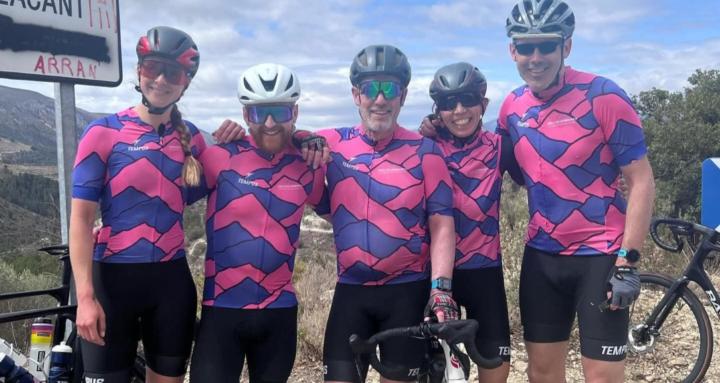
Recovery is a topic that has popped up multiple times in recent weeks so fuelling and replenishment of glycogen stores is a key weapon to support recovery. We want to relenish asap after long or intense sessions, so the standard practice is within 1 to 4 hours you need to take in a mix of carbs and protein ( 4:1 is still a good mix). Training camps in Spain reveal Chocolate milk as a perfect source!
For race day ( or big training) - if its a shorter effort under an hour you don't need to take anything on board so it is likely if coach sees you with a carb drink during a swim session, you may have it bounced off your head. For an hour to 2 to 2.5 taking on between 30 and 60 g per hour improves performance. Above this its long so on the long stuf ( at race intensities) 60-90g using multiple sources is recommended. The key thing being you have to adapt so don't rush out tomorrow on a long session and start gobbling 90g an hour - it may end badly. Test it, try it, refine it.
Now eat up! Weight loss of course has a different strategy relying on running a calorie deficit. Too big a deficit and the training sessions are likely to be compromised.
6
9 comments
Carbs are King!
skool.com/enduranceworx-3031
All about the craic and the endorphins. We educate athletes and coaches on moving in the endurance world
Leaderboard (30-day)
1

+13
2

+4
3

+3
4

+3
5

+3
Powered by