
Write something
Pinned

Mar 9 •
Welcome.
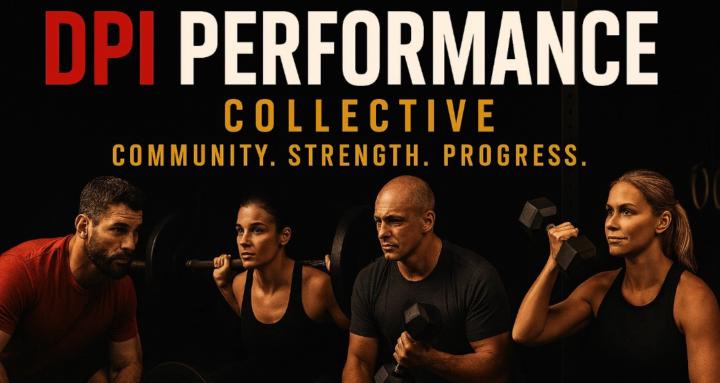
Welcome to the DPI Performance Collective. I'm Danny — ex-professional chef of nearly 20 years, personal trainer, and the bloke who built this community because I got sick of watching men in their 30s and 40s train hard for years and get nowhere. This isn't a place for hype, fad diets, or programmes that fall apart when real life gets in the way. Everything here is built around what actually works — practical training, real food, and the kind of consistency that creates lasting change. What's inside the free community: 🏋️ Training, education and programming guidance 🥗 Nutrition advice built around body composition and performance 🍳 High-protein recipes and meal prep strategies from an actual chef 📈 A place to ask questions, share progress, and stay accountable New here? Start with these three things: 1️⃣ Introduce yourself in the intro thread — tell us who you are, where you're at, and what you're working towards 2️⃣ Download the DPC Nutrition Blueprint — my complete guide to eating for body composition. Free for all community members. Pin it. Use it. 3️⃣ Check out the 12-week coaching plans if you want structure, accountability, and a programme built specifically around you. Three tiers are available depending on where you're at and how much support you need. DM me the word COACH if you want the details. The free community exists because I genuinely believe in giving value first. But if you're ready to go further, the coaching is where the real transformation happens. Glad you're here. Now let's get to work. — Danny | DPC Coaching
7
0

Pinned
Mar 9 •
Introduce yourself.
Welcome to the DPI Performance Collective. To help everyone get to know each other, drop a comment and introduce yourself. Share a few things: - Your name - What brought you here (what's not working right now) - Your main goal for the next 12 weeks - One habit you've been meaning to nail but keep dropping I'll start. I'm Danny Ives — PT, nutritionist, and ex-professional chef of nearly 20 years. I built this community after getting sober and realising I wanted to put everything I knew about food and performance into helping men build something that actually lasts. If you're here, you're already ahead of where you were.
5
0
Pinned
May 12 •
The DPC 12 Week Protocol.
I spent nearly 20 years in professional kitchens. I know what it takes to perform under pressure. To show up every single day regardless of how you feel. To build something that actually lasts. That's exactly what I've built DPC Coaching around. Not quick fixes. Not crash diets. Not programmes that fall apart the moment life gets busy. Real transformation — training and nutrition working together, built around your life, coached by someone who's lived it. I've just opened spots on my 12-week coaching plans—three tiers depending on where you're at and how much support you need. FOUNDATION — $240/month Self-guided but not alone. Online training programme, training and nutrition guides, and full access to the DPC Skool community. Built for the person who's ready to take ownership and needs the right structure to follow. HYBRID — $300/month. The most popular option. Everything in Foundation plus a tailored programme and nutrition plan built specifically for you, daily check-ins in week one, weekly check-ins throughout, and one 1-on-1 coaching session per month (If based in Perth). Built for the person who wants personalisation and accountability without the premium price tag. PREMIUM — $600/month Full access. Full support. A fully customised programme and nutrition plan, daily check-ins in week one, weekly check-ins, Skool community access, and one 1-on-1 session every single week (If based in Perth). Built for the person who's serious about results and wants eyes on them every step of the way. All three plans run for 12 weeks. All three include nutrition. All three are built around getting you a result — not just keeping you busy. If you've been sitting on the fence, this is the sign.
1
0
3d •
The actual goal isn't you needing me more — it's you needing me less
Friday's Reel, expanded. It would be an easy business model to make you dependent on me forever. It's also not what I'm actually trying to build. The goal by week 12 is that you can look at your own training and your own week and know what to adjust — not because I've disappeared, but because you've actually learned it. You still get the check-ins, the plan, the accountability the whole way through. The difference is what happens after — a client who leaves able to run it themselves got the better product, even if that means they need fewer paid weeks from me down the line. Discussion prompt: Think about something you've learned to self-correct on without needing to ask anyone — training, food, sleep, anything. What was it, and what actually taught you that?
0
0
5d •
Why I build the plan around your worst day, not your best one
Wednesday's Reel in full. Most plans get written for the version of the week where nothing goes wrong — every meal prepped, every session on time, no late nights. That week is real for some people some weeks. It is not most weeks for most people. So I build it the other way around: what does Thursday actually look like when work ran long and dinner's at 8 pm? What's the version of this session that still happens on a day you didn't sleep well? A plan that only works on your best week gets abandoned the first time a normal week shows up — one that's built around a realistic week survives contact with real life, which is the only kind of plan that actually compounds over 12 weeks. Discussion prompt: What's the one part of your week that usually wrecks a "perfect" plan — work, sleep, kids, something else? Tell me, and I'll factor it into how I think about this.
0
0
1-30 of 77
powered by
skool.com/dpi-fitness-5479
Ex-chef. PT. Sober. I help men in their 30s-50s build real strength and sort out their nutrition. No gimmicks, no Ozempic. Not a quick fix.
Suggested communities
Powered by