Activity
Mon
Wed
Fri
Sun
Aug
Sep
Oct
Nov
Dec
Jan
Feb
Mar
Apr
May
Jun
Jul
What is this?
Less
More
Owned by Danny
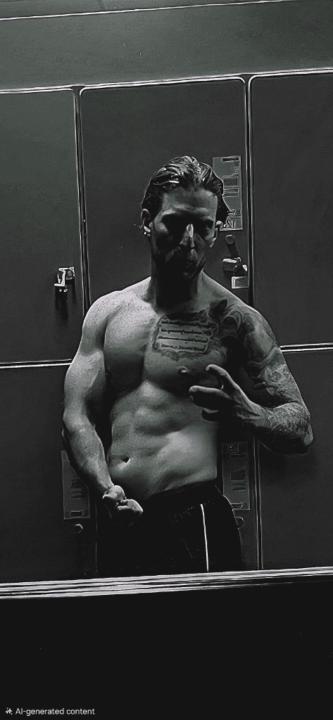
Ex-chef. PT. Sober. I help men in their 30s-50s build real strength and sort out their nutrition. No gimmicks, no Ozempic. Free Blueprint inside. ⬇️
Memberships
Agentic AI for Founders
3.8k members • $97/month
GREAT Community Leaders
774 members • $49/month
AI Automation Vault
21.2k members • Free
the skool CLASSIFIEDS
2k members • Free
AI Automation Society
424.6k members • Free
Lead Gen Secrets
23.9k members • Free
Free Skool Course
71.5k members • $1
Skoolers
165.4k members • Free
43 contributions to DPI Performance Collective

6d •
Your Sleep Is Costing You Muscle (Even If Your Training Is Perfect)
You can nail every set, hit your protein, and still lose muscle — if you're sleeping five hours a night. New research this year gives us the clearest picture yet of why sleep isn't a "nice to have" for guys training seriously. Studies comparing 5.5 hours of sleep against 8.5 hours found muscle protein synthesis — the actual process of building muscle — was 20-30% lower in the sleep-deprived group. Same training, same food, worse results, purely because of sleep. Here's why: testosterone and growth hormone, the two hormones doing most of the heavy lifting for recovery and muscle maintenance, are released primarily during deep sleep. Cut your sleep short and you're not just tired — you're chemically undercutting your own recovery. Researchers at UC Berkeley published a study earlier this year mapping the exact brain circuits that control growth hormone release overnight, and confirmed just how tightly recovery is tied to sleep architecture, not just total hours. For men in their 30s-50s, this matters more, not less. Your baseline testosterone is already declining with age. Add chronic short sleep on top of that and you're fighting recovery with one hand tied behind your back — no matter how good your programming is. Practical takeaway: if you're serious about body composition and performance, treat 7-8 hours of sleep as part of your training program, not separate from it. A missed hour of sleep most nights will undo more progress than a missed gym session ever will. Question for the group: what's actually getting in the way of your sleep right now — is it a schedule problem, a wind-down/screens problem, or something else?
0
0
8d •
The Strength Training Sweet Spot (Harvard's 30-Year Study)
You've been overthinking your training. A 30-year Harvard study just proved it. Researchers tracked almost 150,000 people for three decades and published the results in the British Journal of Sports Medicine last month. They wanted to know exactly how much strength training it takes to meaningfully cut your risk of dying early. The answer: 90 to 119 minutes a week. That's it. Roughly two 45-minute sessions, or three 30-minute ones. Here's the part that should change how you think about training — going beyond 120 minutes a week didn't add any extra longevity benefit. The curve flattens out completely. More volume didn't mean more life. It just meant more time in the gym for the same result. I see blokes in their 40s and 50s doing 90-minute sessions five days a week, wrecking their joints and burning out, convinced more is always better. This study says otherwise. The floor for real benefit is lower than you think, and the ceiling is lower too. What actually matters more than volume: consistency, intensity (working close to failure on your big lifts), and hitting the major muscle groups each week. Two well-structured 45-60 minute sessions of compound lifting — squat, hinge, press, pull — will do more for your longevity than five rushed, unfocused ones. The takeaway: if you're strapped for time, stop feeling guilty about it. Two solid sessions a week, done properly, is enough to move the needle on how long you live. The extra three days aren't wasted, but they're not the difference-maker you think they are. If you're only getting two sessions in this week, make them count — heavy, compound, close to failure. Question for the group: are you currently training in that 90-120 minute sweet spot, above it, or below it? And has this changed how you're planning your week?
0
0
13d •
Why The Protein That Worked At 25 Stops Working At 45.
Here's something nobody tells you in your 40s: your body gets worse at using protein — and most men eat like it's still 1999. There's a thing called anabolic resistance. As you age, your muscles become less responsive to the protein you eat. The research is blunt: older adults show roughly 16% lower muscle protein synthesis after a meal compared to younger people, and young muscle is up to 3x more responsive to dietary protein. Same steak, less result. This is the quiet reason men start losing muscle from their 40s — not just less training, but less return on the protein they do eat. And muscle loss isn't a vanity problem. It's a metabolism, strength and longevity problem. The fix isn't complicated. You beat anabolic resistance with dose and distribution. Aim for around 1.2g of protein per kg of bodyweight per meal — for a 90kg bloke that's roughly 108g — spread across 3-4 meals, not loaded into one giant dinner. Each meal needs enough to flip the muscle-building switch. As a chef for 20 years, this is the easy part: a palm-sized serve of meat, fish or eggs at each meal. Greek yoghurt. A protein shake if you're short. You don't need to be precise. You need to be consistent and hit the floor every meal. Takeaway: Don't just ask "did I get enough protein today?" Ask "did I get enough at this meal?" Three to four solid hits a day beats one big one. What does protein look like at your breakfast right now — is it actually there, or is breakfast still toast and coffee? — Danny | DPC Coaching
0
0
15d •
The Strength Training Rulebook Just Got Rewritten
For the first time in 17 years, the science of strength training just got an official rewrite — and most blokes are still training off the old playbook. The American College of Sports Medicine released its 2026 resistance training guidelines, pulling together 137 systematic reviews and over 30,000 people. It's the closest thing we have to a definitive answer on what actually builds muscle and strength. A few things stood out. First: volume beats intensity for size. For muscle growth you want roughly 10 hard sets per muscle group per week. Not 30. Not "one and done." Around 10 quality sets, taken close to failure. That's it. Most men either wildly undershoot or bury themselves in junk volume. Second: you don't need a fancy gym. The review found bands, bodyweight and home routines produce real, measurable gains in strength, size and function. The barrier was never the equipment. It's consistency and effort. Third — and this matters most for the 40+ crowd — resistance training delivers across the entire adult lifespan. It's not a young man's game. The muscle you build now is the independence you keep at 70. Takeaway: Pick the 4-5 movements that cover your whole body. Hit each muscle group around 10 hard sets a week. Train close to failure. Show up 3x a week. That's 90% of the result, backed by 30,000 people. How many hard sets per muscle are you actually hitting each week — and be honest, how many of those are "junk" sets? — Danny | DPC Coaching
0
0
18d •
The Most Underrated Muscle-Building Tool Is Free
Your muscle isn't built in the gym — it's built while you sleep. The training session is the stimulus. The growth happens during recovery, and the single biggest lever for recovery is deep sleep. Research keeps confirming it: slow-wave (deep) sleep is the prime window for growth hormone release, inflammation control, and resetting your nervous system after hard training. Cut your sleep short and the cost is real. Sleep restriction lowers growth hormone, raises cortisol, and bumps up inflammatory markers that slow muscle repair. You can have your training and nutrition dialled in, but if you're running on 5 hours you're leaving gains — and fat loss — on the table. You don't need to biohack this. Protect a consistent sleep and wake time, get the room dark and cool, cut screens and heavy food late, and — from my own sobriety story — know that alcohol absolutely wrecks deep sleep even when it knocks you out. Removing it was one of the biggest recovery upgrades I ever made. Takeaway: Treat sleep like a training variable. Aim for 7-9 hours with a regular schedule, and watch your recovery, strength and mood all climb. What's the one thing stealing your sleep right now — screens, stress, late meals, or a drink? Name it and let's problem-solve. DM COACH to build recovery into your plan.
0
0
1-10 of 43
Active 6d ago
Joined Mar 3, 2026
Perth