
Pinned

👑
Jul 1 •
Welcome to Clief Notes. Here's where to start.
1. Go check out 📚Navigating The Course to see how to get around and what's here. 2. Start with The Foundation. Concepts, folder architecture, prompting framework. Everything else builds on this. 3. Check in at the bottom of each lesson. Polls, discussion posts, other members working through the same stuff. Use them. 4. When you're ready to build real things join in on our Biweekly competitions and win some real cash. ⭐ Competitions Mega Thread 5. If you are wanting to dive into the masterminds, grab all the past templates, artifacts and resources. Upgrade and head into the The Vault for Premium and The Drawing Room (VIP) for VIP 6. Post your work. Ask questions. Help others when you can. What are you here to build?
Pinned
👑
1d •
Van Neistat and I figure out how to naviage 20 Years of Footage
Go comment and like the video on YouTube as well ! Lots of cool ideas in this one.
Pinned

2d •
🏆 WEEKLY COMP #10: THE DIAGNOSTICIAN 🏆
🎟️ PRIZE: FREE SEAT IN THE LYCEUM 🎟️ Pick your cohort. Technical, Business, or Creator. Your call. 📋 THE CHALLENGE Build a folder-based AI diagnostician that reads something broken and tells you WHY it's broken. Not how to fix it. Why it failed. This week's deliverable is one diagnostician folder that someone could drop into a Claude project and use to figure out why something in their world isn't working. 🎯PICK YOUR DOMAIN The domain is yours. Pick something specific. Pick a failure you've actually seen happen. A few sparks to get you thinking: - 📉 Why a landing page isn't converting - 📧 Why cold emails to a specific buyer aren't getting replies - 📋 Why a product spec keeps getting pushed back by engineering - 📄 Why a resume isn't getting callbacks in a specific industry - 🚪 Why users drop off at one step of an onboarding flow - 💸 Why a pricing page isn't converting trials - 🎥 Why a YouTube video underperformed the channel average - 🤝 Why a sales deal stalled after the demo - 📱 Why an app's retention craters in week two The more specific, the better. "Diagnoses marketing problems" is too broad. "Diagnoses why cold emails to enterprise IT buyers get opened but never answered" is right. 🗂️THE METHODOLOGY If this is your first comp, welcome. Here's what you need to know: This week (and every week) you're learning interpretable context methodology. Folders as architecture. Each file does one job well. Your diagnostician is a folder with five things: - 📄 identity.md (who the diagnostician is, what they diagnose) - 📐 rules.md (how they diagnose: what they look at, how they separate cause from symptom) - 💬 examples.md (2-3 example diagnoses showing the reasoning) - 📚 reference/ (common failure modes, diagnostic frameworks, benchmarks) - 📖 README.md (how to use it, what to feed it) Drop the folder into a Claude project. Claude becomes the diagnostician. Reusable. Shareable. Portable. 🔥 THE ANGLE THIS WEEK A diagnostician is NOT an editor. Last comp was The Editor. That one critiques craft. It looks at a draft and says "this part is weak, go fix it."

13h •
Swarm your desing process. Build Anything, fast.
One chat. One agent. One long context that fills with tool dumps, half-ideas, and "sure, let's build that." You call it brainstorming. The context window says otherwise... The problem When design and doing share one seat: - Context floods. Digests never form. - Weak approaches never die. They just get rewritten. - You "approve" a vibe, not a design. - Build starts before the frame can defend itself. Pretty threads. Soft decisions. Expensive rework. The idea: a design swarm I shipped a skill pack for this: brainstorming-swarm v1.0.0. Not a build swarm. A design swarm. 1. Fan independent lenses (failure, stakeholder, constraint, temporal, experiential). 2. Return digests only. Schema caps. No raw dumps into the conductor seat. 3. Hold hard gates for the human (redirect discovery, pick the winner). 4. Stop at a written design. Do not build from this skill. If your harness can run multi-seat, multi-tab, or multi-chat: dispatch-first. If it cannot: serial fallback with the same stages and honest labels. Floor is not default. The habit: orchestrator, not doer The main chat advises, routes, and synthesizes. Heavy work leaves the seat. Brief in. Digest out. Same turn when the work qualifies. Workers execute. They do not own taste or rewrite the method. You keep the gates. That is the job. Micro example Goal: redesign a personal reading list app. - Five lens digests, each capped. - Three competing approaches under different axioms. - Critique kills two, salvages one hybrid. - You pick. Spec writes. Session halts. No code in that run. That is the point. Get it Deep Dive (method + diagrams): https://aris-space.com/documents/workflows/brainstorming-swarm Members on Ari's Space: download the skill pack zip (v1.0.0). Load SKILL.md. Point it at a hard problem. Prefer dispatch-first. Stop at written design. Argue first. Code second. //A<3


1m •
5 Claude Code Plugins Worth Trying in 2026
If you are using Claude Code regularly, the right plugins can make a much bigger difference than tweaking prompts. The best ones do not just add features they improve how you navigate codebases, write cleaner code, automate repetitive work and connect Claude to the tools you already use. In this post, I have highlighted 5 plugins that stand out for improving productivity and making Claude Code a more capable development environment. Whether you are building AI agents, shipping products or experimenting with automation, there's likely something here worth adding to your workflow. 💬 Which Claude Code plugin has become essential in your setup? I would love to discover more from the community.
0
0
1-30 of 2,828
skool.com/cliefnotes
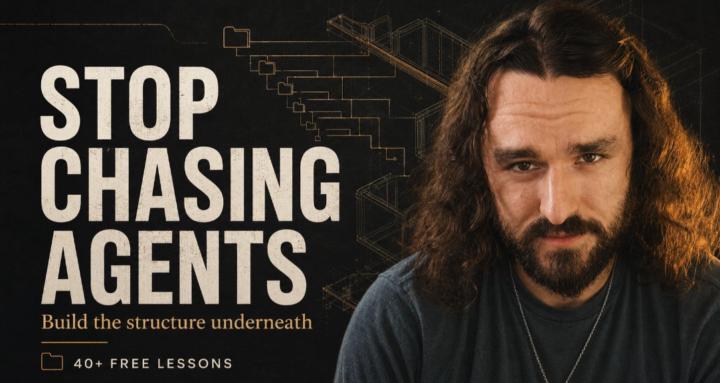
What we give away free beats most paid courses. Build durable AI systems with a Marine vet and Edinburgh researcher. 40+ lessons, growing.
Leaderboard (30-day)
1

+1367
2

+1076
3

+1033
4

+572
5

+566
Powered by