Write something

Mar 11 •
Psalm 91 as a power code: program protection 🛡️🧠🙏
From an NLSP view, Psalm 91 is more than “text”. It’s a state code: words + imagery + repetition = your subconscious learns safety. 🔁🧬 When your system feels safe, it becomes less hackable by fear triggers. 🔒😨 And “quantum physics” here as a lens/metaphor: Your focus is a signal 📡, your state is a field 🌊. The more coherent (calm, grateful) you become, the clearer your perception, decisions, and behavior get. 🧘✨ No proof-claims — just a powerful lever. ✅ Power code (90 seconds, spoken or silent) 🗣️🫧 Replace “God” with “Source / Life / Love” if you prefer. 🌿 I dwell in the shelter of God/Source. 🫧 I am covered and held. 🤍 Fear has no seat in me. 🛑 My mind stays clear, my heart stays calm. 🧠 ❤️I choose trust. I choose peace. 🕊️ Only what serves me may enter my field. 🔐 Mini use ⏱️🛡️ 1. Hand on heart ❤️ 2. 6 calm breaths 🌬️ 3. Repeat the code 3x 🔁 4. Anchor line: I am safe. I am guided. ✅ 👇 Question: Which word works like an instant shield for you? (one word is enough) 🛡️

Apr 28 •
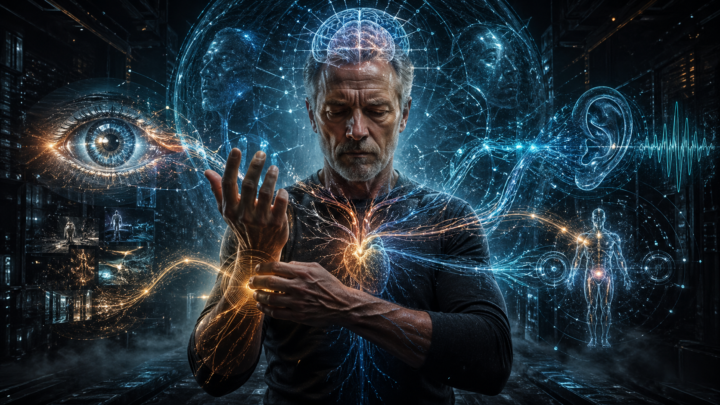
Perception channels: how your system really speaks to you 👁️👂🖐️
We often talk as if thinking happens only “in the head”, as if decisions come purely from logic. But if you look honestly, your whole system is communicating with you all the time — through images, inner voices, body sensations, impulses, mood shifts, tightness, openness. These are perception channels. And they’re not decoration — they’re the language your subconscious uses to run you. From the perspective of neurolinguistic self-programming, this is crucial: you don’t program yourself mainly through pretty thoughts, but through states. Your subconscious learns through repetition, emotion, meaning, and the body. That’s why someone can say “I am safe” a hundred times — and still react under stress exactly like before. The body reveals which program is actually running. Perception channels are like different “ports” into your system. Some people receive more visually: inner images, symbols, scenes, sudden “seeing”. Others are more auditory: a sentence, an inner commentary, a tone, a clear “yes/no” in the mind. Others are strongly kinesthetic: pressure in the belly, warmth, trembling, goosebumps, relaxation, resistance. Add smell, taste, timing, synchronicities — anything can become a signal if you’re quiet enough to notice it. And this is where kinesiology becomes interesting: in your model, it’s the language of an all-knowing subconscious intelligence. More soberly: a communication channel through the body — a form of biofeedback that shows whether your system resonates with a statement, a decision, or a direction. Not as a “proof device” for objective truth, but as a mirror for congruence. And congruence is gold in self-programming. Because the biggest enemy is rarely “lack of knowledge”. It’s the doubt loop. Mental noise. Endless weighing. The mind can split you into a hundred possibilities in 30 seconds. Kinesiology can act like a blade cutting through fog: you ask a clear question, you stay calm, you observe the system’s response. No drama. No debating. Just contact. Just feedback. And suddenly “maybe…” turns into “my system says yes / no / unclear”.
Mar 6 •
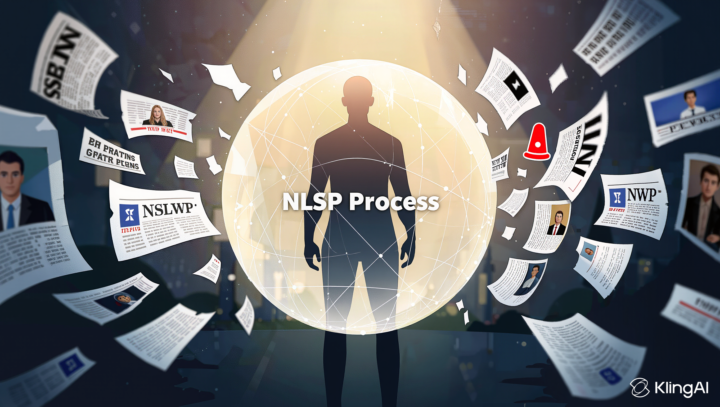
The NLSP process: building resilience against negative information 🛡️🧠📺
Negative information isn’t just “content”. It can behave like mental malware: 🦠 fear in, clarity out. reactivity in, choice out. 😨➡️😵💫 The key is not ignorance. The key is resilience: you decide what stays inside you. 🔐✨ NLSP is your inner security protocol. 🧩🛠️ Simple structure: scan → clean → reprogram → anchor. 1. Scan: where did it dock? 🧲🔎 Pause right after consuming news/content. Ask: What emotion is trying to “move in” right now? 😨😡😞 And: Is this mine… or did I pick it up? 🛰️ 2. Cut: close the backdoor 🕳️🔒 Common entry points: nonstop news, doomscrolling, endless debates, low sleep, overstimulation. 📲💤⚡ Set one rule: news only in fixed windows. Never “in-between”. 🪟📵 3. Clean: discharge heavy energy first 🧼🌬️ Don’t “think” while your system is loaded. Take 3–6 deep breaths, drop your shoulders, soften your gaze. 🌬️🧘 You bring your nervous system back into leadership. 🧠👑 4. Reprogram: replace the script 🔁🧠✨ Choose a new internal command (afformation works great): Why is it easy for me to stay calm, clear, and effective— no matter what I hear? ❓💡 Then add a 1% action: one step you can actually do today. 👣✅ Action turns helplessness into power. 🔥 5. Verify: align the subconscious ✅🧪 If you use kinesiological testing: check what your system accepts and what it rejects. 🖐️ The goal: congruence—so the new program sticks. 🧲 6. Anchor: make it a habit 🧷🛡️ Create a micro-ritual after any heavy input: pause → breathe → replace → 1% act. 🔁 That’s how you become “unhackable” over time. 🔒⚔️ 2-minute MindShield routine (right now) ⏱️🛡️ 1. Stop scrolling 📵 2. 6 breaths 🌬️ 3. One afformation question ❓ 4. One tiny action 👣
Feb 28 •
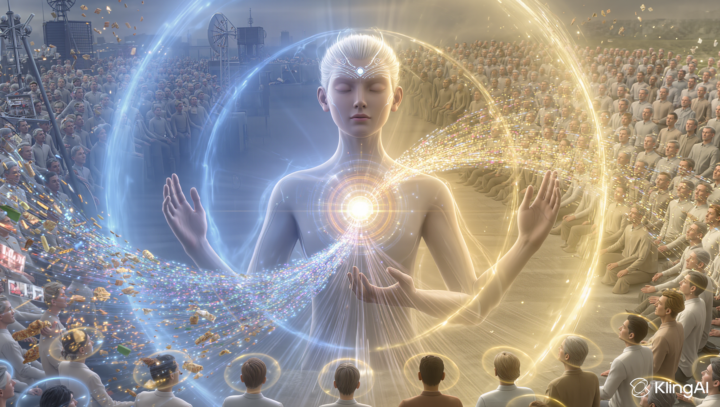
NLSP could be a Gamechanger for a large part of humanity
🌍 An Environment We Were Not Designed For Modern humans live in an environment our nervous systems were never designed to handle. We are exposed to constant streams of information. News cycles, social media, permanent communication, digital overstimulation. Our brains process more data in a single day than previous generations processed in weeks. At the same time, we are surrounded by technology. Wi-Fi, mobile networks, Bluetooth, screens, artificial light, constant connectivity. We cannot truly escape it. Technology is no longer a tool — it has become our environment. The problem is not technology itself.The problem is overstimulation. A constantly activated nervous system remains in a subtle state of alarm. Chronic stress influences sleep, immune function, hormonal balance, and long-term biological processes. Psychoneuroimmunology and epigenetics clearly show: thoughts, emotions, and environmental input affect our physiology. Mental hygiene has never been more important. 🧠 The Invisible Pressure: Information and Energy Noise We often speak about environmental pollution in the physical sense. But what about internal pollution? Negative news cycles. Polarization. Fear-based narratives. Endless outrage loops. The nervous system reacts to perceived threats — even when they are mediated through screens. The body does not perfectly distinguish between physical danger and imagined danger. At the same time, a large part of the population consumes highly processed food. Industrially altered, often nutrient-poor, frequently inflammatory. Gut health influences brain health. Metabolism influences cognition. We are living in a time of continuous sensory and psychological density. And yet we expect clarity, stability, and resilience from ourselves. ⚡ Frequency, Resonance, and Conscious Regulation Physics teaches us that everything vibrates. Matter is condensed energy. On a quantum level, reality is dynamic, not static. Biologically, we function through frequency patterns: brain waves, heart rhythms, neural impulses — all electrical and oscillatory processes.
Feb 27 •
ANCHORING ⚓🧠Self-regulation at the push of a button
An anchor is a stimulusthat triggers a state. A song 🎵 A smell 🌿 A specific word 💬 And suddenly you’re back there. Emotion.Body sensation.Memory. That’s not random.That’s neurobiology. 🧠 Your brain links stimuli to states. In NLSP, we use this consciously. Instead of being triggered randomly,you create your own anchor. ⚓ For example: ✨ Calm ✨ Clarity ✨ Confidence ✨ Focus You intensify the state —with imagery 👁️inner dialogue 👂emotion 💓body awareness 🫁 And link it to a specific gesture. Repetition strengthens the connection. Eventually, the gesture aloneactivates the state. Self-anchoring means: You don’t wait for motivation. You generate it. Question 👇 Which resource would you like to access anytime? 🔥

1-26 of 26