Activity
Mon
Wed
Fri
Sun
Oct
Nov
Dec
Jan
Feb
Mar
Apr
May
Jun
Jul
Aug
Sep
What is this?
Less
More
Owned by Stefan
🧠 Alte Routinen auflösen und neue Gewohnheiten für ein besseres Leben entwickeln. 💕
How to become happy - the easy way.
The Curious Edge
25
Free
Embrace Your Inner Weirdo
124
5.0
Free
Pinterest Skool
5.4k
5.0
$7/m
Krypto.Leichtgemacht
462
Free
AI Tools & Training Club
7.9k
$33/m
The SKOOL Directory
980
5.0
Free
Leadership Skool
1.8k
5.0
Free
The Human Practice
323
Free
THE SKOOL HUB
5.6k
5.0
Free
265 contributions to BlissBrain 💕🧠💥💗

18d •
New home ...
Okay, it threw me off track a little — actually, quite a bit... We moved on September 1, 2026. It was only across our little town, but we’re still far from finished with everything that needs to be done. But we’re getting there. So please forgive me for being away for far too long. I hope you won’t hold it against me too much. I’ll make it up to you... So, what else has been happening? Well, now that we’ve decided to stay in Germany for the time being, I’m becoming more actively involved here and paying closer attention to the way things are developing. Perhaps there is still something for us to do here — a task to take on. Who knows? Maybe you could bring me up to speed on the topics and issues that are currently on your minds. Then, together, we can find a great way to reconnect and get back into the flow. Warm regards, Stefan
1 like • 14d
@Frances Scully 🙏🏼❤️ my home is my mountain of boxes 🤣 hope the furniture will be delivered soon. We bought a new kitchen, but it will arrive next week... time. ⏰
0 likes • Jul 1
Love this 🥰
Jun 28 •
"Why is changing behavior so difficult?"
This question has been on my mind for a long time. Do you have any thoughts on it? I feel like I have a hundred projects on the go—small personal initiatives I started but mostly abandoned whenever they required changing old habits. And don't get me started on the setbacks everyone is familiar with. It’s worth taking a look at James Clear, who has dedicated himself to this very topic. What became strikingly clear to me while reading his book *Atomic Habits* is this: We don't actually need to focus primarily on changing our habits. We need to create an identity that aligns with the new, desired habits. Then, putting them into practice follows almost automatically—and with greater ease. In my professional life, I’m used to setting measurable goals and requiring my clients to do the same. What’s missing—or underdeveloped—is system stability: the process that leads to achieving those goals. A goal dissolves once it’s reached; if it’s missed, it breeds frustration. Neither scenario is particularly motivating. But what if we created a process that aligns with our goals and makes them achievable? I hadn't connected the dots in this way before, but everything is falling into place. NLSP is one possible path. It directly addresses the reshaping of identity and liberation from the limiting programming of one’s personal past. It’s an exciting prospect for me.
5
0

Jun 23 •
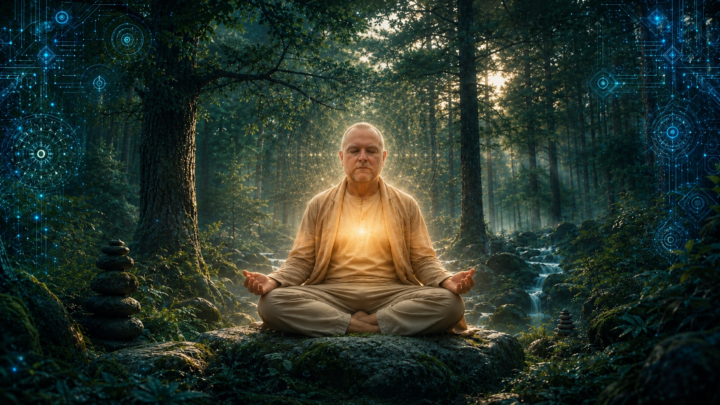
🧲 You were not designed for this "system."
Your body knows it. We live in a perfectly optimized, artificial world. Smart homes, 24/7 light, scheduled productivity. But what I consistently observe is this: the further we distance ourselves from our natural environment, the louder our body’s call for its roots becomes. For generations, we've been conditioned to believe that nature is dangerous and that we need experts and institutions to tell us what's good for us. Yet, in practice, it's clear these systems often follow their own logic—one that isn't always aligned with our well-being. 🔍 3 Observations on Our Alienation (and How to Counter It): - The Pacemaker is Artificial: Your biorhythm isn't governed by the sun, but by alarm clocks, deadlines, and artificial light. This often leads to a feeling of constant exhaustion because your body is fighting its own internal clock. - Safety is an Illusion: We're told to trust the food industry, the pharmaceutical industry, and the state. But anyone who looks behind the curtain quickly realizes that their primary goal isn't always your health, but often the maximization of profit and control. - The Connection is Missing: We've unlearned how to rely on our intuition and the signals from nature. Instead, we seek answers in apps, studies, and from experts, rather than simply walking barefoot across a meadow to feel what it does to us. 💬 QUESTION: Where do you most strongly feel the conflict between the demands of the "system" and your own natural rhythm in your daily life? At what point do you say, "I'm not playing along with this anymore"? ✅ EXERCISE (5 minutes for you): 1. Go outside right now. Whether it's a balcony, a park, or a garden. 2. Close your eyes for 60 seconds and just notice: What do you hear, smell, and feel? (The wind on your skin, birds, the scent of grass?) 3. Post one thing you noticed in the comments below.
0 likes • Jun 23
Archuma is kind of lifestyle ✨🙏
1 like • Jun 23
@Frances Scully 💕 Glad to hear 🥰 good day, little soulsister 🙏
Jun 23 •
News from HeartMath ©️
The transformed world is not something we wait for—it is something we create… #collectiveconsciousness #weareallconnected #compassion #harmony
4
0

1-10 of 265
@stefan-bosebeck-2018
NLSPfounder, DAOcoach, Daoyin yangsheng Gong-Qigong, sound, frequence and harmony.
Active 1d ago
Joined Nov 8, 2025
INTP
Hückeswagen