
Write something

🔥
Mar 18 •
The "False Positive"
1. The Bone-Buffer Effect Bone is a thermal conductor, but it heats up differently than meat. If your probe is touching the bone, or even within 1cm of it, you are getting a "False High" reading. The metal tip is sensing the radiant heat of the bone, not the internal rendering of the collagen. The Fix: Always probe the "Deepest Muscle" exactly halfway between the bone and the surface fat. 2. Cold Spots & Air Pockets Beef ribs are anatomical, not symmetrical. There are pockets of heavy fat (the deckle) and lean muscle. Fat renders at a different rate than protein. If your probe hits a pocket of rendering tallow, the temperature will spike. If it hits a lean patch, it will lag. - The Masterclass Rule: Never rely on one "Read." Probe at least three different spots on the rack. If the middle is 96°C but the end is 91°C, you aren't finished. 3. The "Carryover" Calculation Heat doesn't stop moving the moment you pull the meat from the Kameeldoring coals. This is Kinetic Energy. A massive 3kg rack of ribs will "carry over" another 2°C to 4°C while resting in your cooler box. - The Secret: If you want a final temp of 96°C, pull the meat at 93°C. Let the physics finish the job for you while the meat rests. Masterclass Pro-Tip: Check your "Probe Resistance" more than your screen. When you slide that needle in, it shouldn't just hit a number; it should feel like it's sliding into a jar of smooth Peanut Butter. If you feel a "pop" or a "tug," that’s unrendered connective tissue. Close the lid. A thermometer is a guide; your hands are the judge.
3
0
🔥
Mar 17 •
3-Bone Rule
When you walk into your local slagtery, you’ll see different types of beef ribs: Back ribs, chuck ribs, and the king—The Plate Rib. 1. The Thermal Shield The bone isn't just a handle; it’s a heat sink. In a 9-hour cook at 110°C, the thick rib bone absorbs heat and radiates it slowly into the thickest part of the meat from the inside out. This "dual-direction" cooking is why a bone-in rib is always more succulent than a boneless cut. 2. The Marrow Infusion As the temperature rises, the nutrients and marrow inside the bone start to react with the surrounding connective tissue. This doesn't just add flavor; it contributes to the structural integrity of the "jiggle." Without the bone, the meat would shrink into a tight, dry ball. 3. Identifying the "Short" vs. "Back" - Beef Back Ribs: These come from the prime rib roast area. They have meat between the bones, but very little on top. Great for a quick braai, but they will dry out in a smoker. - Plate Short Ribs: These have a massive "deckle" of meat sitting on top of the bone. This is where the heavy marbling lives. This is the only cut that can survive a 9-hour journey in the Kameeldoring smoke and come out looking like a masterpiece. Masterclass Pro-Tip: Never remove the membrane (the silver skin) from the bone side of a beef rib. Unlike pork ribs, the membrane on beef ribs is structurall. It holds the heavy meat to the bone as it softens. If you peel it off, your masterpiece might literally fall apart and drop into the coals before it’s finished!
3
0
🔥
Mar 13 •
Platrib
AT the beach, we know how to spot a good wave, but do you know how to spot a perfectly rendered Platrib? You have to look for the three signs of a "Finished" rib: 1. The "Bone Pull-Back" Look at your rack. Have the bones "shrunk"? Actually, the bones haven't moved—the meat has. As the collagen turns into liquid gelatin, the muscle fibers retract. If you don't see at least 2cm of clean bone sticking out, that connective tissue is still holding on tight. It’s not ready. 2. The "Peanut Butter" Probe Forget the temperature for a second. When you slide your probe into the meat, there should be zero resistance. Not "a little bit of grab," and not "soft-ish." It should feel like you are sliding a hot needle through a tub of room-temperature Stork margarine. If the meat "clings" to the probe, the fat hasn't fully rendered. 3. The Legendary Jiggle This is the "Wow" factor. Pick up the rack (with your black nitrile gloves, of course) and give it a gentle shake. The meat should vibrate like a bowl of jelly. This is the "Jiggle Test." It tells you that the internal structure has completely broken down. The muscle fibers are now just floating in a sea of rendered tallow and gelatin. Pitmaster Masterclass Tip: If you hit 96°C and it doesn't jiggle, don't pull it! Every cow is different. Sometimes "Done" is 96°C, and sometimes it’s 99°C. Trust the jiggle, not just the screen.
3
0
🔥
Jan 27 •
The Preserve Profile: Engineering a "Sticky-Bark" Hybrid
Most pitmasters use a binder just to make the salt and pepper stick. But when you use jam, you are introducing two powerful culinary agents: High-Concentration Fructose and Pectin. 1. The Pectin "Glue" Pectin is a naturally occurring polysaccharide found in the cell walls of fruits. In jam making, it’s what causes the liquid to "set" into a gel. - The BBQ Effect: When smeared on raw meat, pectin acts as a high-viscosity adhesive. It creates a thicker "film" than mustard. This allows you to apply a much heavier coating of coarse black pepper or granules without them falling off during the first hour of smoke. - Smoke Adhesion: Because pectin stays tacky for longer than water-based binders, it captures more smoke particulates (the aerosols that carry flavor) before the surface eventually dries out. 2. Differential Caramelization Standard table sugar (sucrose) begins to caramelize at roughly 160C. However, the fructose found in fruit jams begins to caramelize much lower, around 110C. - The Benefit: Since most low-and-slow BBQ happens between 107C and 135C, the fruit sugars in the jam are undergoing a slow, deep caramelization for the entire duration of the cook. - The Result: Instead of a dry, crumbly bark, you get a "glassy" bark—a translucent, mahogany crust that has a deep, jammy chew. 3. The Acid-Sugar-Lipid Balance Barbecue is fundamentally a heavy, fatty (lipid-rich) food. Jam introduces two things that fat needs to taste balanced: Sugar and Organic Acids (like citric or malic acid from the fruit). - Using a Peach Preserve on pork or an Apricot Jam on chicken provides a sharp acidity that "cuts" through the grease, making the meat feel lighter on the palate even though it’s incredibly rich. How to Execute the "Preserve Base" Using jam requires a slight adjustment to your fire management to avoid a "sugar burn." - The Thinning Strategy: Straight jam is too thick and will clump. Whisk your jam with a tablespoon of apple cider vinegar or bourbon to loosen the viscosity. You want a "glaze" consistency, not a "toast" consistency.
2
0

🔥
Jan 15 •
The "Sticky" Science: Why your Rib Glaze is Burning (and how to fix it)
Most people "braai" with sauce. They brush it on cold, it drips into the fire, and it burns into a bitter, black mess. In professional Low & Slow BBQ, we don't "sauce"—we Glaze. If you want that high-gloss, finger-sticking finish on your Beef Plate rib, you need to understand the thermodynamics of sugar. 1. The Maillard vs. Caramelization Trap Your beef rib has been cooking at 110°C to achieve the Maillard reaction (savory browning). But most "sticky" sauces are loaded with sugar or honey. Sugar doesn't caramelize until it hits 160°C. If you apply sauce too early, it just sits there, making your bark "mushy." If the pit gets too hot, the sugar bypasses caramelization and goes straight to carbonization (burning). 2. The "Setting" Phase A professional glaze is applied in the final 20 to 30 minutes of the cook. This is called "Setting the Sauce." You want the heat of the smoker to evaporate the water in the sauce, leaving behind a tacky, concentrated lacquer that bonds to the bark. 3. The Umami-Acid Balance (The S.A. Profile) Beef is incredibly rich. A "sweet" sauce alone is a mistake. To cut through that heavy tallow, your glaze needs: - Acidity: Apple Cider Vinegar or local Lemon juice to "brighten" the fat. - Umami: A splash of Worcestershire sauce or soy sauce to bridge the gap between the sugar and the beef. - The "Stick" Factor: Honey or Apricot Jam (a South African favorite) provides the viscosity needed to "cling" to the rib without running off.

1-22 of 22
powered by
skool.com/bbq-beer-and-whiskey-9787
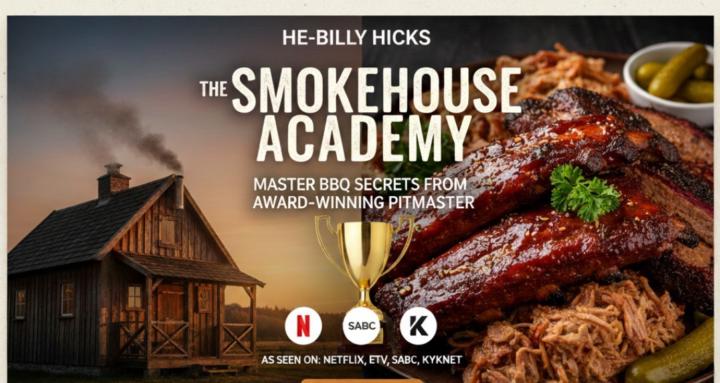
Award-winning pitmaster teaching BBQ, craft beer & whiskey-making. Join He-Billy Hicks' community of makers. Level up your craft. As seen on tv
Suggested communities
Powered by