
3d (edited) • General discussion
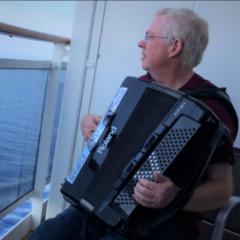
What does Michael do when he can't make videos
Because time alone and quiet is hard to come by. I am about to start going to my car to do this.
But I can ideate, write, read.... and code no matter what.
So I did a thing....
Trainings, Onboarding, better documentation are all priorities and being added to daily.
But in the background my buddy Claude is churning along on a few things...
Next Priorities are marketing, LayoutCrafter (the Vellum/Atticus tool) which I had some layout issues with to get all the extras that Romantasy and modern books now have, images in the backgrounds, fancy chapter headings, sprayed edges, forced edges (neat trick that one), etc. In doing more research on this I came across a few things that tied into some future roadmap items.
I've mentioned this before that I started writing again a few years ago with a fascination of Visual novels created in Ren'Py and then came Ai. About six months ago I started noodling on how to do this easier and write better and WordCrafter.Pro was born and continues to evolve.
I am trying NOT to change much in its base functionality to keep the learning curve light on the basic writing side but instead use the plugins to do the "optional" additions AudioCrafter for audiobooks, BookCrafter as an automated writing tool, the unfinished tools, Layout Crafter for book finishing, ImageCrafter for higher end covers, graphics, and POD or DIY merchandise, MarketCrafter for the full marketing plan and social media mastery, PathCrafter for Interactive/Branching Fiction and the three just research projects so far GameCrafter, VideoCrafter, BookWorlds, and a couple others that are notes on a napkin.
The goal is a one stop shop. We may not do everything here but having to learn one tool that does most helps us all be more productive
So a teaser of my last few days is below. And yes I have been editing furiously two books as well
PathCrafter for interactive and branching fiction. At it's simplest it is a Choose Your Own Adventure book engine. But I'ma glutton for punishment and can't leave it at just that. So you can also create game books with encounters, combat, dice rolls, NPC's with timelines and agendas they follow. Both of these formats can be read/played online or exported as an epub, pdf or html file with the choices on each page and "If you have the lantern go to page 12, Otherwise got ot page 23". The gaming version has extra pages to cover those needs, including a way to generate a random number if you do not have dice. Cool eh?
But remember I got into this to do VISUAL NOVELS. So you can add graphics to the pages as well courtesy of ImageCrafter, Color, Gray Scale or Black and White just like the old CYOA books. But nope, that wasn't enough. Let's add export to Ren'Py and Godot (a gaming engine) to make these into real games and online visual novels. In Ren'Py or Godot minigames, challenges and a bunch of extras could be added to make them even better. I'm more concerned on the working story and creating the Prose side here. Oh and don't forget you can add background music, sound effects, and video clips to some nodes for this.
Prose.. He said Prose. These images below look complex don't they. Well, they are auto generated from the coded story. I created a whole language for this called PathScript (I'm terribly creative with naming). Claude can learn PathScript..and write in it. We have BookCrafter, and we have a Binder we write our own stories in, and we can import anything from such fun places as project Gutenberg and others, and wow BookCrafter can do story hacking and create something totally new from an older story. So what if we could use those sources for creating a Branching or interactive story? Yep, you guessed it. PathCrafter can take an existing story and reverse engineer the Scenes, Locations, Characters, and objects and turn it into a Choose Your Own Adventure. Add choices, sidequests, additional directions to what was a linear storyline. You can automate the original input of the story into the graph and then edit, modify and add from there. Currently designed to handle about 1000 nodes. Most original CYOA books were 60-80 nodes.
But that will be way too long for a printed book, and my story is too complex for this even though this sounds like fun ( and a couple more ways to advertise,market a story, and bring in more income form the initial book). BookCrafter can already change the length of a story but for most of us that would be more turing a novella into a novel than the reverse. And then I remembered the kids versions at different reading levels that companies like Disney produce for their movies. Shorter versions of the stories that hit the highlights. We already have the DragonWorks Content Scale and BookReporter Skillroom. What if we pulled a Captain Planet reference "with our powers combined" and add the ability to change the length and reading level of a story for different audiences..Wow more books from one effort and a bigger audience overall.
So taking this back to PathCrafter we can use the shorter form to create a more manageable branching/interactive version and not have to learn a new language or program anything unless you want to work that way.
Now why did I do this now? Because pieces of this affect other things existing and coming. The code base for the visual graph is the solution to some of the issues holding me back with layout crafter and i needed a better test base than just a printed page and why waste the effort building test cases when I can build something new that tests and exists in the same timeframe.
And all of this combined, gets us Children's picture book versions of longer novels.....ta dah!
Everything stacks forward. To fix one thing keeps spawning others.
Keep the ideas and suggestions flying folks.
8
7 comments
What does Michael do when he can't make videos

skool.com/ai-pro-writers-studio
Write & finish your novel fast with AI author personas for story, prose & marketing. Claude-powered skills for indie authors. Never write alone.
Leaderboard (30-day)
1

🔥
+189
2

+106
3
🔥
+74
4

+65
5

+64
Powered by