🔥
7d • General Discussion 💬
Hybrid Kitchens and Emerging Tech: Transforming F&B Operations in 2027
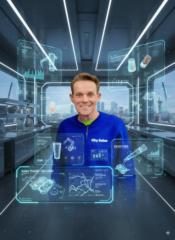
Tuesday 7th of July 2026, the food and beverage (F&B) industry is undergoing a profound transformation driven by the rise of hybrid kitchens, the accelerating adoption of robotics and AI, and evolving operational and workforce strategies. This edition examines the hybrid kitchen model projected for 2027, explores the market forces propelling investments in physical AI and automation, and details the advanced technology stack and operational design imperatives reshaping safe, scalable, multi-channel kitchen environments. Understanding these interconnected trends is essential for leaders aiming to harness innovation while optimizing costs, agility, and guest experience in a competitive landscape.
Executive Snapshot: The Hybrid Kitchen in 2027
The hybrid kitchen concept by 2027 epitomizes a transformative approach that combines traditional kitchen operations with cloud-based, delivery-only platforms. This model maximizes space and resources by serving multiple brands or menus from a single location, thereby reducing overhead and expanding market reach. A good example is Eatch Technologies in Zaandam. For F&B leaders, hybrid kitchens deliver increased operational flexibility and agility to respond swiftly to changing consumer tastes and surging off-premise dining demand. Key implications include enhanced scalability, data-driven menu innovation, and heightened responsiveness to trends such as immersive, personalized dining experiences and wellness-focused offerings. To fully capitalize, organizations must invest in integrated technology systems that unify operational and customer data, enabling seamless coordination across brands and sales channels. These innovations are critical for maintaining a competitive edge as consumer expectations for convenience, quality, and novelty converge Forbes and Hospitality Net.
Market & Adoption Drivers: Why Now?
Multiple converging trends underscore the urgent timing for investing in physical AI and robotics across industries, including F&B. Persistent structural labor shortages compel automation of roles difficult to fill, with robotic welding demand projected to grow at 9–12% annually through 2035 due to labor and quality requirements IndexBox World Robotic Welding Market. Supply-chain complexities demand agile logistics enabled by AI-powered IoT sensors and agentic AI systems that monitor shipments in real-time, optimize inventory, and dynamically adjust workflows to mitigate delays Inbound Logistics. Customer expectations for smarter, physically adaptive systems accelerate Physical AI 2.0 technologies that recover real-world system states for reliable autonomous robotic actions and infrastructure management Business Insider - Physical AI 2.0. Together, labor market shifts, supply-chain pressures, rising consumer expectations, and advances in physical AI architectures signal that 2026–27 is a pivotal moment to adopt robotics and intelligent automation that improve operational efficiency, agility, and innovation.
The Tech Stack on the Pass: AI, Robotics, AR/VR and Connected Systems
Advanced technologies form an interconnected ecosystem optimizing food preparation, service, and operational management in hybrid kitchens:
- Robotic Cooking and Arm Systems: Automated solutions ranging from robotic baristas in South Korea to robotic meal assembly improve labor efficiency and precision within hygienic, temperature-controlled environments. Retrofitting kitchens with such robotics demands compliance with health and safety regulations BusinessWorld Online, Source: Fleet Owner.
- AI, Vision & Predictive Analytics: AI enhances labor scheduling, inventory control, and forecasting, as exemplified by initiatives like the AI Hospitality Alliance. Successful implementation depends on interoperability with property management systems and real-time data flow essential for operational agility Hospitality Net, Source: IT News.
- AR Menus and Front-of-House VR Experiences: Augmented reality menus and VR-enabled dining or staff training offer immersive customer engagement and operational advantages. Companies like VirtualGo provide mixed reality platforms facilitating remote participation and interactive environments. Key challenges include hardware integration and ensuring smooth, intuitive user experiences UploadVR.
- Sensors and IoT: IoT devices monitor equipment, inventory, and environmental factors, enabling predictive maintenance and waste reduction through cloud-connected analytics. Effective integration requires data standardization, secure wireless communication, and ERP compatibility to achieve comprehensive operational control Precedence Research.
Together, these technologies empower business owners to elevate efficiency, boost customer satisfaction, and foster continuous innovation. Careful vendor selection emphasizing scalability, interoperability, and sustainability is critical for maximizing return on investment.
Sources
- BusinessWorld Online – South Korean Shops Turn to Robots, Self-Service to Escape Labor Woes
- CSP Daily News – U-Stop Convenience Shops Meal Deals Rewards App Work Harmony
- Food Business News – McCormick and Co. Benefiting from Reformulation Health Trends
- Fleet Owner – Locus Robotics Expands HelloFresh Cold Storage Automation
- Forbes – Summer Fancy Food Show 2026
- Hcamag – Hidden AI Costs Threaten Workforce ROI, Gartner Warns CHROs
- Hospitality Net – AI Hospitality Alliance Accelerates Responsible AI Adoption
- Hospitality Net – Five Trends Every Hotel Leader Needs to Watch in 2026
- IndexBox – World Robotic Welding Equipment Market Analysis
- Inbound Logistics – Six Technologies Reshaping Logistics Execution
- OpenAI – Mapping AI Job Transitions in the EU
- Precedence Research – Farm Management Software Market
- IT News – KFC Australia Operator Collins Foods Eyes AI for Margin Improvements
- UploadVR – VirtualGo’s Mixed Reality Multiplayer System
- American Ag Network – KIND Snacks Achieves Regenerative Agriculture Sourcing Milestone
- Business Insider – Physical AI 2.0 and the Critical Need for Physical State Recovery
- Gartner – CHROs Must Identify Hidden Workforce Costs to Protect AI ROI
The conclusion, the convergence of hybrid kitchen models, breakthrough robotics and AI technologies, and evolving operations and workforce strategies is poised to reshape the F&B industry landscape by 2027. Leaders who invest strategically in integrating scalable technology stacks, reimagining kitchen design, and managing workforce transitions thoughtfully can unlock significant value in operational efficiency, customer experience, and innovation agility. With consumer preferences and market pressures rapidly evolving, now is a critical time to pilot and scale these hybrid kitchen initiatives to establish sustainable competitive advantages.
12
28 comments
Hybrid Kitchens and Emerging Tech: Transforming F&B Operations in 2027
skool.com/ai-automation-society
Learn to get paid for AI solutions, regardless of your background.
Leaderboard (30-day)
1

🔥
+7662
2

🔥
+7408
3

+6715
4
🔥
+4550
5

🔥
+3607
Powered by