Activity
Mon
Wed
Fri
Sun
Nov
Dec
Jan
Feb
Mar
Apr
May
Jun
Jul
Aug
Sep
What is this?
Less
More
Magnetic Love Collective
70
$15/m
The Potted Garden Society
3.5k
Free
It Girl Academy
1.8k
$29/m
Dr. Mary Oz | Community
78
Free
Day by Day Wellness Club
60.9k
Free
13 contributions to The Potted Garden Society

Dec '25 •
🌱🏡 How to Build a Mini Indoor Greenhouse for Under $25
Winter doesn’t mean your gardening has to slow down. In fact, it’s the perfect season to create a cozy little indoor greenhouse and you don’t need a fancy setup or expensive equipment to make it happen. A mini indoor greenhouse helps you: ✔ germinate seeds faster ✔ grow herbs through winter ✔ give humidity-loving plants a boost ✔ protect tender plants from dry indoor air ✔ keep curious pets away from seedlings ✔ enjoy a tiny tropical oasis (for less than the price of takeout!) And the best part? You can build one for under $25 with supplies you already have or can easily grab at Dollar Tree, Walmart, or a thrift store. Let’s build your tiny indoor garden paradise! 🧰 𝐖𝐡𝐚𝐭 𝐘𝐨𝐮’𝐥𝐥 𝐍𝐞𝐞𝐝 (𝐁𝐮𝐝𝐠𝐞𝐭-𝐅𝐫𝐢𝐞𝐧𝐝𝐥𝐲 𝐋𝐢𝐬𝐭) 𝐎𝐩𝐭𝐢𝐨𝐧 𝐀: 𝐓𝐡𝐞 𝐂𝐥𝐞𝐚𝐫 𝐒𝐭𝐨𝐫𝐚𝐠𝐞 𝐁𝐢𝐧 𝐆𝐫𝐞𝐞𝐧𝐡𝐨𝐮𝐬𝐞 * 1 clear plastic storage bin with lid ($7–$12) * Optional: small wire rack or cooling rack ($1–$5) 𝐎𝐩𝐭𝐢𝐨𝐧 𝐁: 𝐓𝐡𝐞 𝐏𝐢𝐜𝐭𝐮𝐫𝐞 𝐅𝐫𝐚𝐦𝐞 𝐆𝐫𝐞𝐞𝐧𝐡𝐨𝐮𝐬𝐞 * 4–6 inexpensive picture frames ($1 each at Dollar Tree) * Hot glue or super glue * A piece of cardboard or poster board for the base * Optional: small LED puck light or fairy lights 𝐎𝐩𝐭𝐢𝐨𝐧 𝐂: 𝐓𝐡𝐞 𝐒𝐡𝐞𝐥𝐟 + 𝐏𝐥𝐚𝐬𝐭𝐢𝐜 𝐂𝐨𝐯𝐞𝐫 𝐕𝐞𝐫𝐬𝐢𝐨𝐧 * Small wire shelf or tiered rack ($10–$15, often cheaper secondhand) * Clear plastic shower liner or clear tablecloth ($1.25–$3) * Tape or binder clips Any of these become a functional, cute indoor greenhouse without going over budget. 🌡️ 𝐖𝐡𝐲 𝐚 𝐌𝐢𝐧𝐢 𝐆𝐫𝐞𝐞𝐧𝐡𝐨𝐮𝐬𝐞 𝐖𝐨𝐫𝐤𝐬 𝐒𝐨 𝐖𝐞𝐥𝐥 𝐈𝐧𝐝𝐨𝐨𝐫𝐬 A small enclosed space gives plants the three things they’re desperate for in winter: 𝟏. 𝐇𝐢𝐠𝐡𝐞𝐫 𝐡𝐮𝐦𝐢𝐝𝐢𝐭𝐲 Great for ferns, herbs, begonias, calatheas, and seedlings. 𝟐. 𝐒𝐭𝐚𝐛𝐥𝐞 𝐭𝐞𝐦𝐩𝐞𝐫𝐚𝐭𝐮𝐫𝐞 Keeps cold drafts away. 𝟑. 𝐁𝐞𝐭𝐭𝐞𝐫 𝐥𝐢𝐠𝐡𝐭 𝐮𝐬𝐞 Clear walls reflect and hold light longer — especially helpful in December. Plus, everything looks neat, organized, and adorable. 🧪 𝐎𝐩𝐭𝐢𝐨𝐧 𝐀: 𝐓𝐡𝐞 𝐅𝐚𝐬𝐭𝐞𝐬𝐭 𝐁𝐮𝐢𝐥𝐝 — 𝐓𝐡𝐞 𝐂𝐥𝐞𝐚𝐫 𝐒𝐭𝐨𝐫𝐚𝐠𝐞 𝐁𝐢𝐧 𝐆𝐫𝐞𝐞𝐧𝐡𝐨𝐮𝐬𝐞 (Ready in 2 minutes!) 𝐇𝐨𝐰 𝐭𝐨 𝐦𝐚𝐤𝐞 𝐢𝐭: 1. Flip the clear bin upside down (lid on the bottom). 2. Place plants, seed trays, or herbs inside. 3. Prop open one corner for airflow if needed.

1 like • Dec '25
Your post are amazing! Love this group!
Dec '25 •
Question -Looking For Advice!
This was my 1st year gardening and I was figuring out how put the garden beds - to bed lol. Also new homeowner so was looking for best cost effective way to mulch the veggie garden beds. My mom asked her landscaper to not throw out the leaves this year so i could use them but when I opened the bag there's a lot of straw/hay? So it's not from her yard I ended up just using it anyway but now I'm nervous did this other persons yard have poison ivy? Pesticide treatments ? Or maybe it might be fake hay for fall decor? Could use some advice Should I just leave it alone or?
1 like • Dec '25
@Tracey Stack Thank You So Much!!
Dec '25 •
💧🌿 How to Keep Indoor Humidity Up Without Buying a Humidifier
Winter is cozy for people, but not always for plants. Heaters turn on, fireplaces crackle, and suddenly the air inside your home feels as dry as a desert — especially in December and January. Indoor plants start showing signs fast: * Crispy leaf tips * Drooping even after watering * Brown edges * Static-y soil * Slower growth More fungus gnat activity (yes, weirdly, dry air + overwatering cycles invite them) If you’ve ever thought, “My plants hate winter,” it’s probably not the cold, it’s the humidity. The good news? You don’t need a fancy humidifier to make your plants happier. Here are easy, cheap ways to bump up humidity and keep your indoor jungle thriving all winter long. 🌬️ 𝟏. 𝐆𝐫𝐨𝐮𝐩 𝐘𝐨𝐮𝐫 𝐏𝐥𝐚𝐧𝐭𝐬 𝐓𝐨𝐠𝐞𝐭𝐡𝐞𝐫 (𝐈𝐧𝐬𝐭𝐚𝐧𝐭 𝐌𝐢𝐜𝐫𝐨𝐜𝐥𝐢𝐦𝐚𝐭𝐞!) Plants release moisture through their leaves called transpiration. When you cluster them together, they create their own little humid bubble. Place humidity-loving plants together like: * Ferns * Calatheas * Peace lilies * Pileas * Herbs * Spider plants 𝐏𝐫𝐨 𝐓𝐢𝐩: Create one “humidity zone” instead of spreading plants all over the house during winter. 🥤 𝟐. 𝐔𝐬𝐞 𝐭𝐡𝐞 𝐏𝐞𝐛𝐛𝐥𝐞 𝐓𝐫𝐚𝐲 𝐓𝐫𝐢𝐜𝐤 (𝐙𝐞𝐫𝐨-𝐓𝐞𝐜𝐡 𝐇𝐮𝐦𝐢𝐝𝐢𝐟𝐢𝐞𝐫) This is one of the easiest and most effective solutions. 𝐘𝐨𝐮'𝐥𝐥 𝐧𝐞𝐞𝐝: * A tray, saucer, or shallow dish * Pebbles or stones * Water 𝐇𝐨𝐰 𝐭𝐨 𝐝𝐨 𝐢𝐭: 1. Fill a tray with pebbles. 2. Add water to just below the top of the stones. 3. Set your potted plant on top NOT in the water. 4. As the water evaporates, humidity rises right around the plant. This works especially well for herbs and delicate houseplants. 🚿 𝟑. 𝐌𝐨𝐯𝐞 𝐒𝐨𝐦𝐞 𝐏𝐥𝐚𝐧𝐭𝐬 𝐈𝐧𝐭𝐨 𝐍𝐚𝐭𝐮𝐫𝐚𝐥𝐥𝐲 𝐇𝐮𝐦𝐢𝐝 𝐑𝐨𝐨𝐦𝐬 Bathrooms and kitchens are humidity hotspots that are perfect for plants that like moisture. Great candidates for these rooms: * Mint * Basil * Spider plants * Ferns * Aloe * Pothos * Philodendrons Just make sure the room has good natural light or a small grow light. 💦 𝟒. 𝐌𝐢𝐬𝐭… 𝐒𝐭𝐫𝐚𝐭𝐞𝐠𝐢𝐜𝐚𝐥𝐥𝐲 (𝐍𝐨𝐭 𝐀𝐥𝐥 𝐏𝐥𝐚𝐧𝐭𝐬 𝐋𝐢𝐤𝐞 𝐈𝐭!) Misting 𝑐𝑎𝑛 help, but only if done right. 𝐏𝐥𝐚𝐧𝐭𝐬 𝐭𝐡𝐚𝐭 𝐞𝐧𝐣𝐨𝐲 𝐨𝐜𝐜𝐚𝐬𝐢𝐨𝐧𝐚𝐥 𝐦𝐢𝐬𝐭𝐢𝐧𝐠:
2 likes • Dec '25
Super helpful thank you!
Nov '25 •
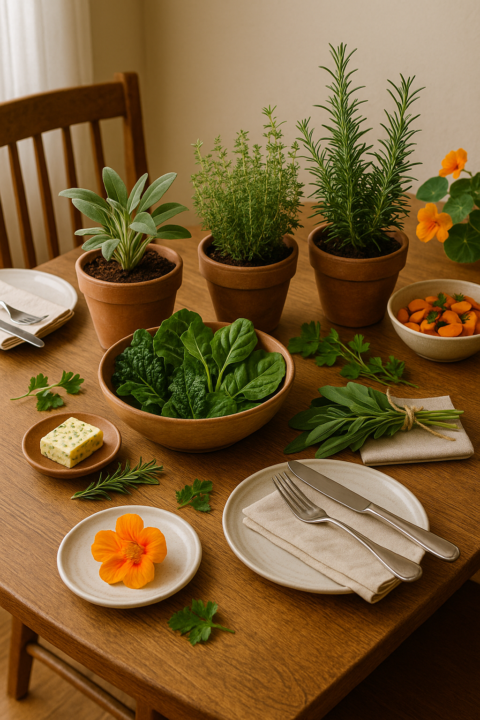
🍂 From Porch to Table: Using Fall Containers for Holiday Meals
As the holidays approach, your container garden may be brimming with the last of autumn’s beauty with herbs, leafy greens, peppers, or even edible flowers. Why let all that goodness fade when you can bring it right to your table? With a little creativity, your porch pots can become the freshest, most flavorful part of your holiday feast. 🪴 𝐒𝐭𝐞𝐩 𝟏: 𝐇𝐚𝐫𝐯𝐞𝐬𝐭 𝐖𝐡𝐚𝐭’𝐬 𝐒𝐭𝐢𝐥𝐥 𝐓𝐡𝐫𝐢𝐯𝐢𝐧𝐠 Cool-season crops and herbs are at their flavorful best in late fall. Look for: * 𝐇𝐞𝐫𝐛𝐬: Sage, thyme, rosemary, parsley, and chives — the backbone of holiday cooking. * 𝐋𝐞𝐚𝐟𝐲 𝐠𝐫𝐞𝐞𝐧𝐬: Kale, spinach, arugula, and mustard greens — perfect for fresh sides or warm sautés. * 𝐑𝐨𝐨𝐭 𝐯𝐞𝐠𝐠𝐢𝐞𝐬: Carrots, radishes, and beets that have sweetened with the chill. * 𝐄𝐝𝐢𝐛𝐥𝐞 𝐟𝐥𝐨𝐰𝐞𝐫𝐬: Calendula, nasturtiums, or pansies to decorate your dishes. Harvest gently and leave enough to keep your plants producing into early winter. 🌿 𝐒𝐭𝐞𝐩 𝟐: 𝐂𝐫𝐞𝐚𝐭𝐞 𝐚 “𝐊𝐢𝐭𝐜𝐡𝐞𝐧-𝐭𝐨-𝐏𝐨𝐫𝐜𝐡” 𝐂𝐨𝐧𝐧𝐞𝐜𝐭𝐢𝐨𝐧 If your herbs and greens are thriving outdoors, move a few smaller pots closer to your kitchen door for easy access during the busy holiday season. Keep a “𝐜𝐨𝐨𝐤’𝐬 𝐜𝐨𝐫𝐧𝐞𝐫” near the back door or porch with a few pots of sage, thyme, and parsley within arm’s reach to make last-minute garnishing simple (and impressive). 💡 𝑃𝑟𝑜 𝑇𝑖𝑝: Bring in small pots of herbs before the first hard freeze and you’ll enjoy fresh flavor all winter long. 🍽️ 𝐒𝐭𝐞𝐩 𝟑: 𝐓𝐮𝐫𝐧 𝐘𝐨𝐮𝐫 𝐇𝐚𝐫𝐯𝐞𝐬𝐭 𝐢𝐧𝐭𝐨 𝐇𝐨𝐥𝐢𝐝𝐚𝐲 𝐌𝐚𝐠𝐢𝐜 🧈 𝐇𝐞𝐫𝐛 𝐁𝐮𝐭𝐭𝐞𝐫 𝐁𝐥𝐞𝐧𝐝 Mix softened butter with finely chopped herbs (rosemary, thyme, sage). Spread on rolls, melt over roasted veggies, or use to baste your turkey. 🥗 𝐖𝐚𝐫𝐦 𝐇𝐚𝐫𝐯𝐞𝐬𝐭 𝐒𝐚𝐥𝐚𝐝 Combine wilted spinach or kale with roasted carrots and radishes, a drizzle of olive oil, and a sprinkle of sea salt. 🌸 𝐄𝐝𝐢𝐛𝐥𝐞 𝐅𝐥𝐨𝐰𝐞𝐫 𝐆𝐚𝐫𝐧𝐢𝐬𝐡 Top desserts or salads with nasturtiums or pansies for a pop of seasonal color. 🌿 𝐅𝐫𝐞𝐬𝐡 𝐓𝐚𝐛𝐥𝐞 𝐃𝐞́𝐜𝐨𝐫 Don’t stop at food! Use trimmed herb sprigs and colorful fall leaves to decorate place settings or tie onto napkins with twine for a rustic, garden-inspired touch.
0 likes • Nov '25
Great Post! Perfect timing!
Nov '25 •
🌿 Best Windowsill Spots for Herbs and Greens All Winter Long
When frost settles outside, your gardening days don’t have to end... they just move indoors! A sunny windowsill can become a thriving mini-garden for fresh herbs and leafy greens all winter long. The trick is choosing the right spots in your home so your plants stay happy, healthy, and harvest-ready. ☀️ 𝐒𝐭𝐞𝐩 𝟏: 𝐊𝐧𝐨𝐰 𝐘𝐨𝐮𝐫 𝐋𝐢𝐠𝐡𝐭 Sunlight is the number-one ingredient for indoor growing success. * 𝐒𝐨𝐮𝐭𝐡-𝐟𝐚𝐜𝐢𝐧𝐠 𝐰𝐢𝐧𝐝𝐨𝐰𝐬get the most consistent light all day. Perfect for sun-lovers like basil, thyme, and rosemary. * 𝐄𝐚𝐬𝐭-𝐟𝐚𝐜𝐢𝐧𝐠 𝐰𝐢𝐧𝐝𝐨𝐰𝐬 catch gentle morning light. This is great for leafy greens like lettuce, spinach, and arugula. * 𝐖𝐞𝐬𝐭-𝐟𝐚𝐜𝐢𝐧𝐠 𝐰𝐢𝐧𝐝𝐨𝐰𝐬 offer strong afternoon light, ideal for chives and parsley. * 𝐍𝐨𝐫𝐭𝐡-𝐟𝐚𝐜𝐢𝐧𝐠 𝐰𝐢𝐧𝐝𝐨𝐰𝐬 tend to be dim in winter. If that’s all you have, supplement with a small LED grow light to keep your plants perky. 💡 𝐏𝐫𝐨 𝐓𝐢𝐩: A mirror or reflective tray behind your pots can bounce extra sunlight back onto your plants! 🌱 𝐒𝐭𝐞𝐩 𝟐: 𝐏𝐢𝐜𝐤 𝐭𝐡𝐞 𝐑𝐢𝐠𝐡𝐭 𝐇𝐞𝐫𝐛𝐬 & 𝐆𝐫𝐞𝐞𝐧𝐬 Some herbs are winter champions, thriving in cooler indoor temperatures and lower light. Try these dependable favorites: * 𝐏𝐚𝐫𝐬𝐥𝐞𝐲: Happy in bright, indirect light; harvest outer leaves first. * 𝐂𝐡𝐢𝐯𝐞𝐬: Fast regrower that loves cool air and sunlight. * 𝐓𝐡𝐲𝐦𝐞: A hardy, compact herb that thrives in sunny spots. * 𝐌𝐢𝐧𝐭: Tolerates shade and adds freshness to teas and recipes. * 𝐒𝐩𝐢𝐧𝐚𝐜𝐡 & 𝐋𝐞𝐭𝐭𝐮𝐜𝐞: Shallow-rooted and quick to sprout — perfect for small pots! * 𝐀𝐫𝐮𝐠𝐮𝐥𝐚: Adds a peppery bite and does well in cooler windows. 🌿 𝐒𝐭𝐞𝐩 𝟑: 𝐂𝐨𝐧𝐭𝐫𝐨𝐥 𝐭𝐡𝐞 𝐈𝐧𝐝𝐨𝐨𝐫 𝐂𝐥𝐢𝐦𝐚𝐭𝐞 Even with sunlight, the wrong indoor conditions can stress plants. * 𝐀𝐯𝐨𝐢𝐝 𝐡𝐞𝐚𝐭 𝐯𝐞𝐧𝐭𝐬 𝐚𝐧𝐝 𝐝𝐫𝐚𝐟𝐭𝐬. They dry plants out fast. * 𝐊𝐞𝐞𝐩 𝐭𝐞𝐦𝐩𝐞𝐫𝐚𝐭𝐮𝐫𝐞𝐬 𝐛𝐞𝐭𝐰𝐞𝐞𝐧 𝟔𝟎–𝟕𝟎°𝐅. Cooler nights mimic outdoor conditions and encourage steady growth. * 𝐀𝐝𝐝 𝐡𝐮𝐦𝐢𝐝𝐢𝐭𝐲. Place pots on pebble trays with water or mist occasionally — especially when indoor heat is running. 💧 𝐒𝐭𝐞𝐩 𝟒: 𝐖𝐚𝐭𝐞𝐫 𝐋𝐢𝐠𝐡𝐭𝐥𝐲, 𝐁𝐮𝐭 𝐑𝐞𝐠𝐮𝐥𝐚𝐫𝐥𝐲 Winter air dries out soil faster than you might expect, but overwatering can still sneak up on you.

1 like • Nov '25
Love this!
1-10 of 13

@stephanie-ozegovich-5781
-Long Island | NY
-Director of Marketing at Dr. Mary Oz
Active 31d ago
Joined Oct 23, 2025
Powered by