Activity
Mon
Wed
Fri
Sun
Dec
Jan
Feb
Mar
Apr
May
Jun
Jul
Aug
Sep
Oct
Nov
What is this?
Less
More
Oasis Builders
176
Free
3 contributions to Oasis Builders

🍀
Jul 4 •
A Forgotten Gardening Treasure from 1863
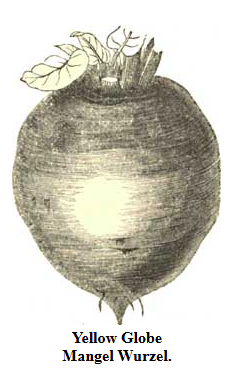
The Field and Garden Vegetables of America was published in 1863 by horticulturist Fearing Burr Jr. It contains descriptions of nearly 1,100 varieties of vegetables, along with growing instructions, seed information, culinary uses, and observations collected from American and European growers of the time. The entire book is now in the public domain and can be read online for free. What I found most interesting is that this wasn't written for commercial agriculture—it was written for everyday gardeners who wanted to become more knowledgeable and self-sufficient. Some of the topics covered include: 🌿 Detailed descriptions of heirloom vegetable varieties 🌿 Seed-saving information and how long different seeds remain viable 🌿 Growing recommendations for different climates and soils 🌿 Which varieties were considered the most productive, flavorful, or hardy 🌿 Medicinal and culinary herbs commonly grown in home gardens 🌿 Mushrooms, edible fungi, peppers, tomatoes, beans, peas, squash, onions, root crops, and much more While some recommendations have naturally changed over the last 160+ years, much of the practical gardening wisdom is still surprisingly relevant today. It also serves as a reminder that our ancestors carefully selected vegetables for flavor, storage ability, seed production, hardiness, and nutrition—not simply for shipping well across the country. If you enjoy gardening, homesteading, seed saving, or learning about heirloom varieties, this is definitely worth bookmarking. It's an incredible snapshot of what American gardens looked like in the mid-1800s. 📖 You can read the entire book for free here: https://www.gutenberg.org/cache/epub/21682/pg21682-images.html Have any of you grown heirloom varieties that have been passed down through your family? I'd love to hear what some of your favorites are!

2 likes • Jul 8
This is great!!! Thank you for sharing
Jun 17 •
Some Herbs Build Slowly
Last week we talked about what an herb is doing in the body. Now we need to add one more layer. Some herbs are gentle supports. They are not always used because something is wrong right now. They are used because they help the body stay nourished, steady, and resilient over time. Nettle is a good example. It is mineral-rich and often used when the body feels run down or depleted. Oatstraw is another steady herb. It supports the nervous system in a slow, nourishing way. Rosehips can bring gentle daily support through food-like nourishment. These herbs are more like compost in the garden. We do not add compost and expect the whole garden to change overnight. We use it because it helps build the ground. This week, pick one gentle herb and ask: Would this herb be useful as steady support, or am I expecting it to act like a quick fix? A strong home apothecary starts with simple herbs we can understand and use with care.
1 like • Jun 19
Can you share a list of gentle herbs please. I fel as though I'm in way over my head, but I really do want to learn.
May 27 •
Older Herbal Maps and the Bigger Picture
Constitution is the larger pattern, and different herbal traditions use different maps to help us read that pattern. Doshas are one map from Ayurveda. They use Vata, Pitta, and Kapha to describe patterns such as dryness, heat, heaviness, movement, intensity, dampness, and stability. There are also older humoral ways of observing people and nature. Instead of focusing on the old temperament names, we can explain the patterns more simply. Some people tend toward heat and intensity. Others tend toward moisture, warmth, and fullness. Some tend toward coldness, dryness, and inwardness. Others tend toward coldness, dampness, and heaviness. Traditional Chinese Medicine gives another deep map. It looks at balance through warmth and cold, dryness and dampness, excess and deficiency, movement and stagnation, fluids, energy, blood, and the way body systems work together. All of these maps are trying to help us slow down and observe. Constitution as the larger pattern. Body-system observation to help us notice what is happening in daily life. Tissue stateto help us see what condition the tissues are showing. Herbal energetics to help us match the qualities of the herb to the person. Older traditions remind us that balance does not look the same for everyone. For family herbalism, this keeps us humble. We are not trying to become doctors overnight, and we are not replacing medical care. Herbs can interact with medications, some herbs are not safe during pregnancy or certain health conditions, and serious symptoms need proper medical guidance. The goal is not to memorize every map at once. The goal is to observe better, choose herbs with more care, and learn how to work with the body instead of forcing it.
1 like • May 28
Thank you Jim for all this education, it really is fascinating. What is Our Peaceful Liberation?
1-3 of 3

@robyn-kielsa-6417
I love gardening, reading, walking and I'd love to have a compost someday!! And i live in MN!
Online now
Joined May 25, 2026
Rush City