Activity
Mon
Wed
Fri
Sun
May
Jun
Jul
Aug
Sep
Oct
Nov
Dec
Jan
Feb
Mar
Apr
What is this?
Less
More
Memberships
AI Automation First Client
1.5k members • Free
Max Business School™
264.5k members • Free
AI Automation Society
324.6k members • Free
120 contributions to AI Automation Society

💎
⭐
10h •
🚀New Video: Seedance 2.0 + Claude Code Creates $10k Websites in Minutes
Seedance 2.0 just dropped and it's a game changer for web design. In this video I show you how to use it to generate looping background videos, then feed those into Claude Code to build a full, modern website from scratch. You'll see the whole workflow from image generation to video prompting to deploying a live site with GitHub and Vercel. No design experience or production budget needed.

4 likes • 10h
@Fabrice Boulben
10 likes • 10h
@Nate May Sleep well, Nate! We’ll be here when you wake up (and the AI tools will be even faster by then). 😴
💎
⭐
1d •
$489 off your annual membership (CLOSED)
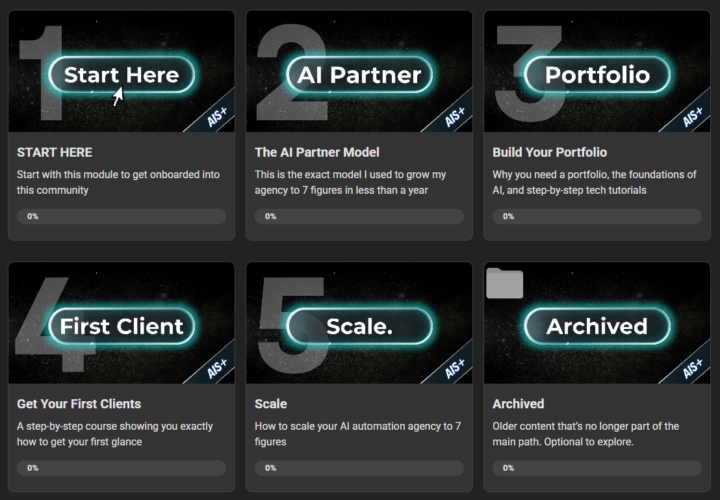
Last day to save a bunch of money on AIS+ Here's what's inside: - 4 Claude Code courses (build real automations step by step) - Get Your First Client (warm outreach, Upwork, the full breakdown) - The AI Partner Model (the business model behind my million-dollar agency) - $3M+ in exclusive tool deals - 7-day money back guarantee You can still join after tonight, but you'll pay $489 more for the exact same thing. Don’t let that happen. 👉 $489 off your annual membership (expires tonight) 👈 - Nate
2 likes • 22h
@Nate Herk thanks

1d •
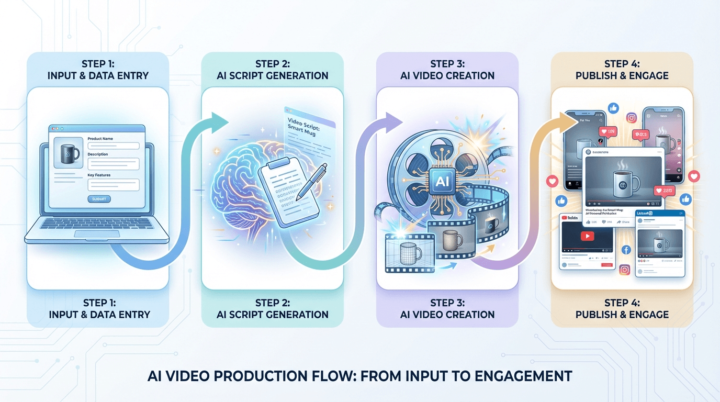
What Actually Happens Inside an AI Video Automation System (Step by Step)
A lot of people hear "AI video automation" and imagine something complicated or futuristic. But the actual mechanics of how these systems work are surprisingly straightforward once you see them laid out. Here's a plain-English breakdown of what happens from start to finish. It starts with your product information. You log into a client portal and enter the basics: the name of your product or service, a photo, a description of who your ideal customer is, the main features or benefits you want highlighted, and the kind of setting or mood you want for the videos. Think of it like filling out a creative brief — except instead of handing it to a human team, you're feeding it to an intelligent system. Once that information is submitted, the first AI kicks in. A language model reads your brief and writes a short video script tailored to your target audience. It knows how to write for short-form social media — punchy hooks, conversational language, clear product mentions, and a natural call to action. It also generates a detailed visual prompt that describes exactly what the video should look like: the person, the environment, the camera angle, the lighting, the product placement. That script and visual prompt then get handed off to a video generation model. These are the same type of AI models that major tech companies have been developing — they can generate realistic video clips from text descriptions. The model takes the prompt, references your product photo, and produces a video that looks like a real person filmed it on their phone. While the video is being generated (which can take anywhere from a few seconds to a couple of minutes depending on the model), the system automatically checks back until it's finished. Once the video is ready, it gets stored and linked back to your campaign in the portal. From there, it can be reviewed, approved, or automatically queued for posting. The entire process — from brief to finished video — happens without any human intervention. And because the system can loop through multiple products, multiple scripts, and multiple visual styles, it doesn't just make one video. It can produce a steady stream of unique content, every single day, across every platform your business uses.
0 likes • 1d
Clear breakdown, this is essentially a modular pipeline combining LLM based scripting, prompt engineering, and video diffusion models, and the real power comes from scaling it into a repeatable content generation system rather than one off video creation.

1d •
Your Competitors Are Already Using AI Voice Agents. Are You?
If you're an agency already offering voice AI - we have a partner program built for you. 👇 Revenue share + white-label access. Plug Convoi.ai into your existing stack, brand it as your own, and earn on every minute your clients use. No competing. Just more margin. Now for everyone else : Every missed call is a missed sale. And most businesses are missing more than they think. After 5pm? Missed. Lunch break? Missed. All lines busy? Missed. Weekend? Missed. The lead didn't wait. They called your competitor and booked with them instead. AI voice agents fix this permanently. ✅ Picks up every call - 24/7, 365 ✅ Qualifies leads in real time ✅ Books appointments on the spot ✅ Follows up automatically ✅ Sounds genuinely human No sick days. No off hours. No missed calls. For business owners: you're already spending on ads and referrals to generate leads — don't let them slip through because no one picked up. We built Convoi.ai around exactly this. No setup cost, 500 free minutes to pilot it with zero risk. Drop a comment or DM me - whether you're an agency looking to partner or a business ready to stop missing calls. 👇
0 likes • 1d
AI voice agents are becoming a strong competitive advantage in service based businesses, especially for capturing missed calls and after hours leads. The real differentiator will be reliability in real environments, not just demos.

1d •
Just started my YT channel
Hey everyone! Just started my YT channel where I'll be talking about AI/Tech space. Want to make more niche content instead of general news content that everybody posts. Just published one of the first videos about how you could 2x your business without a single new hire. Check it out 👀
0 likes • 1d
Strong direction, niche focused AI content will outperform generic tech news if you stay consistent and keep your examples practical and results driven. The key now is improving clarity and building one recognizable content style over time.
1-10 of 120

@nabeel-babar-7448
Helping businesses automate operations using AI (Chatbots, RAG, Workflow Automation) Open to collaborations and real-world projects
Active 3h ago
Joined Apr 2, 2026
Powered by