Activity
Mon
Wed
Fri
Sun
Dec
Jan
Feb
Mar
Apr
May
Jun
Jul
Aug
Sep
Oct
Nov
What is this?
Less
More
Owned by Markus
Top 1% Health
392
5.0
$49/m
Endless Evolution w/ Duffin
3.1k
Free
CourseBuild
335
Free
Castore: Built to Adapt
1.3k
5.0
Free
Perma Resilience
1.2k
$7/m
Skoolers
148k
Free
The TRT Academy
309
5.0
$19/m
7 contributions to Castore: Built to Adapt

Feb 5 •
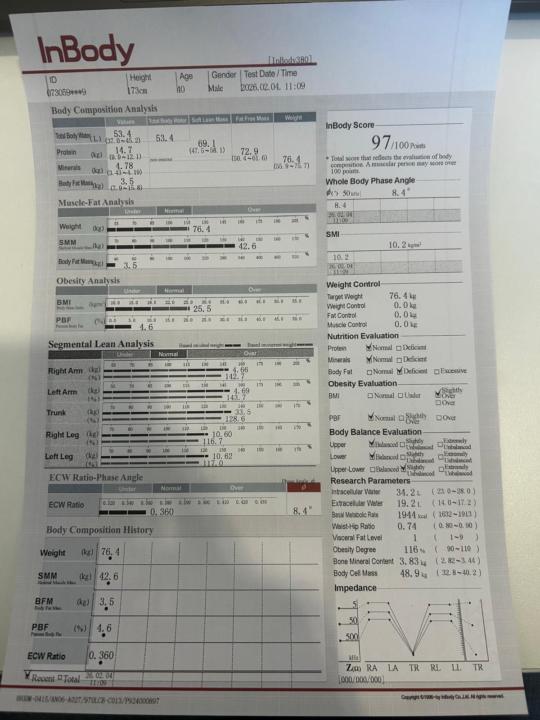
My Recent InBody Results
I did an InBody scan yesterday. I've never done one before. I think it underestimates my body fat, but it'll be interesting to compare with a DEXA scan in a couple of weeks. I'd guess maybe 8-10%. Any comments?
0
0

Jan 31 •
Carbs vs No Carbs on Retatrutide Here’s What Everyone’s Missing
This Retatrutide carbs vs no-carbs discussion is a perfect example of the kind of work we’ll be doing inside the Cellular Intelligence Circle. I am attaching a video so you guys can get a sense of what to expect. Not hot takes. Not protocols copied from the internet. Not arguing teams or tribes. Instead, I’ll show you how I actually think. How I zoom out, identify what system is really being affected, and trace decisions back to first principles like cellular energetics, redox balance, signaling hierarchy, and context. You’ll see how to move beyond surface-level debates and start asking better questions. The kind of questions that cut through hype, confusion, and false certainty. The goal of the Circle isn’t to tell you what to think. It’s to teach you how to think for yourself. If you’re tired of conflicting advice, overconfident influencers, and protocols that work in theory but fall apart in real humans, this community is built for you. We’ll break down topics like peptides, metabolism, training, recovery, fat loss, and longevity in a way that connects the dots instead of fragmenting them. We kick off in February, and each month will center around a focused agenda designed to build real understanding, not just information overload. Members will get long-form breakdowns, case studies, monthly live Q&A discussions, and practical frameworks they can actually apply. If this video made you stop and rethink the question instead of picking a side, you’re exactly who this was built for. More details coming soon…. The Cellular Intelligence Circle launches February.

1 like • Feb 1
@Anthony Castore Great general response to include in any carnivore diet debate.

Jan 11 •
Can SLU cause gyno ?
This question keeps me worried all the time. Alex Kikel mentioned it multiple times. That through receptors crass-talk it can do it. What's your personal opinion on it? Is it possible technically ? Do you know someone who suffered from gyno caused by SLU ?
2 likes • Jan 12
I've never seen it.

Jan 3 •
How much do you agree with this?
@Anthony Castore As far as the nutrition on certain days https://youtu.be/roB4KfR-_hg?si=ry06iHvv5ta2Y2q3
1 like • Jan 8
@Curtis Smith I eat 400-600 grams of carbs per day and have been doing so for 20+ years and my fasting insulin is below the detectable limit with an HbA1c of 4.6. Carbs are not the enemy, poor metabolism is.
Jan 7 •
Part 5: Sleep, Rewritten: Why Kids Sleep, Adults Don’t, and How to Restore the Signal
Sleep is not passive. It is one of the most energy-demanding things the body does. Repair, detoxification, memory consolidation, immune recalibration, and cellular cleanup all require ATP. This is where aging quietly sabotages sleep. As cells lose efficiency, sleep becomes harder to enter and harder to sustain. Children sleep well because their mitochondria are powerful, flexible, and responsive. Energy production is efficient. Waste is cleared quickly. Signals are clean. Adults carry years of oxidative stress, inflammation, and metabolic strain. Mitochondria still work, but they work at a higher cost. Every cell has to decide how to allocate energy. When energy is abundant, repair is prioritized. When energy is scarce or inefficient, survival comes first. Sleep sits downstream of that decision. As mitochondria age, several things happen at once. Electron transport becomes less efficient. More reactive oxygen species are generated per unit of ATP. Redox balance shifts. The cost of maintaining membrane potential rises. Cells become more sensitive to stress. This matters because sleep requires coordinated downshifting across the entire system. If cells are struggling to maintain basic function, they resist the drop in activity that sleep demands. Think of it like an old engine. When it runs well, you can idle smoothly. When it is worn, idling causes stalling. The system compensates by keeping the RPMs slightly elevated. That compensation feels like light sleep, fragmentation, or early waking. Inflammation further disrupts sleep. As people age, low-grade inflammation becomes more common. Inflammatory signals stimulate the brain and alter neurotransmitter balance. The brain becomes more reactive. Sleep becomes lighter. Children have lower baseline inflammation. Their immune systems are adaptive, not chronically activated. Adults carry unresolved immune activation from stress, poor sleep, infections, gut issues, and metabolic disease. Sleep both suffers and contributes to this cycle.
0 likes • Jan 8
@Dr, Randy Smith I consider 1-MNA more potent than 5-amino-1MQ.
0 likes • Jan 8
I actually contributed to a paper on NNMT, MNA, exercise, and fasting during my biomedical studies way back when: https://pubmed.ncbi.nlm.nih.gov/29445118/
1-7 of 7
@markus-mattiasson-1313
MSc in Biomedical Science, Health Coach, Functional Medicine Educator, Independent Researcher, Student of Life
Active 11h ago
Joined Dec 15, 2025
Powered by