Activity
Mon
Wed
Fri
Sun
May
Jun
Jul
Aug
Sep
Oct
Nov
Dec
Jan
Feb
Mar
Apr
What is this?
Less
More
Memberships
Construction Contractors Hub
1.8k members • Free
4 contributions to Construction Contractors Hub

11h •
Do you make decisions guided by Earned Value?
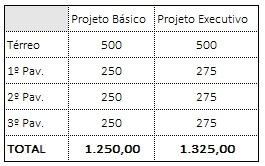
Currently, cost control in construction projects frequently uses the ABC/M (Activity Based Cost Management) methodology. This approach tracks expenditures from specific activities, represented by verbs, through to the project's final deliverables. This method makes the cost structure of a construction project more transparent and enables a variety of interpretive analyses of the values. One such analysis is Earned Value Analysis (EVA), which compares the construction schedule and budgeted values against actual expenditures. In this insight, we will conduct a case study demonstrating the possible interpretations of an Earned Value Analysis, showing how it can be useful in decision-making and construction project management. Basic Concepts of Earned Value Analysis Before diving into the case study, it is necessary to understand some fundamental concepts of Earned Value Analysis: - BCWP (Budgeted Cost of Work Performed) or EV (Earned Value): The percentage of actual quantity completed multiplied by the budgeted cost of the work item. - ACWP (Actual Cost of Work Performed) or AC (Actual Cost): The real cost of executing the work item for the percentage completed. - BCWS (Budgeted Cost of Work Scheduled) or PV (Planned Value): The percentage of elapsed time multiplied by the budgeted cost of the work item. - CPI (Cost Performance Index): The cost performance index, calculated as EV / AC. - SPI (Schedule Performance Index): The schedule performance index, calculated as EV / PV. Note: Since both performance indicators use Earned Value as the numerator, values above 1 indicate favorable performance. Case Study: Scenario: A construction company is building three identical buildings and the time has come to contract masonry services. All site engineers received the same schedule and budget for execution. However, there is a difference in masonry quantities between the basic design and the executive design, as shown below: - Masonry Quantities - Contractual Budget - Construction Schedule
1
0
2d •
The Monte Carlo Machine
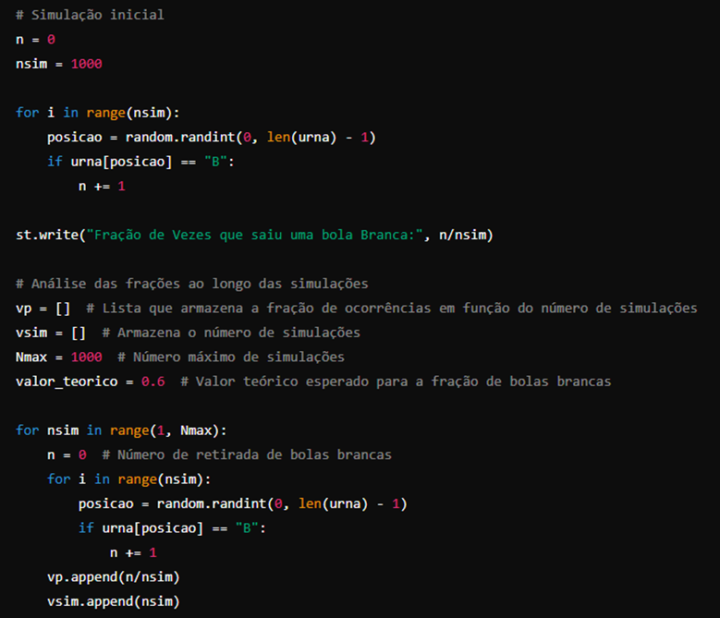
In physics, there is the many-worlds interpretation of quantum mechanics, which holds that the universe branches like a tree at every moment. What we are experiencing right now is just one of many possible worlds. Taking this idea to the extreme, whenever there are countless viable possibilities, the world splits into multiple universes — one for each different possibility. The Monte Carlo method, in short, consists of creating hundreds, thousands, or even millions of artificial histories based on input variables. We will see in our Insight how the Monte Carlo engine is capable of discovering, by brute force, solutions that mathematics would solve through elegant equations. Extrapolating to our everyday scenarios, we can use this method to estimate and quantify risks, as well as understand the probabilities of possible outcomes. Probability by "Brute Force": Imagine we have an urn with 6 white balls and 4 black balls, totaling 10 units. What would be the probability of drawing a white ball? Simple! 6/10 = 60%. But let's suppose that for some reason this mathematical equation is not so straightforward to apply, and we decide to find out the probability using the Monte Carlo method instead. First, we will draw a single ball from the urn. At that point, we will note whether the ball drawn is white or black. Then we will repeat the process, but this time the draw will be performed twice, calculating the fraction of white balls among those drawn. We will continue in this way, increasing the number of draws to three, four, and so on, until we reach 1,000 draws. Doing this by hand would be very slow, but for a computer, all that is needed is a loop — and for that, we can use Python. This process allows us to see how, with a sufficient number of simulations, the Monte Carlo method gives us an answer that closely approximates reality, even when the exact calculation is complex. With this, we are able to estimate probability in a practical and intuitive way. Applying the Method in Cost Engineering:
1 like • 2d
@Tim Fairley Thank you!

Jan 24 •
Introduce Yourself
I'm keen to hear who everybody is, and what their goals are I assume you already know who I am. But if you don't I'm Tim. I worked for 8 years for big contractors on road, rail, renewable energy projects. I've always worked for head-contractors. I recently worked for some smaller contractors as a consultant when I left my job doing estimating and contract management. It was good, but I found it hard to see a path to scale (other than just starting a contracting business myself) So I instead decided to build software, and found that that's 100x harder than I thought and a very easy way to lose money

1 like • 10d
Hello everyone, I am a Contracts Manager based in Brazil, currently working for a project management firm that represents the owner’s side. I am a Civil Engineer and a Certified Cost Professional (CCP) by AACE International. Throughout my career, I have been involved in vertical construction projects (buildings), but most of my experience is in logistics warehouse developments. Nice to meet you all.
1 like • 10d
Hi @Tim Fairley , thanks! Yes, I definitely recommend the Certified Cost Professional (CCP). It’s an excellent certification that brings a very strong foundation in cost engineering. Beyond the technical knowledge, becoming a member of AACE International also gives you access to a wide range of recommended practices that are extremely useful for real day-to-day situations, especially for professionals working with planning and cost control. For me, it has been very valuable both from a technical perspective and for structuring decisions in projects.
10d •
WBS for Logistic Warehouses
Hey everyone, good afternoon. I work with logistics warehouse construction in Brazil and one thing that always bothered me is the enormous effort required to structure a WBS. With that in mind, I worked together with Claude to build a skill that solves this problem. I basically taught it all the construction logic we use day to day — longitudinal advancement, quadrant division based on bay counts, floor slab sequencing with dock border strips poured last, items that are independent of docks like fire doors and louvers, and even L-shaped warehouse geometries. Everything aligned with AACE International Recommended Practices. The skill starts from a questionnaire of about 30 questions about the project and generates the complete WBS, standardized and ready to import into MS Project or Primavera. The practical result is that a task that used to take me around 48 hours as a planner now takes about 30 minutes between answering the form and validating the output. I've already tested it on warehouses from 12,000 to 44,000 m², crossdocking and single-dock layouts, with different configurations of annexed buildings and external areas. The most interesting part is that Claude doesn't replace the planner's expertise — it learns and replicates the logic we normally carry only in our heads. The next step is building a second skill for activity logic (predecessors and successors), turning the WBS into a fully sequenced schedule. If anyone is interested in discussing this further, I'm happy to connect.
1-4 of 4