Activity
Mon
Wed
Fri
Sun
Nov
Dec
Jan
Feb
Mar
Apr
May
Jun
Jul
Aug
Sep
What is this?
Less
More
Redirect K9s
98
Free
The Detection Dog Lab
935
5.0
Free
16 contributions to Redirect K9s
Aug 26 •
Should Faux Scents Be Used In Counter Conditioning/Fulfillment For Working Canines?
For those that may be unaware, which I imagine won’t be many, faux scents are bottles of liquid that you can get from a hunting store that is supposed to mimic the real thing. They have scents such as rabbit, deer, hog, various birds and fox just to name a few. The short answer to the question at hand is no especially if you have a dog that does conservation work or off leash work around potential wildlife. It is tempting to think that “if I just associate this exciting odor with my dog’s toy that should be enough to fulfill his desire to go after the real thing”. While I’m sure there’s a dog out there that could put two and two together in that context the vast majority of dogs with a high desire to SEEK out interesting things, such as wildlife, may not. This is especially true if a dog’s SEEK is focused more on wildlife instead of their target odor whether through distraction or immaturity. The ability to have a dog successfully understand and accept the replacement without any bleeding towards the real thing will decrease when the dopamine response of what they really are interested in (wildlife) is paired with an outlet that allows them to practice the unsafe portion of the Predatory Motor Pattern (chase, grab-bite, kill-bite) especially without the completion of the PMP (dissect and consume). This leaves an unintentional void within the dog which may lead to them SEEKING out the real thing. This increases if the dog has been successful in the past chasing wildlife and if the faux animal scent used is one that can be found in your area. Your dog may either stop looking for their target odor or abandon the task once a “more interesting” odor crosses their path. Now I don’t anticipate anyone here using this approach but just in case you or someone you know has a dog with this exposure history, whether it was to try and remedy the unwanted chasing or perhaps a gun or hunting dog that is now in a home that does not provide that outlet for whatever reason, counter conditioning that is going to be very tough especially if the dog has a lot of experience under their belt with this lifestyle. In some cases, it may be impossible and perhaps finding a more suitable living arrangement is in order.
1 like • 30d
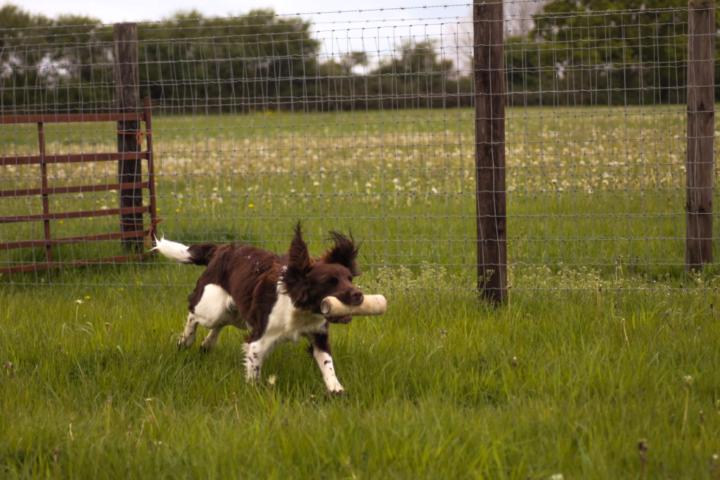
Interestingly I used these for my spaniel (I do gundog work) and he's not really a retrieving dog so put them on my dummies zero interest the scent of the real thing a different matter !
1 like • 30d
@Christina Brewster good point will try that thanks
Aug 12 •
The Difference Between Play Drive, Prey Drive, and Aggression
How many times have you come across someone walking their dog barking and lunging in an uncontrollable manner and the owner says “oh don’t worry he’s friendly he just wants to play” when in fact the dog is either fearful or showing more aggressive body language? I have seen this many times while working in the vet field and it astounds me how many people misinterpret their own dog’s behavior. What is play drive? Play drive is part of the joy system in Panksepp’s emotional command system and when other systems are in play (seek, rage, fear, care, panic and lust) the play drive can also be the most suppressed if a dog is in another “mode”. If you have dog that comes across their Achilles heel they may not have any interest in playing with you. This is because their seeking mode is prominent at that moment. Once your dog has a better understanding and increased impulse control they will soon learn that engaging with you is more fun and productive so chasing the animal is not worth it. This is something that takes time and practice to achieve but is well worth it in the long run. The type of play you have with your dog is also very important for achieving this goal of reengagement with you after seeing a trigger. The play has to fulfill the desire that the dog wants to do which can be achieved with Predation Substitution Games and also knowing what kind of toy they find rewarding. This must be done when the dog is not over threshold and has their thinking brain back online and if your dog is not interested in either the treat or their toy do not fret. This is important information as it tells you that your dog is not ready yet. The play drive system also serves as a buffer between prey and aggression drives as it provides a safe way (pending your fingers) for your dog to “scratch that itch” but in a safe way. Fetch is associated with the seeking system (aka the prey drive) and a game such as tug is associated with the rage system (aka the aggressive or fight drive) but while also keeping the play system engaged.
1 like • Aug 13
@Paul Bunker wow I do miss her classes and workshops, she's one of a kind !!!!
1 like • Aug 20
@Tina Walker Kay moved to Scotland 4-5 years ago, she still does online stuff, our paths might of crossed all those years ago !!!!
Aug 1 •
Duck Tolling Retriever
Once again my apologies about posting this a day late. We have been quite busy here at Chiron K9 and there was a little mayhem for me personally. My youngest cat Minka (who I just call Kitten usually) has a UTI (treated) and apparently peed on some blankets and my female vizsla Csili has decided to be quite interested in Minka or the toads under the RV so she forgets to potty outside so she also peed inside. Needless to say, on top of everything else, yesterday was a huge laundry day and of course when I thought the washer was running it wasn’t so put my progress back about an hour and a half. It was one of those days. Anyways this week’s Breed of the Week comes at the request of @Katie Schobel: the Duck Tolling Retriever. The Duck Tolling Retriever is from Acadian community of Little River Harbour, Nova Scotia in Canada that originated in the early 19th century.. They are known by a few names: The Nova Scotia Duck Tolling Retriever, Toller and their original name Little River Duck Dogs. They are in the sporting group so should go without saying that if you are interested in one exercise, both physical and mental, are not optional but in return you will get a loyal and happy fur friend that will want to anywhere and everywhere with you. The Duck Tolling Retriever were a well-kept secret of Nova Scotia hunters for many years and used their fox like athleticism and playfulness to lure fowl and their retriever side accounted for their willingness to retrieve downed fowl from the water. This is where the “tolling” part of their name comes from. They would lure their prey by frolicking in the water which would catch the attention (not sure how. I guess the fowl in Canada are just…different) which would close the gap between the fowl and the hunter who would then shoot and down the fowl. While the origin of the Duck Tolling Retriever is unknown it is thought that they are a mix of retriever, spaniel, setter and possibly collie. Despite this mystery when the breed was discovered outside of Nova Scotia the blend had been perfected by the late 19th century and was considered a purebred by the Canadian Kennel Club in 1945. The Duck Tolling Retriever is considered the provincial dog of Nova Scotia.

1 like • Aug 5
On one of my gundog holidays a chap from Italy came over with a Toller was impressed did some lovely work.
Aug 5 •
Pet Insurance
This week I wanted to talk about pet insurance. While I am not an insurance expert I can say with confidence that animal insurance is much easier to understand than human insurance. This week’s topic was inspired by my animals and encouraged to talk about by @Katie Schobel . For those who don’t know I have 3 dogs, 3 cats and a snake and they range from the age of 2.5 years old to 12.5 years old. Dogs: - Lucas McCain – American Pit Bull Terrier – 12.5 years - Káosz – Vizsla – 2.5 years - Csili – Vizsla – 5 years Cats - Artemis – DSH – 12 years old - Aries – DSH – 11 years old - Minka – 3 years old Snake - Havoc – Thorn Scrub Rat Snake – 5 years (?) I have had Lucas on insurance since he was about 4 years old and I am so glad that I have due to him getting sick at a month short of 9 years old with a chronic auto immune disease that he still has. That first year I spent about $10,000 between food, diagnostics, medications, supplements and insurance payments. Thanks to insurance though I was reimbursed about $7000-8000. So, when I bought Káosz I immediately put him on insurance and when I adopted Csili she was covered as well. In November of 2025 I switched the vizslas to a different insurance company which I am happy with but kept Lucas on the one he has always been on due to coverage issues with his history. I will admit that I only have my dogs covered as thankfully my cats are for the most part medically boring although Minka is no longer medically boring. The blood test is pending but she is suspected to have histoplasmosis which is a fungal infection endemic to the Americas that is found in the soil that if left untreated is fatal. She is currently blind and her sight may not possibly return. I will know more about her prognosis once I get the test result hopefully later this week. In hindsight having her covered would have been beneficial as well but it won’t stop me from caring for her. Given my experience some things to note when considering insurance:
1 like • Aug 5
Yes I have insurance for my dog after my Golden who wasn't insured had laryngeal paralysis and had a tieback op, expensive then later on in his life developed aspiration pneumonia and was hospitalised. Hetty my next Golden was insured and at 8 yrs had seizures which was the result of a brain tumour and lost her within 4 months, the medication and blood tests for epilepsy are expensive, always difficult when they get to 8 years as the insurance gets ridiculously expensive.
Jul 29 •
Drive Vs Motivation
When someone says they have a “high drive dog” have you ever stopped to think what that means? I know as a trainer when someone describes their high drive dog to me what I imagine is that their dog has a lowered threshold for predatory triggers - often times that is by design within the breed. What is drive? Many people think that when a dog has a lot of drive that it comes from within and if their needs are not met that it builds up and often leaks or pours out as “bad” behavior. This is a very easy thing to think and up until recently I thought the same thing. While a dog with unmet needs does display more intense predatory behavior it is not an “internal drive” that is building up like water behind a dam but rather the dog’s SEEKING system becoming overactive and dysregulated with no appropriate outlet which can happen under stress, conflict or frustration. The SEEKING system does not wait for an external trigger as it is always on and scanning. The part of the Predatory Motor Pattern that we do not want our dogs to display (chase, grab bite, kill and dissect) does in fact wait for an external trigger such as movement or scent. What is Motivation? Motivation is considered the why behind a behavior and it is not just with predatory behavior either (hunger, social need). Learning is less likely to happen without motivation and when a dog has a history of predating there is motivation to repeat the behavior but if that stimulus was not there then the behavior wouldn’t happen. So how can one reduce the motivation of the undesirable behavior chasing wildlife. When a dog chases something there are two phases that occur: drive induction (wanting - as in the chase itself) and drive reduction (getting - as in capturing). Both are rewarding but the pleasure areas of the hypothalamus is more strongly connected to the drive induction (which is why dogs try again and again even if they fail). Since drive induction is associated with pleasure part of the hypothalamus more so than with drive reduction if you were to replace chasing a wild animal, such as a lizard, with chasing a treat not only will you get a dog that is not chasing wildlife but you will get a dog that has less of a desire to solo hunt and an increased desire to engage with you in these highly stimulating moments.
3 likes • Jul 29
Great post.
1-10 of 16
Active 4d ago
Joined Dec 24, 2025