
Write something
45m •
Csili Had A Big Win Yesterday
She drank water inside of a kennel in the vehicle! This is the first time without me having to spike it with something like tuna juice. Since I have had her she has had bad kennel/vehicle anxiety which I have now concluded is a blend of a conditioned emotional response and learned helplessness. This has been ongoing for over a year, setbacks included, with one month last year where we slept in my Equinox every night. That helped with her relationship with vehicles but not her relationship with the kennel unfortunately. How I am approaching the kennel in the vehicle context is giving her the choice to enter it while I lay in one half of it. We just hang out in the back, the kennel is pushed all the way in with no pressure for her to enter the kennel. Any pressure and she shuts down so it is all at her own pace. I do feed her her meals in the vehicle as well. Her drinking the water shows that she is starting to feel relaxed and safe enough to let her guard down which is very encouraging. What is a win with your dog that from the outside may not have looked like a big deal but actually was?
0
0

13d •
Everyone Needs Help. Even Professionals.
I wanted to talk today about something that some people might struggle with and that is asking for help. Perhaps you have been doing this for a number of years, you are on your second, third or fourth dog, you have been part of a team for a while, copious amounts of operations and attend plenty of workshops in person and online. With dedication like that it can sometimes feel like you finally are starting to have a grip on this whole dog handling thing. Then it happens…either you have a new dog that makes you feel like you don’t know anything or your current dog shows a behavior that you have never seen them do. This is when it is important to reach out to a trusted person that you feel is the best fit not only for your concern but also this dog’s learning style. Preferably a trainer that can adapt to the dog in front of them over one that has the approach of “your dog is this breed so you must do this” or “your dog is this discipline so it has to do that”. Running into snags isn’t just for handlers but trainers too. It is through the difficult moments that learning occurs even for us humans. If we want our dogs to enjoy their work and be successful we figure out how to communicate that to them in the best way possible and tailor training to what that dog needs. Do they need steps broken down into smaller ones? Do they need a different direction? Do they need a whole different approach? These questions, and those like them, are why there are so many different ways to train a dog for the same job and it is important to keep an open mind while also having discernment. You may go to a workshop or seminar and hear something that you think is not helpful but a year or two down the line you remember it and it is exactly what you needed to troubleshoot. I had a similar experience recently and, while I cannot go into detail, I can say that it is a benefit to work with people who have many more years of experience than you. Not just quantity of years but quality and variety. Dog training has evolved tenfold in the past 20 years or so with what is accepted as mainstream. Welfare is huge compared to how it use to be and the types of dogs that have access to work has multiplied in ways that very few probably saw coming.
7d •
Why Your Dog Pulls Back When You Pull
A couple of weeks ago I was at the ophthalmologist with my cat, Minka, who was diagnosed with histoplasmosis. We were waiting in the lobby for her recheck when I saw something that I have not been able to stop thinking about. There was a large middle aged dog (dog #1) at the reception desk with his owners and someone had just entered the lobby with their medium/large dog (dog #2). I immediately could tell that dog #1 was going to have an issue with dog #2 and the owner saw it too but did not do anything. He just stared at the stand off his dog was having and instead of creating distance or removing the dog entirely from the lobby (the owner was there with his wife so no dine and dash would have occurred) his dog reacted and owner of dog #1 pulled back with the leash. Owner of dog #1 then pulled his dog further into the lobby and closer to the other pets that were there and his wife finished up talking to the staff. What was demonstrated above is something called opposition reflex which is when the person pulls back against the dog wanting to go forward. This type of pressure, dog wants to go forward and the person is pulling back, creates an involuntary counter response. This involuntary counter response will actually increase the dog’s resistance instead of dampening it. This is due to increased frustration within the dog and typically the response to being frustrated is persistence. Think about how people increase toy drive: they hold the dog back while the toy that they want is out of reach. So how can we change how we physically remove a dog from a situation whether that be in the lobby at the vet or on a nature walk near interesting critters? You use something called Conditioned Harness (Collar) Pressure. This is found within the PST curriculum and while it is recommended to have a dog on a harness to minimize tracheal damage this can work on a collar as well. This is something that should be taught to all dogs so they understand what you are wanting but especially to dogs that may have a negative reaction to being grabbed/startled especially while focused on a stimulus.
28d •
GPS Trackers: Peace of Mind Tools
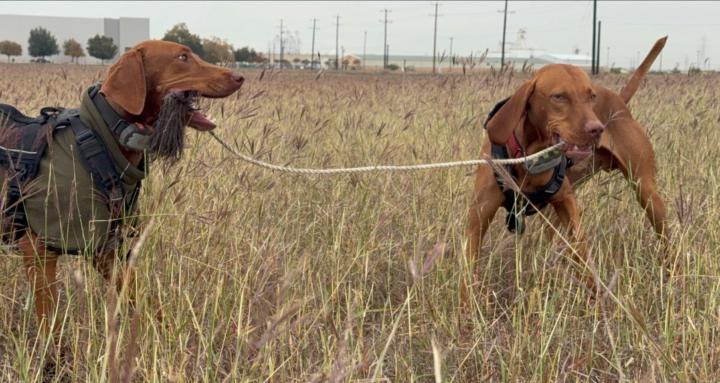
This week I wanted to talk about GPS trackers for dogs (and cats). There are many brands out there: Halo, PetLink, Garmin, SpotOn, Fi and Tractive just to name a few. I personally use the Tractive brand and just updated my vizslas to their new Dog 6XL due to it being smaller than their Adventure tracker. It was a bit chunky for my vizslas but I loved the battery life which the Dog 6XL has but at a smaller size. Now this isn’t an advertisement for one particular brand over another but for the concept in general. For transparency I used to have a Whistle GoExplore for Lucas up until Tractive bought them (the vizslas had Tractive prior to this happening) and I was overall happy with it and it did come in handy a time or two. I am very pro GPS tracker on our dogs even if you decide that the only time they wear it is while training or working. That, ideally, is the only time you will need them as well but I do have it on my dogs 24/7 due to constantly being worried about them because you just never know. I am glad that I have taken this approach because my male vizsla had learned how to escape from my yard either through parts of the fence or just jumping over it. The fence/yard has since been updated and so far has been successful in keeping him in. I found out he escaped due to his GPS tracker alerting me that his tracker had left the boundary. Understand that GPS devices are not always 100% and the occasional false alarm can happen (but that is better than no alarm) but for Káosz it unfortunately wasn’t but fortunately I was on property for 2 of them, @Paul Bunker r was present for one and so was a neighbor and he was returned safe and sound. Had I not had a tracker on him who knows what kind of trouble he could have found himself in to. Not all neighbors are nice and not all dogs are nice so if he were to chase something and get lost…I don’t even want to think about it. Do you use a GPS Tracker or have you thought about one? Let’s talk about it and help each other out!
21d •
Consequence vs Punishment
These two words are sometimes used interchangeably in conversation but what do they actually mean. Let’s start out with definitions: Consequence: umbrella term for any outcome that follows and depends on a behavior, with its meaning determined by the effect it has on that behavior. Punishment: a specific consequence that reduces behavior; the opposite of reinforcement. When a trainer or owner/handler does something in response to a dog’s behavior they may have every intention for it be as force free as possible but the dog may not see it that way. This is something that I see and hear quite often in both the working and nonworking canine worlds; that is the dog does something undesirable and the response is not timed well, harsh and sometimes more than what the situation called for. The dog then has a reaction of fear or caution and the person may think that their dog had a consequence when in fact the dog received a punishment. This is not to paint the trainer or owner/handler as a bad person but to remind everyone that even if our intentions are good the dog may interpret the consequence as a punishment. This could be due to the reasons listed above but also could be due to past experiences, the dog senses you’re in a bad mood, or something else happened in tandem and the moment was overwhelming for the dog even if the events are completely unrelated. It is important to know and understand the dog in front of you and have the ability to adjust on the fly to what that dog needs in that moment. Do not be afraid to reach out and learn from others in order to add skills to your toolbox. If you are in it for the right reasons sharing information to better a dog’s life and learning opportunity/ability is never an issue.
1-30 of 37
powered by
skool.com/beyond-the-leash-9053
Redirecting prey drive into purpose. Off-leash freedom through Predation Substitution Training
Suggested communities
Powered by