Activity
Mon
Wed
Fri
Sun
Nov
Dec
Jan
Feb
Mar
Apr
May
Jun
Jul
Aug
Sep
Oct
What is this?
Less
More
Growth Hub 365
13.3k
Free
The Philosophy of Order
1.7k
Free
Languages through Music
217
Free
Dispatcher University (Free)
24.8k
Free
(Free)The Creditpreneur Group
10.6k
Free
6 contributions to Dispatcher University (Free)

🚀
Sep '25 •
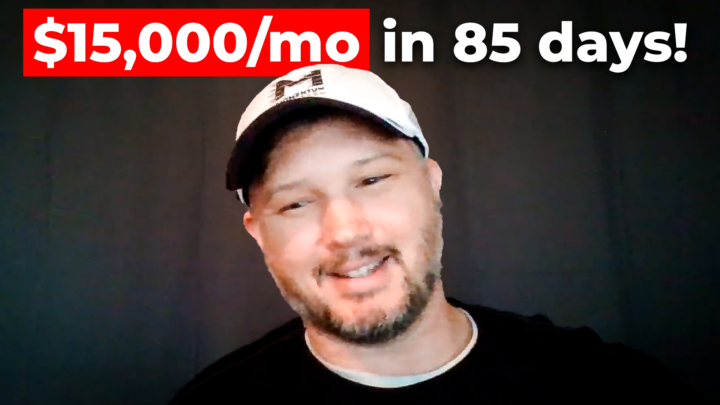
$15,000/month in 85 days!! 😮💨💰
@Eric McLemore just signed 6 carriers and is on track to make $15,000/month. And 90 days ago, he didn’t know a SINGLE thing about dispatching... He was working in real estate. No trucking background. No idea if this would work. But he joined Dispatcher University anyway: https://skool.com/dispatch Like most people, he had doubts: What if I fail? What if I waste time? What if this is all hype? Then he saw the offer: "Find your first carrier in 90 days — or get 100% of your money back." Worst case? He gets a full refund. Best case? He builds a business that changes his life. So what did he do? He took ACTION. He joined Dispatcher University, he spent 60 days going through the full course, and in the last 30 days he joined the Dispatch Games — a bi-monthly challenge I run inside DU where I give away $1,000 just for doing the work. From August 1st to August 31st: - He spent $600 on ads. - Used the exact templates and step-by-step ad training from the course. - No guesswork. No second-guessing. By the end of the month, he had signed 6 carriers! That $600 he spent on ads, he turned it into $15,000/month... That's a 25x return — in just 30 days. This is what happens when you stop waiting. When you stop doubting. When you finally bet on yourself. Eric was in the same spot you’re in right now. He just made a different decision. Now it’s your turn... 👉 Click here to join Dispatcher University for just $97/mo Here's what you get: - 100+ hours of step-by-step training. - Weekly LIVE Q&A calls with me. - Proven scripts, templates, and everything you need to get your first carrier. And guess what? I'll make you same offer I made Eric... Find your first carrier in 90 days — or get 100% of your money back. You have nothing to lose. $15K/month to gain. Let’s get to work. //Gurpreet P.S. I interviewed Eric so you can hear the full story straight from him!

8 likes • Sep '25
That is amazing what would you say would you 1 pro and con you have learned from.

Aug '25 •
Popular Trucking Terms series - I
Hey Dispatch University Dispatchers, Possibly, the most common thing I've been told by new dispatchers is that they don't have any experience. And, that they really want this. Our course covers everything we need to know to get started, up and running in a very short time. It is not uncommon to be making money in a matter of weeks. I want to do my part too. So, I thought of these terms that may help us all get more familiar with the dispatching and trucker lingo. Let me know if you like it. We're going to do it one alphabet at a time. This is the next one. The I's. I ask that you add any others that begin with I that you think are missing. I 1. Icing Charge – The charge for adding ice to any time-sensitive, perishable freight either before or during transit. 2. IFTA (International Fuel Tax Agreement):A simplified system for calculating fuel taxes across different states and provinces, streamlining the process for commercial carriers who operate in multiple jurisdictions. 3. ILDM (International Logbook Device Management):This system is used for managing electronic logging devices (ELDs) and ensuring compliance with Hours of Service (HOS) regulations. 4. In Bond/In-bond shipment – 1) A shipment that is allowed to enter a country but is held temporarily for transport to a final destination where duties and taxes will be paid. 2) A shipment that has not yet cleared customs from being imported or exported. 5. Independent owner-operator: A truck driver who owns their own truck and may operate as a contractor for a trucking company. 6. Individual Shipper - Any person who is the shipper, consignor, or consignee of a household goods shipment identified as such in the bill of lading contract. The individual shipper owns the goods being transported and pays the transportation charges. 7. Interchange Agreement – A contract between two companies negotiating the switch of a trailer to pick up and deliver shipments. This is most common along border towns between countries. 8. Interline freight: Freight that is transported by two or more transportation lines from its origin to its destination. 9. Intermodal Transportation – 1) The term for shipments that require more than one type of transportation mode, such as ship and truck, truck and rail, etc. 2) Refers to shipping that utilizes more than one mode of transportation, such as trucks and trains, to move goods. 10. International Fuel Tax Agreement (IFTA) – An agreement among U.S. and Canadian jurisdictions created to simplify tax calculations for interstate and international carriers. 11. Interstate – 1) Shipments that travel between multiple states. 2) Occurs when cargo is transported between different states or countries.
1 like • Aug '25
You rock Kendrick thank you for the amazing information, I love everything about it.
Aug '25 •
Introduction to Keyaira
Hey Hey folks My name is Keyaira I currently live in Washington DC., I will make 6k monthly dispatching loads within the first year. Overall i will make no less than$34k monthy. 3 Things I will learn I will learn how to communicate effectively with my peers to ensure that we are actively getting better together. Learn the Do's and Don't of the trade How to become a Mentor to others so that we can all win and win BIG . 3 Fun thing I like to do 1. Spend time with my dog 2. Crafting I make things out of resin. 3. traveling when I can
2 likes • Aug '25
@Gregory Agbasiere good day Greg no I haven’t started yet with carriers yet. I Have a American bully pit
🚀
Mar '25 •
Welcome! Start Here
Before you do anything else — start here: 1. Watch the “Start Here” course → 2. Finish the Free Dispatch Course → 3. Unlock the full course ($97/mo) → Let’s get to work! – Gurpreet & The Dispatcher University Team POLL: Be honest — how did you hear about this free course + community?
Poll
2735 members have voted
1 like • Aug '25
Such a good introduction of the course.
2 likes • Aug '25
@Reynaldo Walters to gain a high understanding of dispatching so that my business is successful and to be able to help others.

Aug '25 •
👋🏾 Hi, I’m Reginald!
Hi my name is Reginald. I live in South Carolina and I plan on making $10,000 per month dispatching trucks. I want to get these 3 things from this course/community: 1. I want to learn the inside information in this industry and use the tools provided to follow the road map to success! 2. Reciprocity, I would like to give any knowledge and resources I have that may be of service to the community so that we can continue to grow and help others. 3. Network, I like the idea of working with a community to each help each other grow exponentially! For fun I like to do these 3 things: 1. Work out 💪🏾 2. Creative Writing ✍🏾(film scripts, animations, short stories, poems etc,) 3. I’m a foodie 🍱 I like to go to new places and try the best things on the menu. So… Jordan, Kobe, LeBron… order these three however you like, the question is who is….. NUMBER 4? ***(There are many to choose from - if not any of these on the list, who would you put at number 4 all time greatest?)***
Poll
9 members have voted

2 likes • Aug '25
@Reginald Childress you can do it keep working on your goals and your sure to be a success.
1-6 of 6

Active 259d ago
Joined Jun 3, 2025
Powered by