Activity
Mon
Wed
Fri
Sun
Nov
Dec
Jan
Feb
Mar
Apr
May
Jun
Jul
Aug
Sep
Oct
What is this?
Less
More
27 contributions to Basecamp

Apr 18 •
Minimalism?
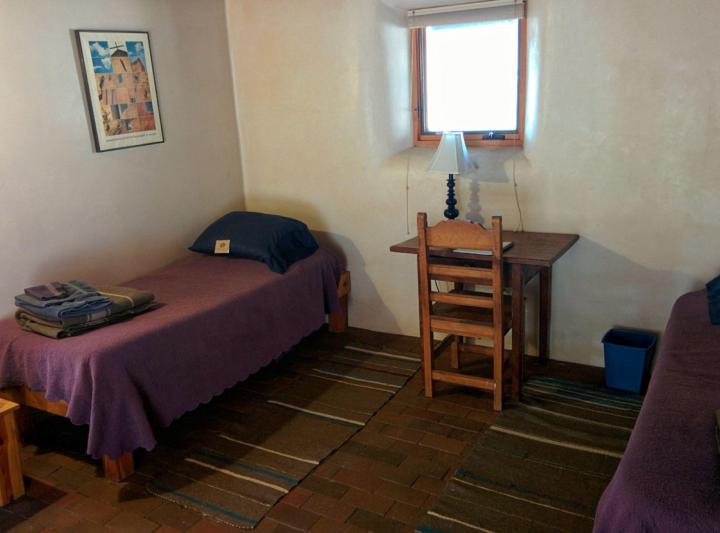
This year, spring cleaning has been a return to the concept of minimalism and simple living - physical, digital, and financial. I have been reading books ("goodbye, things" and "new minimalism" were both very eye-opening) and subscribing to youtube channels ("laura larson organizing", "sunny kind journey", "gabe bult") to retrain my consumer mind. Have any of you explored this philosophy? Do you have any resources to share which were influential in your journey? P.S. Enjoy these images of monastery guest houses.

2 likes • Apr 19
I did a lot of minimalism and slow living/intentionality at the beginning and continue to remind myself often to counteract the bombardment of consumerism. I found these books helpful: Digital Minimalism by Cal Newport and Essentialism by Greg Mckeown. The podcast The Tortoise with Brooke McAlary(no longer new episodes, but the old ones are there).
0 likes • May 18
@Donna Burske me too!

Apr 30 •
Art of Becoming Session 2
Thanks to everyone who joined last night. Session 2's recording is now live in the classroom for all those participating.
1 like • May 5
@Sandra Partridge at the top there is a button called Classroom. There you should see The Art of Becoming. Click in there and you will see Session 2
Apr 8 •
A One-Time Live Series (The Art of Becoming)
Morning Basecampers. I'm hosting a four-part series beginning later this month called "The Art of Becoming." It's an evolution of one of our most popular programs - the Being and Doing Course, which is being sunset. I'm only going to host this live once. We wanted to offer it at a price-point that could make sense for everyone. Recordings will be available if you can't attend live. If you feel the nudge, I hope you'll join me. Everything will take place right here in Basecamp - just sign up in the classroom. You can learn more @ https://monkmanual.com/pages/the-art-of-becoming

0 likes • Apr 12
@Monica Mullen if you are in The Path, you are already doing this deeper work. This is pre-Path content so no need to join.
0 likes • Apr 21
@Pam Ohm-Pitock it should be. You can click on Classroom here in Basecamp and should be able to sign up.

Mar 10 •
AristotleTidBit and Reflection
Currently going through Aristotle for a research paper, and thought I’d share a fundamental idea of his that seems relevant to the ongoing discussion. This is a piece of quoted commentary on Aristotle’s general view of what nature and/or natural objects are: “Nature is, or natural objects are, that which itself contains the determination of what it is or is to be, while art is, or artificial objects are, that which has this determination elsewhere. In the plant the determination is in the plant; in the house it is in the builder. The plant makes itself under the conditions of its making. This the house does not do.” For Aristotle, the final end of a natural object, its purpose, its destiny, in some sense dwells within it from the moment it comes into being. This end, or telos, guides the growth and development of its matter, and its environment shapes this natural progression. Its path of becoming, then, is already set from its conception, and changes depending on how other natural objects and forces act upon it. While plants and animals certainly have this kind of determination in themselves, they do not have agency or possession over it. But humans do. And this is what it is to be an human being: to have a destiny, a journey of its own becoming, and perhaps more importantly, the capacity to intentionally engage the journey. Artifacts on the other hand, i.e., tools, buildings, machines, receive their end in a preconceived way. A builder has an end in mind, and chooses and shapes matter to bring his idea into existence; and it’s fitting and good for humans to work with the world in this way to bring forth art, expressing ideas by doing so. But something else happens in machine time. In machine time, an externally preconceived end is placed on the human person in way that’s indifferent to the end already existing within them. This industrial framework not only competes against the destiny of the human person, but blinds them to it. It also shapes the environment in which the person lives, making it difficult to even recognize the existence of the frame.
3 likes • Mar 11
Thank you so much for sharing. It is a great explanation of the growth I have experienced. I loved your last line "I want to listen to my gut and respond appropriately in trust". My word of the year is Trust this year because I am needing to build that trust so that I can respond appropriately more often in trust.

Mar 3 •
Monk Manual paired with digital calendar
Does anyone have tips or pointers for using Monk Manual well along with a Google or Outlook calendar? One of my goals is to lessen my reliance on (addiction to?) devices but I need the digital calendar to share schedules, book online meetings, manage travel etc for work.
2 likes • Mar 6
Myles, how I use my Monk Manual with my Google calendar is that I put all appointments, meetings, and recurring items in my Google calendar. When I do my weekly planning, I have my calendar open for that week. I fill in the things by priority. As an example – recurring meetings go in my to-do, but a doctor appointment might be a priority. Then, I fill in what else needs to be done based on my Monthly priorities, Life Atlas quarterly goals, and what I am working on this week. That allows me to see the full picture of my time as my priorities are taken and my to-do list starts filling up.
1-10 of 27

@kathrin-sandall-5799
Always becoming me. Monk Manual community guide. PAR method enthusiast.
Active 4h ago
Joined Jul 5, 2024
Powered by