Activity
Mon
Wed
Fri
Sun
Nov
Dec
Jan
Feb
Mar
Apr
May
Jun
Jul
Aug
Sep
What is this?
Less
More
CSCS Accelerator Community
236
Free
13 contributions to CSCS Accelerator Community

Apr 15 •
CSCS Daily Practice Question #30
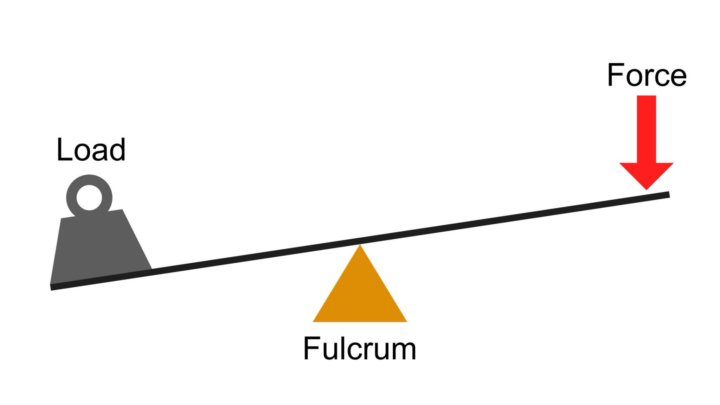
Which body movement is an example of a second-class lever? A. Knee extension B. Elbow flexion with biceps curl C. Plantar flexion (raising on toes) Answer in the poll, then explain your rationale below in the comments! I'll follow up with my breakdown of the question after enough people have responded. From Chapter 2: Biomechanics of Resistance Exercise DCO Code: 1.C2 NOTE: Image is for illustration purposes, not needed to answer the question.Use something that shows lever concepts broadly without isolating plantar flexion.
Poll
25 members have voted

1 like • Apr 17
A and B are examples of third class levers since the effort force is between the fulcrum and resistive force. C is a second class lever since the resistance is between the fulcrum (toes) and effort force (gastroc-soleus)
Mar 9 •
CSCS Practice question #17
Which coaching strategy is most effective for promoting intrinsic motivation in athletes? A. Providing athletes with opportunities to make choices during training B. Emphasizing performance rankings among teammates C. Implementing reward systems for attendance and participation Answer in the poll, then explain your rationale below in the comments! I'll follow up with my breakdown of the question after enough people have responded. From Chapter 8: Psychology of Athletic Preparation and Performance
Poll
25 members have voted
3 likes • Mar 9
B and C are examples of extrinsic motivation, while option A is intrinsic because it has to do with the individual athlete's thoughts, plans and desires
Mar 9 •
CSCS Practice Question #19
Which nutrients are commonly insufficient in athletes who eliminate dairy products without appropriate dietary substitution? I. calcium II. riboflavin III. vitamin D IV. vitamin B12 A. I and III only B. I, II, and III only C. I, III, and IV only Answer in the poll, then explain your rationale below in the comments! I'll follow up with my breakdown of the question after enough people have responded. From Chapter 9: Basic Nutrition Factors in Health
Poll
20 members have voted
4 likes • Mar 9
Dairy provides a significant source of calcium, vitamin D and riboflavin. Vitamin B12 can come from many non-dairy sources, so a dairy-limited diet shouldn't necessarily lead to a vitamin B12 deficiency
Mar 6 •
CSCS Practice Question #16
A strength coach is designing an in-season resistance training session for experienced rugby athletes. The primary goal is to maintain maximal strength and power while minimizing residual fatigue before competition in 48 hours. Which of the following session structures would be MOST appropriate? A. Perform Olympic lifts first (3–5 sets × 2–3 reps at 80–90% 1RM) followed by heavy squats (3–4 sets × 2–4 reps at 85–90% 1RM) with 2–3 min rest intervals B. Perform heavy squats first (5–6 sets × 6–8 reps at 75–80% 1RM) followed by accessory hypertrophy exercises (3–4 sets × 8–12 reps) with 60–90 s rest C. Perform circuit-style resistance training including multi-joint and single-joint exercises (3 rounds × 12–15 reps each) with in an explosive manner with minimal rest Answer in the poll, then explain your rationale below in the comments! I'll follow up with my breakdown of the question after enough people have responded. From Chapter 17: Program Design for Resistance Training
Poll
28 members have voted
1 like • Mar 8
Just reiterating what was said - because the athletes are in their competition season, the main rationale behind training should be lower volumes but higher intensity, along with sufficient rest.
Mar 6 •
CSCS Practice Question #15
A collegiate tennis player reports excessive anxiety before matches and difficulty maintaining attentional focus during competition. A sport psychologist recommends interventions designed to improve arousal regulation and attentional control. Which of the following strategies would MOST likely improve the athlete’s performance? I. Use imagery rehearsal to mentally simulate competitive situations II. Implement controlled breathing techniques to regulate physiological arousal III. Use positive self-talk cues to maintain task-relevant focus IV. Provide knowledge of results feedback after every attempt A. I and IV B. I, II, and III C. II, III, and IV Answer in the poll, then explain your rationale below in the comments! I'll follow up with my breakdown of the question after enough people have responded. From Chapter 8: Psychology of Athletic Preparation and Performance
Poll
26 members have voted
2 likes • Mar 8
Adding to what Eric said, the reason I ruled out option IV was that having excessive feedback information will only increase the athlete's psychological arousal and will inhibit his focus by dividing his attention into several technical details.
1-10 of 13

@katherine-heekin-1533
Masters in Kinesiology Student at Point Loma Nazarene University
Active 46d ago
Joined Feb 4, 2026
Powered by