Activity
Mon
Wed
Fri
Sun
Oct
Nov
Dec
Jan
Feb
Mar
Apr
May
Jun
Jul
Aug
Sep
What is this?
Less
More
Owned by Karin
Leadership is not meant to be done alone. Join us for real conversations, shared experiences, and practical support. Better Conversations start here!
Skoolers
157.2k members • Free
Read SkoolMagazine Here
412 members • Free
The Social Selling Shift™
34 members • $1,400/month
Social Selling on LinkedIn
1.1k members • $24/month
Grok For Creators
74 members • $5/month
AI Online Educators & Coaches
3.5k members • Free
Skool Growth Free Training Hub
9.5k members • Free
UK Skoolers
440 members • Free
Public Speaking - Vocal Power
465 members • $13/month
4 contributions to InnerDevelopment@Work

Mar 8 •
What might modern “beguinages” look like today—co-living communities, cooperative economies, digital communities, or something entirely new?
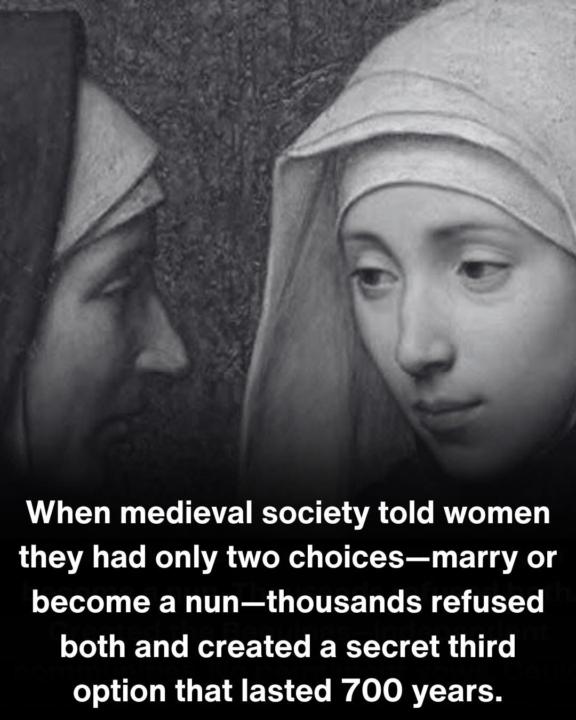
When medieval society told women they had only two choices—marry or become a nun—thousands refused both and created a secret third option that lasted 700 years. Imagine living in a world where your entire future has been decided before you were born. As a woman in 1200s Europe, society offered you exactly two paths: Marry—surrender all legal rights, bear children, obey your husband completely, own nothing in your own name. Or become a nun—take permanent vows, live behind convent walls forever, require a dowry most families couldn't afford. Both demanded the same price: your freedom. Both required lifelong obedience to male authority. But some women looked at these two rigid paths and simply said: "No. We choose neither." They called themselves the Beguines, and they built something revolutionary. Starting in the late 1100s across Belgium, the Netherlands, France, and Germany, women began forming independent communities that fit neither official category. They weren't married. They weren't nuns. They were something entirely new. They built beguinages—small houses arranged around shared courtyards and gardens, like self-contained villages designed by and for women. They prayed together daily, following spiritual practices they created. They worked in skilled trades—weaving intricate cloth, creating lace that wealthy clients paid premium prices for, brewing beer commercially, nursing the sick, teaching children to read. They supported themselves through their own labor. In many regions, they could legally own property and control their own money—something married women absolutely could not do under medieval law. And here's what made them truly revolutionary: they could leave whenever they wanted. No permanent vows. No lifetime commitment. If a Beguine decided to marry, she could leave and marry. If she wanted to return home, she could. Her participation was completely voluntary—a radical concept in medieval Europe where women's choices were almost never voluntary.

1 like • Mar 8
I vsisted a Berginage in Amsterdam - it was so very peaceful. Now I know much more.

Jan 15 •
Birthday month poll
@Nadene Canning and myself both have our birthdays in January, we're both Capricorns. It would be fun to know some of our birthdays, and if you know it, your Zodiac sign. The poll didn't let me add 12 options, so I had to group 2 months together. If you like, add your exact birthdate and zodiac sign in the comments ;-)
Poll
19 members have voted

2 likes • Jan 18
Aquarius and happy birthday January babies
Jan 8 •
What are your values?
Hey everyone! I'm thinking of making a mini course that will help you discover or clarify what your highest values are. I'm curious, what are you values? Try to say them in one word. I'll go first!

2 likes • Jan 8
freedom, integrity
Jan 6 •
What does music help you with?
Let’s talk music at our hangout later today. Motivation Creativity Relaxation Focus Forgiveness Energy See you there 🤗

2 likes • Jan 6
Apart from joy, certain music helps calm my monkey mind and nervous system.
1-4 of 4
@karin-ovari
Promoted to Leadership my whole life - Ask me anything. The Supervisors Hub is a community for everyday leaders by leaders.
Online now
Joined Dec 12, 2025
Aussie in Scotland
Powered by