Activity
Mon
Wed
Fri
Sun
Aug
Sep
Oct
Nov
Dec
Jan
Feb
Mar
Apr
May
Jun
Jul
What is this?
Less
More
Memberships
ASA Service Dogs
97 members • Free
Cool Dog Skool
134 members • $97/month
27 contributions to ASA Service Dogs

2d •
🐾 Dog Safety Tip: Let’s Talk About Bloat (Stomach Torsion/GDV)
One dog health topic I wish more people knew about is bloat, also known as gastric dilatation-volvulus (GDV). After more than 22 years of training dogs, I’ve heard far too many stories from families who simply didn’t know this was something to be aware of. The goal isn’t to scare anyone—it’s simply to share a few easy habits that may help reduce the risk. Here are a few things we do with all of our dogs: 🐶 After meals, we let our dogs rest for at least one hour. No running, swimming, fetch, rough play, or vigorous exercise right after eating. 🐶 Feed in a calm environment. Our dogs either eat and then relax in their crate, or they eat and rest on their designated “place” while they digest their meal. 🐶 If your dog has just finished exercising and is panting heavily, let them cool down before feeding a meal. 🚨 Know the signs. If your dog has a swollen or tight-looking abdomen, tries to vomit but nothing comes up, is drooling excessively, pacing, or suddenly seems very uncomfortable, seek emergency veterinary care IMMEDIATELY. Bloat is a true emergency, and early treatment is critical. Prevention is always easier than dealing with an emergency, and hopefully this is one dog safety tip you’ll never have to use—but it’s one that’s worth knowing. 💙 Question for you: Is resting after meals already part of your dog’s routine, or is this a new dog safety tip for you? Let us know in the comments! 👇


1 like • 2d
Saffy dines and rests in her crate. We have started trying to walk first thing in the morning before it gets hot and we hold her breakfast until she is no longer panting. She still eats in her crate to keep the cat from sharing her food and to keep the crate as good place. She is still crated at night, if we need to leave her home, or of we leave her alone for a period of time (the humans go swimming alone 🙃 or want to watch a movie with the volume up - gotta protect her hearing.). Side question on crating : do you recommend they are always crated if alone for long periods or at night? If not, how and when do you recommend transitioning to roaming of the house and also not spending the night in our bed (naps are okay but she would literally kick us off of the bed if it was all night🤣)
1 like • 2h
@Amanda Taulborg Thank you for that great answer! We will “test” Saffy but with her attachment to us, I have a feeling she will be more happy in a crate. If we leave her on the patio by herself, she goes from door to door looking for us. So we will have to set up a camera and see what she does when we are gone.
Jun 13 •
Service Dog 101: Desensitization 🐶
One of the most important parts of raising and training a future service dog is desensitization. Desensitization simply means exposing a puppy to the sights, sounds, smells, surfaces, equipment, people, animals, and environments they may encounter in everyday life—and pairing those experiences with positive reinforcement. The goal is not to force the puppy into situations that are scary or overwhelming. The goal is to help them learn that new things are safe, normal, and nothing to worry about. In this video, Cole is working on several different types of desensitization at once: ✔ Learning to work around other dogs without needing to interact with them. ✔ Becoming comfortable wearing his new booties. ✔ Experiencing the sights and sounds of a public environment, including shopping carts, beeping noises, people moving around, and other unexpected distractions. ✔ Getting used to wearing his service dog vest. Just like people need time to get used to a new pair of shoes, dogs need time to get comfortable wearing new equipment. We don’t simply put the gear on and expect them to love it. Instead, we pair it with food, praise, play, and positive experiences! The same applies to public environments. A confident service dog isn’t born knowing that shopping carts, loud noises, other dogs, and busy stores are normal. Confidence is built through positive exposure and repetition. The goal is not just for the dog to tolerate these experiences. We want the dog to be comfortable, confident, and able to focus despite distractions. By introducing these things early and making them positive, we’re helping create a service dog that can confidently navigate the world and focus on their future job of helping their person. Small exposures. Lots of praise. Big and brave 💪 ❓How long does it take you to get used to a new pair of shoes?

1 like • 22d
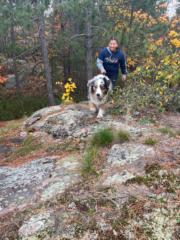
@Laura Rauscher We got Saffy some wagwellies that look like Crocs. They are a little pricey but they are well made and come in cool colors! They allow their feet to breath a little more, still get corn chip feet but no burnt feet. I literally burned my feet on my driveway and grass last year, made me really think about their poor pads. My Dad sent me this picture later that same day before I told him.🤣. https://wagwear.com/products/wagwellies-mojave?variant=43959803576555&country=US¤cy=USD&utm_medium=product_sync&utm_source=google&utm_content=sag_organic&utm_campaign=sag_organic&srsltid=AfmBOopKgbGsTKNto564PPXm0jYWbcs_b_zpAyIW8Yi3UdWdILn62ywTJ3g
29d •
Sit, down, stand
Howdy guys. Cole is definitely feeling his teeth and gums right now. Hasn’t been too motivated for food lately like he normally is. Hopefully these puppy teeth fall out soon so I can get the highly food motivated Cole back!

1 like • 28d
He looked MUCH happier getting the toy vs the crunchy food! Way to go little Man and Becca!!
May 18 •
💦 Puppy Pool Safety 💦
If you have a puppy and a pool, pool safety is something that is REALLY important to think about 🐶 Having proper pool safety fencing/barriers in place is incredibly important because puppies are curious, fast, and accidents can happen very quickly. One of the best things you can teach young dogs early on is how to confidently find the stairs/exit of the pool in case they ever accidentally fall in. That’s what this video is demonstrating 👇 The process starts by introducing the puppies to the steps and helping them understand where the exit is. Then, little by little, the distance away from the stairs is increased so they can learn how to confidently swim back to safety on their own. A lot of dogs that do not understand where the exit is will instinctively swim to the edge of the pool and start trying to climb out vertically against the wall. Once panic sets in and they lose that natural horizontal swimming position, situations can become dangerous very quickly. Teaching puppies where the exit is ahead of time can make a huge difference in an emergency situation. It also helps build confidence and comfort around water at a young age 🐕🦺💦 If you have a dog, do they like swimming? Or are they part of the “absolutely not” club?

1 like • May 18
When Saffy was little you shared this knowledge with us because we were concerned about her falling in the pool. So last year she learned the exit steps. This year she has learned where all the benches are and swims back and forth between them. She did actually fall in the pool about a month ago. Once she/I got past the “what just happened”, she started swimming towards the steps and I told her out. I thought she might take off swimming but she didn’t, she listened and got lots of praise for the “good out”. We have also taught her a “swimming” command to enter the pool and she is really good about staying out of the pool. When we all go swimming, we put her in a sit/stay until we are ready and then release her with the swim command or free dog.
1 like • May 26
What fun! Save the noodle, having fun splashing, and the music 🎶 !! Made me start my day with a smile!! 😁 🙂
Mar 4 •
🐕🦺🎒 Service Dog “Go Bag” Essentials (AKA Your SD's Diaper Bag)
When you’re out and about with your service dog — doctor’s appointments, travel days, long outings — it’s always a good idea to have a doggy go bag ready to roll. Think of it like a diaper bag… but for your very important working dog!! Here’s what Saffy’s go bag looks like as a great example: 🦴 Comfort + Entertainment • Chew bone • Non-squeaky toy • Mat for your dog to settle on • Dog Booties 💧 Food + Water • Water jug • Drinking bowl • Extra treats • Food training pouch 🧻 Cleanup + “Just In Case” Supplies • Poop bags 💩 • Pee pad • Paper towels • Gloves • Towels • Wet wipes • Hand sanitizer • Extra Leash 🔌 Extras • Chargers Julie and Saffy even keep two versions of the bag: 👜 Small bag → quick outings like doctor appointments 🎒 Big bag → longer adventures when you want all the essentials Because when you’re prepared like this… you’re basically ready for anything. And trust me — if your dog is working somewhere boring for a while, having a chew or something to occupy them can make a huge difference. 💬 Now I’m curious… What do you keep in your dog’s go bag? Did we miss anything? Huge thank you to @Julie Kelley and Saffy for showing us Saffy’s diaper bag setup! 🐾✨

2 likes • Mar 25
@Amanda Taulborg
2 likes • Apr 8
@Anissa Stark Saffy’s mat is 30 x36. it’s enough for her to recognize as a “place spot” but fits in corners in public/doctors, under tables etc without being too big.
1-10 of 27

@julie-kelley-5758
Learning to be a service dog trainer and spokesperson for service dogs for all needs!
Active 51m ago
Joined Jul 23, 2025