

3d •
🐾 Dog Safety Tip: Let’s Talk About Bloat (Stomach Torsion/GDV)
One dog health topic I wish more people knew about is bloat, also known as gastric dilatation-volvulus (GDV). After more than 22 years of training dogs, I’ve heard far too many stories from families who simply didn’t know this was something to be aware of. The goal isn’t to scare anyone—it’s simply to share a few easy habits that may help reduce the risk. Here are a few things we do with all of our dogs: 🐶 After meals, we let our dogs rest for at least one hour. No running, swimming, fetch, rough play, or vigorous exercise right after eating. 🐶 Feed in a calm environment. Our dogs either eat and then relax in their crate, or they eat and rest on their designated “place” while they digest their meal. 🐶 If your dog has just finished exercising and is panting heavily, let them cool down before feeding a meal. 🚨 Know the signs. If your dog has a swollen or tight-looking abdomen, tries to vomit but nothing comes up, is drooling excessively, pacing, or suddenly seems very uncomfortable, seek emergency veterinary care IMMEDIATELY. Bloat is a true emergency, and early treatment is critical. Prevention is always easier than dealing with an emergency, and hopefully this is one dog safety tip you’ll never have to use—but it’s one that’s worth knowing. 💙 Question for you: Is resting after meals already part of your dog’s routine, or is this a new dog safety tip for you? Let us know in the comments! 👇

9d •
🐕🦺 Service Dog Public Access: What Businesses Can (and Can’t) Ask
One of the most common questions we receive is: “What are businesses legally allowed to ask me when I’m out in public with my service dog?” Under the Americans with Disabilities Act (ADA), if it is not obvious that your dog is a service dog, a business may ask only two questions: ✅ 1. Is the dog a service animal required because of a disability? ✅ 2. What work or task has the dog been trained to perform? That’s it! 🚫 Businesses may not: - Ask about your disability. - Ask for medical records. - Ask for certification or an ID card. - Ask your dog to demonstrate its task. 🛑 When can a business ask a service dog team to leave? A business may ask the dog to leave if: 🐾 The dog is out of control and the handler is unable to regain control. 🐾 The dog is not housebroken. 🐾 The dog poses a direct threat to the health or safety of others based on its actual behavior. A business cannot ask you to leave simply because: - They have a “No Pets” policy. - Someone is afraid of dogs. - Someone has allergies. - They don’t understand the ADA laws. - You don’t have an ID card or certification. 📹 What should you do if you believe your rights are being violated? ✅ Stay calm and remain respectful. ✅ If possible, begin recording a video of the interaction. ✅ Ask for clarification on why you are being asked to leave. ✅ Make note of the date, time, location, and the names of any employees involved. Having a calm, factual record of what happened can be very helpful if you need to address the situation later. Knowledge is power! The more we understand our rights and responsibilities as service dog handlers, the better prepared we are to advocate for ourselves while also representing the service dog community in a positive way 💙 ❓Current Service Dog handlers - Have you been denied access or has a business asked you inappropriate questions? Tell us what happened and how you dealt with it 👇

13d •
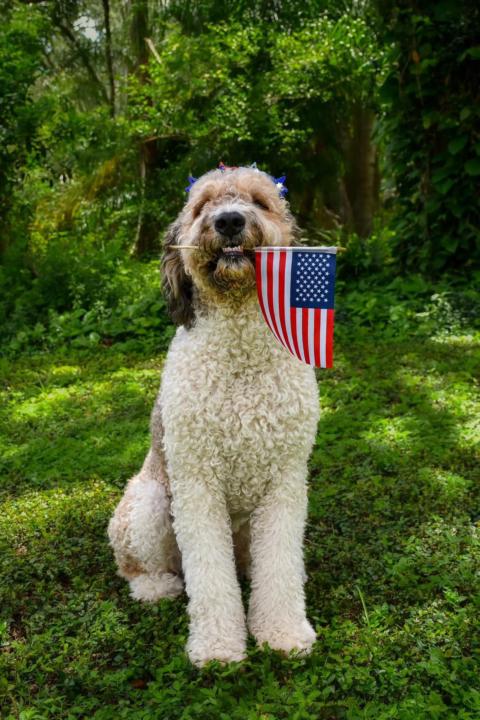
🎆 4th of July Tips for Dogs & Service Dogs 🇺🇸🐕🦺
As you know, it's going to be a loud weekend, especially if you live anywhere near fireworks. While our goal is to help our dogs become more confident around loud noises through gradual desensitization, it's important to remember that fireworks are loud and can be physically uncomfortable for both humans and dogs. Even the best-trained dog can be startled by a sudden, unexpected boom, so this weekend is all about safety first. 🐶 Before the fireworks begin: ✅ Exercise your dog early in the morning or earlier in the day (while being mindful of the heat). ✅ Feed your dog and give them plenty of opportunities to potty before fireworks typically begin. The goal is to have everyone settled in for the evening before the loud noises start. 🎆 During the fireworks 🐾 Keep your dog indoors whenever possible. 🐾 If you need to take your dog outside, always use a leash—even if they're normally reliable off leash. 🐾 If your dog goes into a fenced yard, double-check that all gates are securely closed. A startled dog isn't making thoughtful decisions—they're simply reacting. Their instinct is often to run first and think later, which is why so many dogs go missing around the Fourth of July. 🏷️ Make sure your dog can find their way home ✔️ Collar with current identification tags. ✔️ Microchip registered with your current contact information. Hopefully you'll never need it—but it's always better to be prepared. 🏠 Make inside the fun place to be Rather than focusing on the fireworks, give your dog something more exciting to do! 🐾 Play a training game. 🐾 Practice a few fun tricks. 🐾 Play with their favorite toy. 🐾 Enjoy a chew or enrichment activity. 🐾 Turn on music or the TV to help soften outside noises. If your dog is crate trained, leave the crate open so they can choose to relax in their own safe space if they'd like. ❤️ If your dog is worried... If you notice signs of stress, try not to make a big deal out of the fireworks themselves. Instead, calmly redirect your dog's attention to something positive, like a toy, training game, food puzzle, or gentle affection if that's comforting for your dog.
Jun 13 •
Service Dog 101: Desensitization 🐶
One of the most important parts of raising and training a future service dog is desensitization. Desensitization simply means exposing a puppy to the sights, sounds, smells, surfaces, equipment, people, animals, and environments they may encounter in everyday life—and pairing those experiences with positive reinforcement. The goal is not to force the puppy into situations that are scary or overwhelming. The goal is to help them learn that new things are safe, normal, and nothing to worry about. In this video, Cole is working on several different types of desensitization at once: ✔ Learning to work around other dogs without needing to interact with them. ✔ Becoming comfortable wearing his new booties. ✔ Experiencing the sights and sounds of a public environment, including shopping carts, beeping noises, people moving around, and other unexpected distractions. ✔ Getting used to wearing his service dog vest. Just like people need time to get used to a new pair of shoes, dogs need time to get comfortable wearing new equipment. We don’t simply put the gear on and expect them to love it. Instead, we pair it with food, praise, play, and positive experiences! The same applies to public environments. A confident service dog isn’t born knowing that shopping carts, loud noises, other dogs, and busy stores are normal. Confidence is built through positive exposure and repetition. The goal is not just for the dog to tolerate these experiences. We want the dog to be comfortable, confident, and able to focus despite distractions. By introducing these things early and making them positive, we’re helping create a service dog that can confidently navigate the world and focus on their future job of helping their person. Small exposures. Lots of praise. Big and brave 💪 ❓How long does it take you to get used to a new pair of shoes?

Jun 11 •
Obedience training for 16 week puppy
My dog chip is 16 weeks me and my mom are going to be training together except most of the time it's going to be me I stated before he doesn't like to listen on command doesn't even know his name a little bit he's learning it but he likes to pants on other dogs and he he likes to jump and burst through the door he's a service animal so he's allowed to go out in public but we don't have a service dog fest which I know we don't need one but I get worried about people we are not going to take him into the stores until he gets all of his shots so for now it's just going to be an at-home training I will be missing the the Lowe's meet up because of that reason and and because he doesn't like to listen he likes to chase his leash he constantly keeps falling apart and he doesn't really like to listen he's supposed to ignore most of his surroundings and and help the handler how do I handle this
1-30 of 57
powered by
skool.com/asa-service-dogs-1614
A welcoming classroom & community for everything Service Dogs! ASA is a 501(c)3 Nonprofit Organization dedicated to helping dogs and humans!
Suggested communities
Powered by