Activity
Mon
Wed
Fri
Sun
Aug
Sep
Oct
Nov
Dec
Jan
Feb
Mar
Apr
May
Jun
Jul
What is this?
Less
More
Memberships
Basecamp
1.1k members • Free
5 contributions to Basecamp

Mar 8 •
Role of disconnection in becoming
I have been thinking about the role of disconnection in becoming. Becoming does not look the same for all of us. My observations are based mostly on my own experience, and that of people that I am close to. I think that (for some of us) there are times that becoming looks more like transformation or even metamorphosis than continuous growth. In these times, it is natural, and even necessary to feel a sense of disconnection from who are (soon to be who we were) so that we can enter this new phase. I also think that the transition can be a little messy and even ugly. There are many metaphors to elucidate the idea (snake shedding its skin, caterpillars and butterflies, tadpoles and frogs). One of the challenges we have as humans is understanding when the disconnection we feel is pushing us deeper into our becoming and when it is keeping us from it. I'm curious if others have had this experience and what clues you look for in your life in deciding how to respond. Right now, in my own life, I see a transformation on the horizon as I am almost at the end of my child-rearing years. But currently, I feel very connected both to the life I am living now with shuttling kids to activities and many dishes, as well as to a future that is beginning to manifest as the kids take on more independence. I am wistful about time that is past, afternoons spent in playgrounds, for example. I told my daughter on our drive home, that time feel a bit like the stitches of a quilting thread, with some pieces of the past peeking through and others hidden beneath the surface. I don't know yet whether my life will be one large quilt or multiple separate pieces. The second, I think, requires disconnection, and either case can be full of beauty and goodness, which is what I aspire to bring into the world. I'm a little nervous about posting this, but it seems the best place to share this sort of reflection. Thanks @Steven Lawson for making a space where we can share.
0 likes • Mar 11
It depends. It is to a prior version of myself sometimes, or a community/activity. I was more trying to articulate the need for disconnection at times. I'm not suggesting that we should be completely at sea, but that disconnecting and letting go is as important as (and sometimes necessary for) embracing our present moment. I'm reminded of lyrics sung (and maybe written?) by an old friend: "Let the leaves of me that I no longer need fall in love to the ground."
0 likes • Mar 11
@Nancy Menning I think that for me, right now, I am at the cusp of a huge change in my seasons of life. From mother to crone, I suppose. I see it coming, and I want to prepare the transition--to be deeply here now, parenting children still living under my roof and those already starting on their own, but also shifting in small ways in my work and my relationships. So that when it is just the two of us in the house, I am ready to embrace that moment as well. It is probably a bit of hubris to imagine that I can navigate it without some discomfort or mess, but I know I can be present for all of it. That's the aim, anyway, not to wish away the now by looking back or forward, but to have vision to navigate and embrace it all.

Mar 10 •
AristotleTidBit and Reflection
Currently going through Aristotle for a research paper, and thought I’d share a fundamental idea of his that seems relevant to the ongoing discussion. This is a piece of quoted commentary on Aristotle’s general view of what nature and/or natural objects are: “Nature is, or natural objects are, that which itself contains the determination of what it is or is to be, while art is, or artificial objects are, that which has this determination elsewhere. In the plant the determination is in the plant; in the house it is in the builder. The plant makes itself under the conditions of its making. This the house does not do.” For Aristotle, the final end of a natural object, its purpose, its destiny, in some sense dwells within it from the moment it comes into being. This end, or telos, guides the growth and development of its matter, and its environment shapes this natural progression. Its path of becoming, then, is already set from its conception, and changes depending on how other natural objects and forces act upon it. While plants and animals certainly have this kind of determination in themselves, they do not have agency or possession over it. But humans do. And this is what it is to be an human being: to have a destiny, a journey of its own becoming, and perhaps more importantly, the capacity to intentionally engage the journey. Artifacts on the other hand, i.e., tools, buildings, machines, receive their end in a preconceived way. A builder has an end in mind, and chooses and shapes matter to bring his idea into existence; and it’s fitting and good for humans to work with the world in this way to bring forth art, expressing ideas by doing so. But something else happens in machine time. In machine time, an externally preconceived end is placed on the human person in way that’s indifferent to the end already existing within them. This industrial framework not only competes against the destiny of the human person, but blinds them to it. It also shapes the environment in which the person lives, making it difficult to even recognize the existence of the frame.
2 likes • Mar 11
Simone Weil's writing on affliction is fundamentally about this part of what you wrote: "This industrial framework not only competes against the destiny of the human person, but blinds them to it. It also shapes the environment in which the person lives, making it difficult to even recognize the existence of the frame." She spent some time working on a factory floor in order to better understand the way industrial processes were so deeply corrosive to the spirit. She says all of this much better than I could in her essay on the Love of God and Affliction. She also does not give false hope. True affliction is not something that is redeeming or carries some silver lining. We can choose not to impose mechanistic values on ourselves (and I'm excited about the framework that Steven is sharing to support that work), but it requires resources and/or power that not all of us have to avoid being subject to mechanization or debasement by others. Even more, some are afflicted by their own bodies through chronic disease. I do think that heroic virtue (in the Greek sense) is continuing to pursue one's human becoming in the face of affliction.

Mar 3 •
Monk Manual paired with digital calendar
Does anyone have tips or pointers for using Monk Manual well along with a Google or Outlook calendar? One of my goals is to lessen my reliance on (addiction to?) devices but I need the digital calendar to share schedules, book online meetings, manage travel etc for work.
1 like • Mar 8
I use my digital calendar during the day at work to tell me what is next or where to go for meetings/find zoom links, etc. It has my standing appointments, free time that is available for people to book, and blocked out time that I preserve for deep work. I use my Monk Manual/analog system for priority setting and reflection. I don't write appointments in my week planning section that are part of the regular rhythm. I already have those in my head. I do add ones that are not part of the regular rhythm. Knowing that I have an extra meeting one day, for example, is very helpful in being realistic about what to expect in that day. I also set out a generic weekly timetable at the beginning of each semester on paper that helps me to make sure there is space for thinking each week (which I then protect as much as possible) and to be realistic about whether I have over-committed myself. Unfortunately, this is often the case, but I am working on it. Not copying the standing schedule items onto every day clears mental clutter for me.

Feb 18 •
Introducing TimeWise: The Four Arenas of Human Time
If you have been following along, you've likely noticed that I have been gesturing towards a new movement happening here at Monk Manual. Our tools aren't going away. We are just going deeper. We want to help people build a new foundation for their time and work, and by extension a new foundation for their life. Across my work with individuals over the past 8 years, a pattern has emerged. The real work for individuals is not time management. The real work for individuals is time leadership. "Management is doing things right; leadership is doing the right things" - Peter Drucker Moving forward, as we enter into the early phases of a new industrial revolution through AI, the Monk Manual exists to provide an alternative to commodity-based time and work. We want to provide a bridge for people to move from a life built for machines, to a life built for humans. This feels timely and important. We've just released the foundational videos for TimeWise in the classroom. I hope you'll take some time to check them out. Link underneath. https://www.skool.com/being-doing-club-6723/classroom/f3535435?md=2d1d48db46b941569119aac6e73ef32d Let me know what resonates below. This is the beginning of something new.
4 likes • Feb 24
To me, human time is messy. It is not linear or orderly or predictable. There are periods of deluge and drought and also quiet gentle rain. The practice I seek to cultivate is this: to be present an attentive in all circumstances so that I can be ready offer or receive grace when the opportunity arises.
Jan 7 •
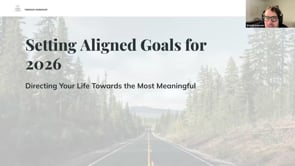
Setting Aligned Goals for 2026 (Workshop Recording)
If you missed the workshop yesterday or would like to watch it again, the recording is now live in the classroom. Appreciate such a large turnout. We will look into adding seats for future workshops so everyone who wants to attend live is able to. For those who attended (or who watched the recording) - what was the biggest takeaway or lesson you took away?
3 likes • Jan 7
Thanks for sharing this. I would have liked to join, but I am at a conference this week. look forward to watching.
1-5 of 5
@jennifer-johnson-leung-9458
I am mathematician and married mom of four with two still at home. I seek to renew my practice of reflection to grow in self-knowledge and compassion.
Active 114d ago
Joined Aug 5, 2025
Powered by