Activity
Mon
Wed
Fri
Sun
Aug
Sep
Oct
Nov
Dec
Jan
Feb
Mar
Apr
May
Jun
Jul
What is this?
Less
More
Memberships
Addict II Athlete
70 members • Free
21 contributions to Addict II Athlete
12d •
Nebo volunteers needed
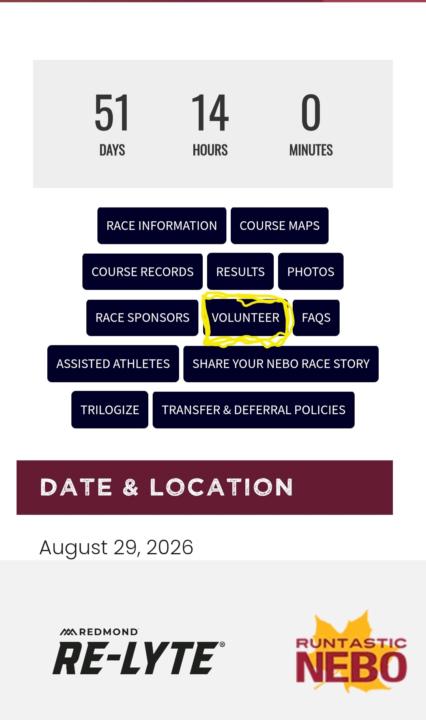
As discussed last night AIIA has been chosen as the charity for the nebo half and full marathon. The team has been asked to get atleast 30 volunteers. The more volunteers the bigger the donation the team gets. We need to start getting vollenters signed up. To do so go to Runtastic NEBO https://share.google/5lnLFl8qGIqxK93XG and find the volunteer option. Click on it and pick a category to volunteer at, pre race. Expo/setup. Or race day. After you selected where to volunteer you will be asked to answer 2 questions 1 shirt size and the next, who are you vollentering with please select AIIA. Then complete the remaining questions. You can volunteer at multiple different areas along as it dosnt interfere with another time you are already doing. Each spot you signed up for counts as 1 vollenters so one person has the ability if they want to get multiple volunteer spots covered. Please jump on and help the team out and register to volunteer now.
0 likes • 3d
Volunteered for Friday handout packets and Saturday station J. It's going to be epic
6d •
“The troops aren’t coming; we are the troops”
Athletes, that's a hard sentence to believe, and it seems scary because it removes the fantasy of rescue. In recovery, though, it is not a sentence of abandonment. It is a call to recognize the people already standing beside us, and the strength we build by standing together. The Troops Aren’t Coming. We Are the Troops. There is a moment in every hard season when you realize no one is coming to live your life for you. No one can make the phone call you keep avoiding. No one can take the first sober day in your place. No one can run the mile, attend the meeting, apologize with integrity, go to therapy, rebuild trust, or choose not to return to the pattern that is costing you everything. That realization can feel lonely at first. It can also become the beginning of power. On Team Addict II Athlete, we do not pretend that recovery is a solo mission. We believe in support, accountability, treatment, community, mentorship, and asking for help. We believe people need people. But we also understand that support is not the same as rescue. The teammates around you can carry encouragement. They can hold the light. They can sit beside you when the road feels impossible. They can remind you who you are when you feel like quitting. But eventually, you still have to stand up. You still have to take the next step. And when you do, you discover something that addiction worked very hard to hide from you: you are not as powerless as you were taught to believe. Your Recovery Is Not Waiting to Be Saved. Addiction often creates a painful cycle of waiting. Waiting for someone else to change. Waiting for the consequences to disappear. Waiting for the perfect recovery plan, the right job, the right relationship, the right mood, the right Monday, the right amount of confidence, or the right moment to begin. But recovery rarely arrives with perfect conditions. Recovery begins when you say, “I do not feel ready, but I am willing to start.” That starting line may look small, like getting out of bed, drinking water instead of soda, or going to a meeting, sending the text, calling a teammate, or showing up for a workout.
1 like • 3d
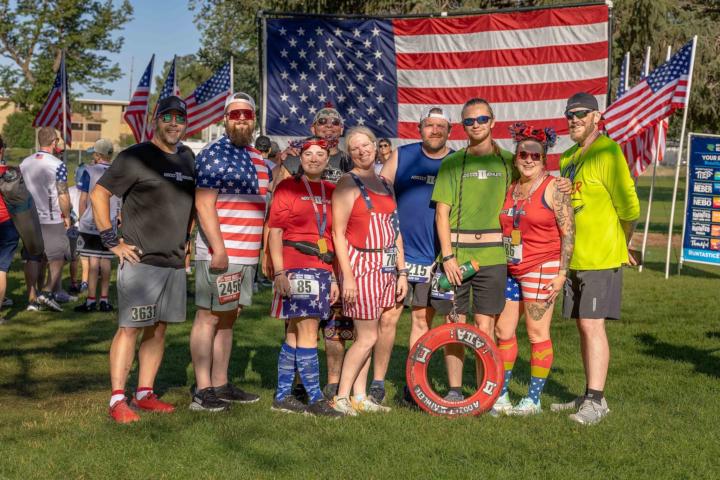
In my recovery I dont need troops who may only be deployed for so long, what i have found that strengthens myself is my teammates and supportive community who I consider family, or my clan. In America Indian cultures it's a village who helps raise a child. Not just there parents. With the support of the whole village the child learns many different things and becomes very knowledgeable on all aspects of life. This is the way I look at mental health and addiction behaviors today. With the help of my Recovery village ( teammates/supportive community) I dont have to feel alone, all I have to do is talk to someone, communicate. Cause as the old saying goes for myself A CLOSED MOUTH DOESN'T GET FED.
4d •
Podcast Guests
Hey Athletes, this community has always been more than a group of people. It is a place where we show up as we are, carry one another through hard seasons, and prove that recovery does not have to be walked alone. That said , I would love to invite you to be a guests on the Addict II Athlete Podcast. If you feel ready to share, we want to hear your story, not a perfect version of it, but the honest one. The moments that changed you, the things you have learned, the struggles you still carry, and the hope you have found along the way. Your experience may be the exact handrail someone in this group needs right now. A person listening may recognize themselves in your words and realize they are not alone, they are not broken, and they still have a team. It’s time to turn the mess into the message. Post bellow is you are willing.
0 likes • 3d
I can give my full testimony anytime your ready coach. Being 100% vulnerable allows me to let go of the past and fully heal those open wounds. Hear is a little bit of vulnerability right now. Suicidal thoughts still can enter the mind even in present time but when those thoughts come with that emotion and feelings today im able to cast out the devil's work and see the great things im doing, though GOD, my hard work and my many different teams I play for giving me support, encouragement, and strength. Behind that every day smile doesn't mean all the pain is gone. But today I get to choose exactly how can turn my pain into power. The mind is powerful and so is our words.
13d •
The Power of Showing Up
Hey Athletes! Have you ever noticed some days you don’t “fix” anything, you just kind of arrive? That’s what showing up is: not performing recovery, but being present with your people while recovery does its slow, honest work. Thats the The Power of Showing Up for your team. We like to talk about breakthroughs. But the truth is, a lot of recovery looks like this: - You show up even when you don’t feel brave - You text even when you don’t know what to say - You listen even when you want to solve - You run your part of the relay even if your legs are heavy Because teammates don’t only celebrate the win. They hold the line when someone’s doubt gets loud. “Showing Up” Isn’t a Mood, It’s a Choice. When you’re part of a team, you learn something recovery teaches fast: feelings change. But commitment can stay. So what does showing up do for Addict II Athlete teammates? It creates a bridge where words fail. It turns “I’m alone” into “I’m still here.” It reminds each other that the next exchange matters because the next exchange is how the relay moves forward. A Simple Challenge for This Week; Choose one teammate. Then do the smallest version of showing up: - Send a “thinking of you” message - Share one thing you did today (even if it’s tiny) - Offer a ride, a check-in, or a seat at the table - Say, “I’m in this with you,” and mean it The goal isn’t to be perfect. The goal is to be present long enough for hope to catch. Recovery isn’t built only in the moments you’re shining. It’s built in the quiet, repeated decision to show up for the person next to you. That’s what teammates do. That’s what Addict II Athlete is.
0 likes • 11d
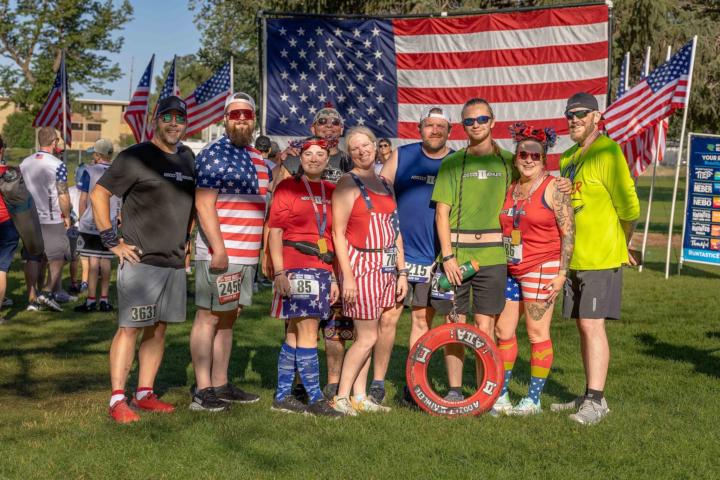
Showing Up......Well for myself I take big pride when I say im a man of my word. I'm impeccable with my words coming out of my mouth cause what I say and do reflects just the person who I am. My words coming out my mouth also has a lot of power that comes with it. Showing up fir others can change someone's life. My words can also take someone down so we have to be careful how we use our words. Showing up reflects the true person i am inside and out. When someone tells me there going to do something I hold them to there word. If you always break your word with me well then you start to create a mistrust and I like to surround myself with people who are true to there word. In recovery i have to push myself to the highest level cause I can rewind that tape and remember what it felt like having no support or nobody who carsed and for me that led to overdosing 7 times and not wanting to wake up. So ya today in my recovery I give someone my dedicated number for support I show up cause your not alone.
18d •
Roll Call
Hey Athletes; How are you all doing out there? The good, the bad, the ugly, lets talk.
6 likes • 17d
I've been hitting it hard in tooele county, today I will being doing a thank you for all the staff at the jail and taking a photo with them, next week Addict II Athlete is suppose to get introduced into drug court, I will be setting up times to meet with different directors like valley behavioral health, warrior spirit, beacon house, and switch point. I will be making my name know as Coach Gonzales when i talk to the chief of police, and chief of the sheriff's office. I will be hitting every single organization and business out here in tooele getting ADDICT II ATHLETE (TOOELE CHAPTER ) Name out there. I will also contact news stations. My visions are big and my manifesting is bigger and I won't quit until I breathe no more. The great part about when the bad does come for now especially with my mental health I get to cast that out right away and shake them off cause the more and more I dig and put into my recovery 10 fold im getting back. I also encourage those who are struggling your not alone, never feel alone cause im right there with you. As Athletes we are a team of champions and have so many plays we run through out the year that makes us stronger mentally, physically, and for myself spiritually. So review those plays over and over (podcasts, lessons) cause that's how im going to win my superbowl , MVP, or WIN THE GOLD.
2 likes • 15d
@Faith Swank surround yourself with all your supportive community. We got ya
1-10 of 21
@jason-gonzales-1730
Showing Up, Rising Up, Combating and Helping Those In Addition Recovery
Active 15h ago
Joined May 3, 2026