Activity
Mon
Wed
Fri
Sun
Nov
Dec
Jan
Feb
Mar
Apr
May
Jun
Jul
Aug
Sep
Oct
What is this?
Less
More
Evateachingopera
491
$9/m
5 contributions to Evateachingopera

Jul 9 •
🎁 GIVEAWAY - Win a FREE Masterclass Chapter!
All you have to do is to answer this question: "If you could unlock ONE chapter of the Online Classical Singing Masterclass, what would you most like to learn?" Simply share your answer in the community. 🎁 Every thoughtful answer will receive one Masterclass chapter as a gift to keep forever. ⏰DEADLINE: Wednesday, July 15, at 8:00 PM (Vienna time). After the deadline, I'll personally send each of you the chapter that best matches your answer. 😊


0 likes • Jul 19
@Eva Lindqvist I just sent it via message and in a comment above 🥰🪽🌹🌹🌹 thank you beautiful Eva!
0 likes • Jul 19
@Eva Lindqvist Dear Eva, my e mail adress: [email protected] thank you so much! 🌹🌹🌹
May 11 •
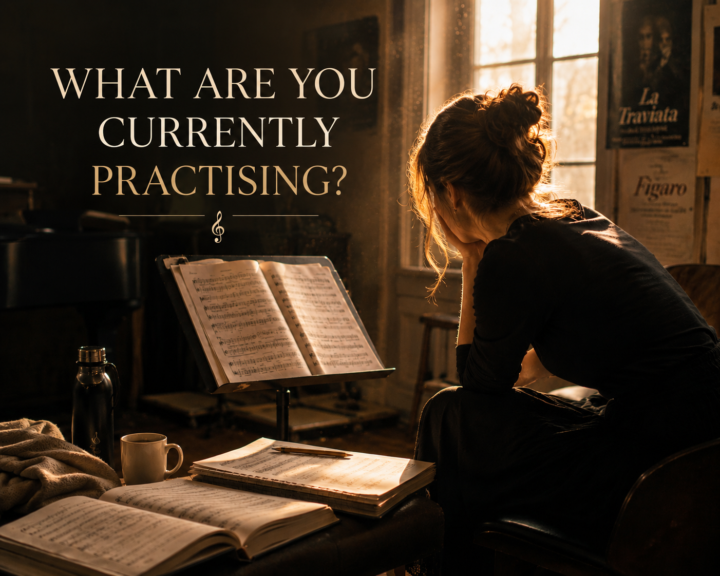
What Are You Currently Practising?
👇 What are you currently practicing? --> An aria? --> Choir repertoire? --> Technique? --> Breath work? --> A difficult passage that drives you crazy? 😅 Hi everyone 🙂 I would love to make this community feel a little more alive and personal again. Go into the community and write just one sentence. I’ll personally answer as many people as possible 🙂 — Eva
0 likes • May 12
@Eva Lindqvist Thank you with all my Heart for your response! I feel it resonating deeply! That is very good question dear Eva, I still have to learn so much, so sometime it is hard for me to define what actually needs improvement. As for Сирень I feel more or less stable with the half of the piece, but I feel the second half is more complex for me for some reason and it requires more subtle shifts if that makes sense, I don't know how to deal with it at the moment, at first I focused on just the melody and timing, but I feel it is all over the place right now 😂
0 likes • May 12
@Eva Lindqvist Thank you very much Eva, for this gentle reminder. :)
Mar 14 •
When Likes Start Guiding The Voice
As a voice specialist, I want to share an observation that is becoming more and more common online. Sometimes we see very young classical singers repeatedly posting videos of extremely deep chest voice sounds even though in their other recordings you can clearly hear a much lighter soprano or mezzo-soprano instrument. And yes, these clips often get huge attention. They are impressive, entertaining, and they trigger strong reactions. But this is exactly where we need to be careful. Especially highly musical and vocally gifted singers are at risk here. Because when something gets applause, it is tempting to repeat it again and again. A few playful excursions into “Look, this is me trying to sound like a man” are absolutely fine. Exploring color, range, and vocal curiosity is healthy. Every singer should experiment. But building an identity around that effect because the comments are enthusiastic can slowly pull the voice away from its natural center. Chest voice is an important part of every healthy instrument, even for sopranos. A well-developed chest register creates grounding, stability, and expressive depth. But it should be developed intelligently and in balance with the rest of the voice. The goal is integration, not domination. When the chest register becomes a performance gimmick rather than a coordinated part of the instrument, long-term imbalance can appear, especially in young voices that are still organizing themselves. The real question is not: “Can I do this sound?” The real question is: “Does this support the voice I actually have?” Your repertoire, your tessitura, and your long-term vocal identity matter more than short-term online reactions. A true soprano or mezzo does not need to prove anything by constantly pushing downward. The most impressive voices are the ones that grow in alignment with their natural design. So yes, explore, play, be curious. But stay anchored in your fach-specific repertoire and in healthy technical development. Likes are temporary. Your voice is for life✨
1 like • Mar 15
Thank you so much for sharing your wisdom and Insights in relation to this topic! I really love experimenting on all levels. I started exploring sound and the human being as an instrument by discovering overtone chanting. I explored overtone chanting in the lower ranges like deep Mongolian throat chanting and I stopped because it hurt at some point. I am still feeling into where the true home of my voice is, feeling into natural flow and where and when I am pushing and crossing my own boundaries.
0 likes • Mar 15
@Eva Lindqvist Thank you so much for your loving response, dear Eva 🌹
Feb 26 •
🧠 This is an Emotional Resilience Checklist for Singers.
A simple but powerful self-assessment to measure how stable, grounded, and mentally strong you are in a high-performance career. Opera and classical singing demand more than technique. They demand emotional control, nervous system regulation, and professional maturity. Use this checklist to honestly evaluate yourself. Rate each statement from 1–5 and calculate your final score. The stronger your emotional resilience, the more stable your voice and career will become. Take a few quiet minutes, go through it carefully, and see where you stand. If you feel comfortable, drop your score in the comments 👇
2 likes • Feb 27
Oh wow! Thank you so much for this powerful Checklist! I don't have that experience yet but it will be interesting to feel and see how things unfold and to go back to the List at some points in time. 🕊️🌹
Feb 19 •
✨ New Mini Course is Live: The Soul Diving Breath Method
I’ve just added a new mini course to the classroom: The Soul Diving Breath Method. This training is focused on one thing: Reducing stress and resetting your nervous system. Inside, you’ll find 6 guided breathing exercises and 6 structured practice sessions designed to help you: • Release stress and inner pressure • Calm your nervous system • Regulate your breath in moments of tension • Reduce performance anxiety • Create mental clarity and emotional stability Your breath directly influences your nervous system. When you learn how to guide it consciously, you can shift from stress into calm within minutes. You can find it in the classroom section. This is a powerful tool not only for singers, but for everyday life. Take 20–30 minutes for yourself and go through the full mini course. Let your body slow down. Let your mind reset. 👉 You can access it now inside the Classroom. Let me know how you feel after completing it.

0 likes • Feb 20
Thank you so much Eva! This is amazing! 😍😍😍
1-5 of 5
@janine-ninger-9723
I am Singer/Songwriter/Filmmaker and I love to tell Stories through Musik.
Active 45d ago
Joined Feb 18, 2026