
Write something

20h •
A Voice Almost Lost-The Beginning of Lidia´s Story
Three years ago, Lidia walked into my studio. She wasn’t confident. She wasn’t secure. And she didn’t even know if singing was truly possible for her. What I saw in that moment… was something very different from what she felt. And that’s where everything began. Over the past three years, I’ve watched her go through a process that most people never see. Not just vocal training. But doubt, pressure, growth, and real transformation. I decided to document this journey. Not as a highlight reel. But as a real story. 🎧 REAL VOICE JOURNEYS – Episode 1 is now inside PRO.
2
0

2d •
The Turning Point: When The Voice Begins To Travel On The Breath
One of the most fascinating moments in vocal development is when the breath suddenly begins to organize itself. The singer stops pushing the sound and the voice starts to travel on the breath much more naturally. This is a real turning point. Everything feels different. Freer. More connected. More stable. In this video, you see Anatol in his 2nd year of my Online Masterclass The Golden Path into Opera Singing. This is exactly the kind of transformation that happens when the foundations are built correctly. And this is what we are working towards. You can find the full Masterclass in the Classroom under THE ONLINE MASTERCLASS. Take your time with this. This is where singing really begins. Let me know what you notice when you watch this 🙂
0
0

3d •
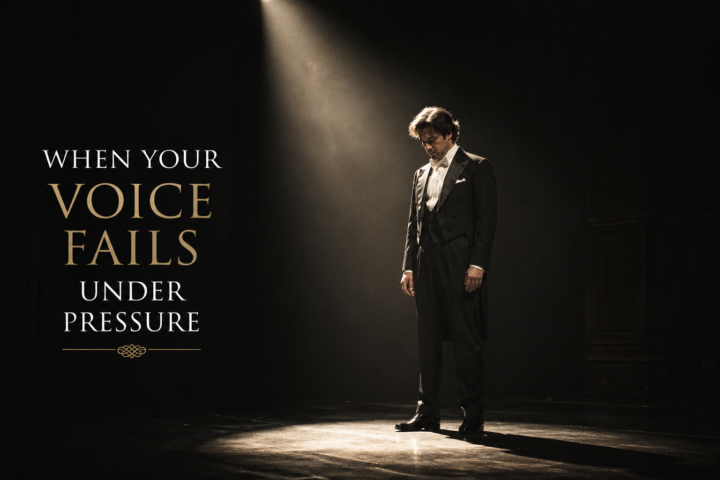
When Your Voice Fails Under Pressure...
and how to REWIRE it. Most singers think their voice “fails” under pressure. But what’s really happening is much deeper. The voice is not the problem. The system is. The moment you feel stress, expectation, or judgment, your body shifts into a completely different state. Breathing becomes shallow. Support becomes unstable. Control increases. And the voice reacts immediately. This is exactly what I break down in the new PRO video inside: 🧠 MASTER YOUR SYSTEM “Your Voice Under Pressure” You’ll understand what’s really happening and why pushing more will never solve it. 👉 If your voice feels different in lessons, auditions, or performances… this will change how you see it.
1
0
8d •
PRO MEMBERSHIP - Where Everything Comes Together
So many of you have been reaching out to me. With questions, challenges, very different situations. And I realized something: There is not just one topic. There are layers. Your voice is not just technique. It is your system. Your body. Your mind. Your identity as an artist. And you need a space where all of this can come together. So I decided to take a step forward. I created a PRO area where you can be in direct contact with me and ask your individual, professional questions. But PRO is more than access. You step into a complete training world. A space where everything is structured, connected, and designed to actually move you forward. That’s why PRO is built around six focused training spaces: 🎤 FIX YOUR VOICE Clear, direct, practical. We fix what doesn’t work. 🧠 MASTER YOUR SYSTEM Understand how your voice actually functions in your body and under pressure. 🎭 BECOME THE ARTIST Where technique turns into expression, identity, and real artistic presence. 🎧 REAL VOICE JOURNEYS Real stories, real struggles, real transformations. Nothing polished. 🧬 VOICE PROBLEMS & HEALTH Learn how to understand, protect, and stabilize your voice long term. 🔬 VOICE & SCIENCE TALKS Where science, medicine, and real expertise finally make things clear. This is not random content. This is a structured path. This is where things start to connect. Technique. Mind. Body. Artistry. Not as separate ideas. But as one system. And once that system works together… your voice changes. Not by forcing it. But by understanding it. If you’re ready to stop guessing and start progressing step by step… PRO is your next level. - Eva 🌊


6d •
Liptrill
In the video, I’m trying to perform a liptrill. It’s not exactly a great attempt—today just wasn’t my day. It’s also a bit awkward because I have to sit, hold my phone in my hands, and play a virtual piano on my laptop. That also restricts me, and after a while my arm starts to hurt and my shoulder and neck get tense. I also asked two questions in the video: one about the passaggio, and the other about how to perform a liptrill. If nothing else, I hope I’m a useful guinea pig.

1-28 of 28
powered by
skool.com/evateachingopera-free-7168
A focused opera singing community with guided training, expert feedback, practical exercises, and support to build your voice step by step.
Suggested communities
Powered by