Activity
Mon
Wed
Fri
Sun
Sep
Oct
Nov
Dec
Jan
Feb
Mar
Apr
May
Jun
Jul
Aug
What is this?
Less
More
Owned by James
The NETFLIX of HYPNOSIS. Once you LEARN HYPNOSIS I'll teach you how to use it to build a tribe on Skool
(Invite Only) Impact Driven Leaders On A Mission To Change The World. Build Your Reputation On Skool And Network With Other Influential Leaders.
Memberships
Love Keepers United
8 members • Free
The Quantum Forge
22 members • Free
Living A Life Less Serious
41 members • Free
Men's Wisdom Work
42 members • Free
The Aesthetic Physique™
169 members • Free
CN
Creation Nation
3 members • Free
Abracadabra Astrology Skool
5.5k members • Free
Inner Pathway
6 members • Free
The Hypnosis Lab
40 members • Free
4 contributions to FLUTARIAN IMPROVISATION

Mar 19 •
I will only take your money if you really want to give it to me!
This community is free. This information is important! Please participate by being a supportive audience to your fellow Flutarians. I tested Improv Games for free until flutists started asking me how they could pay me. So then I started accepting payments for group classes and private lessons. Almost all of my events are free to drop in to! Here's where you can make a donation if you've been to Improv Games and you loved it so much you want to tip me. Here's where you can subscribe, if you want to be like the cool Flutarians who've already committed to showing up at least once a week. If you subscribe now, you'll get private lessons too. Check here to see if the subscription with private lessons is still available.


0 likes • Mar 19
@Vic Wheeler as soon as I can I’m getting a drone flute 😂
0 likes • Mar 19
@Vic Wheeler
Jan 25 •
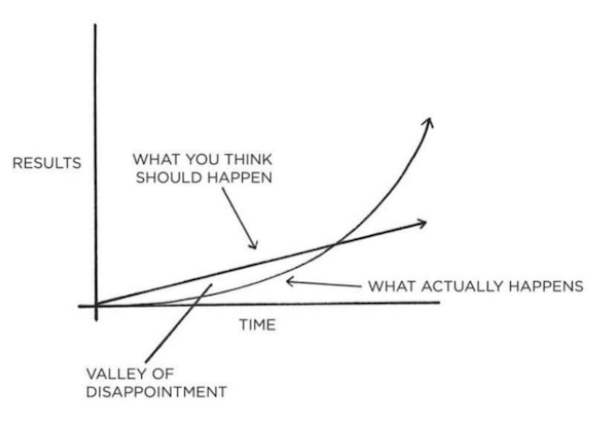
Where are you at in the learning curve? Are you in the valley of disappointment?
Don’t you think this chart from Atomic Habits applies to most worthwhile endeavors? When I was a child, somewhere I got a set of juggling balls. I thought it was so cool what the jugglers did at the circus!! But I gave up trying to juggle before I ever even got close. I tried and dropped the balls. I tried again and dropped the balls again. I lacked understanding and persistence. I succumbed to the disappointment of failure. I was in the valley of disappointment. It wasn’t until about a year ago that my interest in juggling resurfaced. At the Play It Again Sports store I picked up a microfiber hacky sack spontaneously. I began to love its texture, and I realized the first of two critical principles when it comes to learning to juggle, or any other challenging hobby: 1. You have to love it. I realized that it was important that, if I ever wanted to become proficient at juggling three balls, I needed to have tools that I really loved. This is like having a flute that you really like. Or improvising with songs you actually love. So, when I saw someone on TikTok playing with FlopBalls, I thought, “ah! I will love these toys. Let’s give it a try.” Then, I took a leap of faith and bought a set of 5, setting my intention to be able to juggle at least 3 of them at a time one day. I thought, “Playing the flute is HARD. If I can learn to play the flute, I can learn to juggle, right?” Then I had another revelation: 1. Chunk it. Some of my best flute teachers taught me that, when I wanted to master a challenging technique or section of music, it could be done by breaking it up into small, digestible chunks - and then practicing those chunks separately until they became natural, and THEN combining them. I thought, “how can I break this juggling skill up into chunks, like when I learn something new on flute?” That’s when I watched a 3-ball juggling video in slow motion until I could see what each ball was doing individually. I realized they work together in a unit like a musical triplet! And with a triplet, what happens when you remove one? We get the long-short pattern we find so frequently in jazz.
1 like • Jan 25
I remember locking myself in my room when I was about 15 with three baseballs and deciding I wasn’t going to come out until I learned how to juggle 😂
1 like • Jan 25
I also like this model as well to go along with the atomic habits one! Used it in dance and with hypnosis all the time.
Dec '25 •
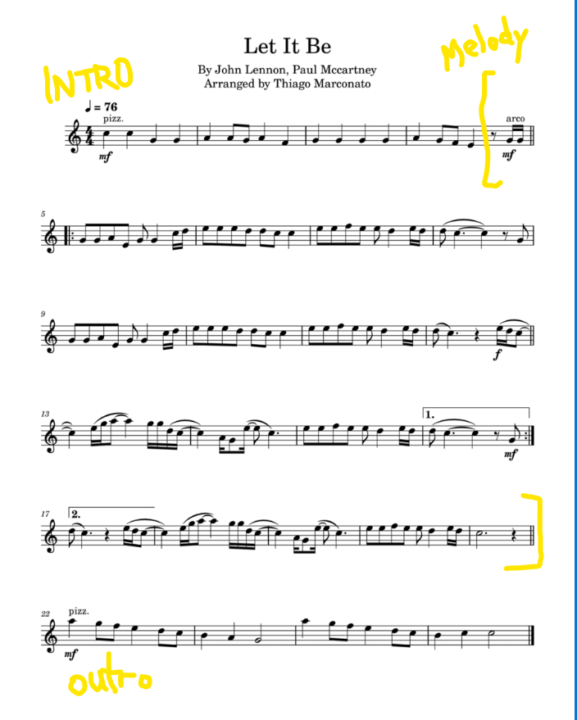
Let It Be Melody!
Sometimes I improvise with sheet music. I see what's written and then change something here or there to make it my own. I found this sheet music of Let It Be today and thought you might like to try it! PS - Join Improv Games tonight at 7pm CT if you can! And be on the lookout for a newsletter-type of announcements! More "LET IT BE" in the new year!!
0 likes • Dec '25
I wish I could play 😂 Would love to join! ⚡💛⚡
Dec '25 •
Guided Meditations Go Great with Flute Music!
One of my intentions for 2026: To create more flute meditation music. I've received some really wonderful compliments in 2025 with regards to my flute playing: they said it took them into a deep state of meditation and rest. I promised my friend Karen that I'd produce some flute meditations this year. So I was intrigued when I connected with Ahmy Brook through another Skool community (for group owners!) and read that she helps people manage thoughts, calm emotions, and find balance... I wondered, what similarities might she have in her community & ours? Might she have something to teach us about managing performance anxiety and building improv confidence? So she shared with me her meditation on Confidence and now I'm sharing it with you... After I've added my own flavor of flute accompaniment. Rather than using some "generic" background track to accompany her voice, now it has my flute sounds. I just added some reverb and played as I was moved by the meditation... sometimes playfully mimicking the scene Ahmy describes or mimicking the tone & rhythm of her voice. I'm actually not satisfied with this recording because of the "hiss" of background noise! But since this group and the "Improvisation Waterfall" category are not about perfection but about making progress, I decided to share it with you today as well. I promised myself I would get at least 1% better with the sound quality next time I record. Listen here: https://drive.google.com/file/d/1Yjjkr7HPI-TyGnYDAPFl-QgJ5dMA1QVV/view?usp=sharing You can look forward to another recording in the future. Would you like to hear more guided meditations + flute music in 2026? Who wants the original voice recording so you can try adding your own flute sounds?

2 likes • Dec '25
Ahmy is awesome! Would love to see/hear some more from you this year!
1-4 of 4

Active 11h ago
Joined Oct 29, 2025
ENFP
North York Toronto