Activity
Mon
Wed
Fri
Sun
Aug
Sep
Oct
Nov
Dec
Jan
Feb
Mar
Apr
May
Jun
Jul
What is this?
Less
More
Owned by Glow
Glow Unique is for those ready to take ownership of their skin through elevated, ingredient-focused skincare. Healthy skin is created with intention.
Memberships
.1Hz Gratitude Experiment
220 members • Free
Impactful Female Entrepreneurs
67 members • Free
Her Cellular Radiance
54 members • Free
Enough, Already
120 members • Free
Awaken To Your Power
57 members • $37/month
Purple Light Lounge
186 members • Free
Ruby Enterprises
1.3k members • Free
GOOSIFY: Skool Made Fun
13.1k members • Free
Skool Extensions 🧩
656 members • Free
1 contribution to VitaLife Longevity Medicine

Mar 10 •
Can GLP-1 Medications Make You Fall Out of Love?
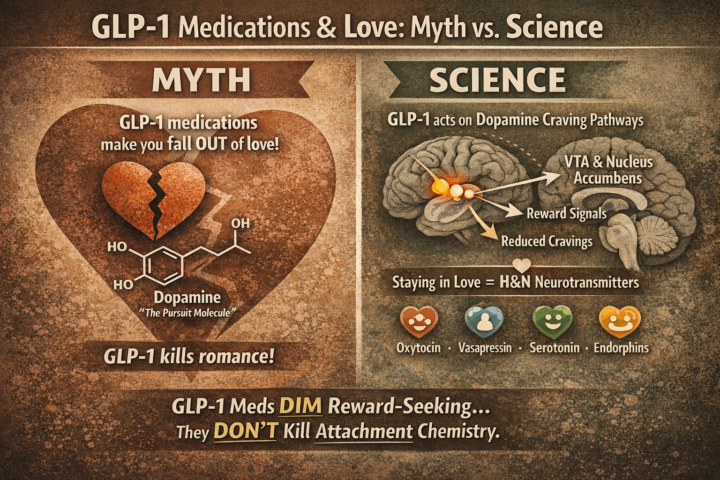
You may have seen viral posts claiming that GLP-1 medications like Semaglutide or Tirzepatide can “make people fall out of love.” That sounds dramatic… but neuroscience tells a much different story. SO let's snuff some viral mythological content and drop a little geeky science into the game. Let’s talk about what’s actually happening in the brain. ☕Grab a cup of coffee and hang in there for this slightly longer lesson post.... 🧠The Brain Chemistry of Falling in Love💌 Early romantic love is largely driven by dopamine. Dopamine is the brain chemical of anticipation, motivation, and pursuit. It activates when your brain senses something exciting or rewarding might happen. But... The dopamine is in the anxiety to get the reward o the reward itself. When we are talking about food...This is why the hamburger doesn't taste as good or leave you as satisfied as wanting it does. The reward is in the obtaining it, not the having it... This is why the early phase of love feels so intense. Your brain is basically saying: 🏃♀️“This person is exciting… keep pursuing them.” In fact, the brain circuits involved in early romantic attraction are very similar to the reward pathways involved in motivation and craving. This concept is described really well in the book: The Molecule of More by neuroscientist Daniel Z. Lieberman. If you want to really dive in. But here’s the key point most people miss... Staying in Love Uses Different Brain Chemistry Long-term relationships shift away from dopamine-driven excitement and move toward bonding chemistry. The neurotransmitters that help maintain long-term love include: • Oxytocin – bonding and trust • Vasopressin – pair bonding and loyalty • Serotonin – emotional stability • Endorphins – comfort and calm These are the chemicals that support connection, security, and long-term partnership. So falling in love and staying in love actually use different biological systems. Where GLP-1 Medications Actually Work GLP-1 medications were designed to help regulate metabolism, appetite, and blood sugar.

1 like • Apr 8
Great info! Thanks for sharing! I haven’t fallen out of love but, desire for many things has reduced since being on a GLP1, I assume it’s the reward issue.
1 like • Apr 8
@Courtney Contreras it has helped me husband with drinking significantly. When you stop using the GLP after long term does the desire return?
1-1 of 1

@jaimee-munoz-8717
Glow Unique is for those ready to take control of their skin with ingredient-driven skincare and a supportive community.
Active 1h ago
Joined Apr 5, 2026