Activity
Mon
Wed
Fri
Sun
Aug
Sep
Oct
Nov
Dec
Jan
Feb
Mar
Apr
May
Jun
Jul
What is this?
Less
More
Memberships
Synthesizer: Free Skool Growth
44.6k members • Free
Restaurant Owner Community
50 members • Free
BBQ, BEER AND WHISKEY
63 members • Free
7 contributions to BBQ, BEER AND WHISKEY

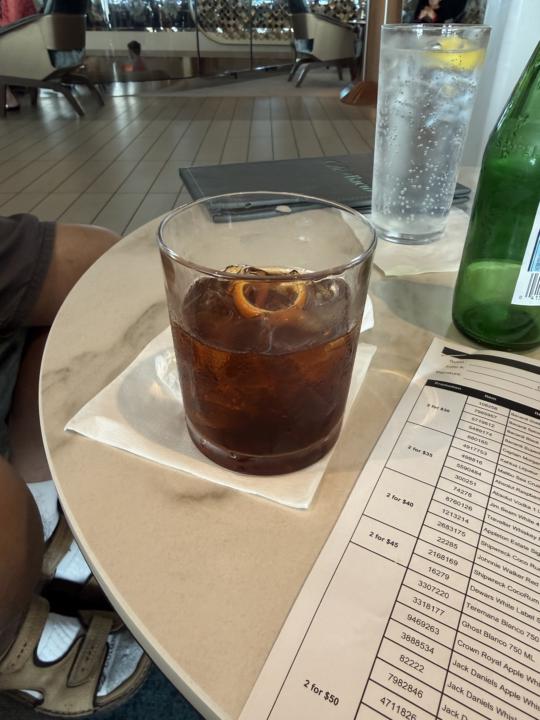

0 likes • Dec '25
@Dar Brown That combo is hard to beat 🔥 Rosemary adds such a clean, aromatic twist to an Old Fashioned—simple but next level.

🔥
Dec '25 •
Pork Belly Candy
Pork belly burnt ends are the gateway drug of the BBQ world. There is nothing like that specific moment when the fat renders into literal butter and the glaze sets into a sticky lacquer. The secret sauce: Don’t over-sauce too early. Let the smoke do the heavy lifting for the first 3 hours, then braise them in the "holy trinity" (Butter, Brown Sugar, Honey) for that shine.
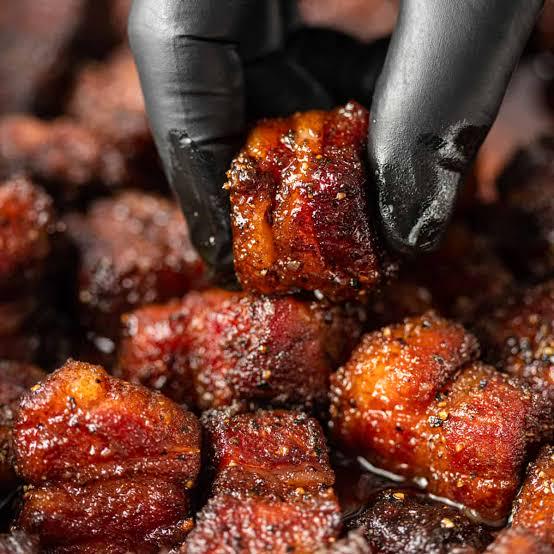
0 likes • Dec '25
@Dar Brown 😂 100% accurate Brisket is definitely the gateway drug… then suddenly you’re chasing burnt ends, beef ribs, pork belly—next thing you know you’re managing fires at 3am. Burnt ends in any form are pure BBQ candy. No turning back once you’ve had the good stuff
🔥
Dec '25 •
Master the skin, Save the bird
We’ve all been there: the meat is juicy, but the skin is like chewing on a rubber band. To graduate from "backyard cook" to "pitmaster," you need to manage two things: surface moisture and fat rendering. 💡 3 Pro-Tips for the Ultimate Crunch: - The "Fridge Air" Trick: After seasoning your chicken, leave it uncovered in the fridge for at least 4 hours (or overnight). The cold air dehydrates the skin. Dry skin = Crispy skin. Wet skin = Rubbery skin. - The Fat Anchor: Use a light coating of avocado oil or olive oil before applying your rub. Because chicken skin is porous, the oil helps the heat transfer more efficiently to render the fat underneath. - The "Finish" Flare: If your bird hits 68C and the skin still looks pale, crank the grill or move the bird directly over the coals for the final few minutes. Just keep it moving—the jump from "mahogany" to "burnt" happens fast at 175C 🪵 Wood Pairing 101: Chicken is a sponge for smoke. Avoid heavy woods like Mesquite which can turn the meat "ashy" or bitter. - Fruitwoods (Apple/Cherry): For a sweet, mild profile and a deep red color. - Pecan: For a rich, nutty depth that doesn't overpower the bird.

0 likes • Dec '25
This is absolute gold 🙌🔥 Crispy skin is the line between good chicken and pitmaster-level chicken, and you nailed the why behind it—moisture control and fat rendering. That fridge-air trick alone changes everything. Once people see the difference dry skin makes, there’s no going back. The finish flare tip is also clutch—knowing when to push heat without torching the bird is real experience talking. And spot on with the wood pairing. Chicken takes smoke fast, and fruitwoods or pecan are money every time. Quality info like this is what levels people up 🐔💪
🔥
Dec '25 •
Reverse Sear: The perfect Gradient
For decades, the "standard" way to cook a thick steak was to sear it over high heat first to "lock in the juices" and then finish it in the oven. Science has since proven that searing does not lock in juices—in fact, the high heat of an initial sear can actually cause the surface fibers to contract so violently that they squeeze moisture out before the middle even gets warm. Enter the Reverse Sear. This technique flips the script by starting low and slow and finishing with a high-heat flash. It is the most scientifically sound way to cook any piece of meat thicker than 1.5 inches. 1. The Myth of the Seal The idea that searing creates a moisture-proof barrier is one of the most persistent myths in the culinary world. If you watch a steak as it sears, you’ll hear a sizzle; that sizzle is the sound of moisture escaping and hitting the hot pan. Searing is about flavor, not hydration. It triggers the Maillard reaction, where amino acids and sugars transform into hundreds of new, savory flavor compounds. 2. The Temperature Gradient Problem When you drop a cold steak onto a 260C grill, you create a massive temperature gradient. By the time the center reaches a perfect medium-rare 57C, the meat just below the surface is likely 93C, leaving you with a thick, gray, overcooked "band" around a small pink center. In a Reverse Sear, by warming the meat at a low temperature 107C first, you ensure the entire steak rises in temperature uniformly. This results in "wall-to-wall" pink meat with almost no overcooked gray band. 3. Surface Dehydration: The Key to the Crust The Maillard reaction cannot happen effectively until surface moisture has evaporated. Water boils at 100C, while the Maillard reaction really kicks into gear above 149C. In a traditional sear, the heat of the pan has to spend energy "boiling off" the surface moisture before it can start browning the meat. In a Reverse Sear, the 45–60 minutes the steak spends in the low-temp oven or smoker acts as a dehydration chamber. By the time you are ready to sear, the surface of the meat is bone-dry.

0 likes • Dec '25
This is top-tier info 👏🔥 Really well explained and backed by actual science, not old kitchen myths. The way you broke down temperature gradients, surface dehydration, and enzymatic tenderization makes it super clear why reverse sear works—not just that it does. Posts like this are gold for the BBQ community. Respect for taking the time to educate properly. Once you understand this, it completely changes how you cook thick steaks. Absolute quality content 🥩💪
🔥
Dec '25 •
Wagyu Myths
The Wagyu Blueprint: Debunking the Myths of Luxury Beef Wagyu beef has achieved a legendary, almost mythical status in the world of barbecue. Its reputation for extreme marbling and a buttery mouthfeel makes it the "holy grail" for many pitmasters. However, as its popularity has grown, so has a collection of misconceptions that can lead to costly mistakes in the pit or at the butcher counter. To truly master Wagyu, you must look past the marketing and understand the biological and chemical realities of the meat. Here is the technical breakdown of the most common Wagyu myths. Myth 1: The "Wagyu" Label is Universal Many consumers believe that "Wagyu" is a single, uniform product. In reality, the term literally translates to "Japanese Cow," and it encompasses four distinct breeds: Japanese Black, Brown, Shorthorn, and Polled. Furthermore, there is a significant difference between Fullblood Japanese Wagyu and American or Australian Wagyu. Domestic versions are often crossbred with Angus (F1 or F2 crosses). While these "Wagyu-influenced" cattle produce exceptional beef, they have a different fat structure and flavor profile than the purebred Kuroge Washu from Japan. Myth 2: Higher Marbling Always Equals Better Quality While the Beef Marbling Score (BMS) is the most famous metric, it is not the only one. The Japanese Meat Grading Association evaluates four key areas: 1. Marbling (BMS): The abundance and distribution of intramuscular fat. 2. Meat Color and Brightness: Measured against a standard firmament. 3. Firmness and Texture: The "feel" of the muscle fibers. 4. Fat Quality: The luster and melting point of the fat itself. A steak with a BMS of 12 is visually stunning but can be so rich that it becomes cloying or "greasy" after a few bites. Often, a well-balanced BMS 7–9 provides a more nuanced eating experience where you can actually taste the beef alongside the fat. Myth 3: Wagyu Must Always Be Served Rare This is a common error in judgment. Wagyu fat has a significantly lower melting point than standard beef—often as low as 28 Degrees Celsius.

0 likes • Dec '25
This is a life-saver, Chelton. As a new smoker, the idea of dropping big money on a Wagyu brisket is intimidating. I always assumed 'the rarer the better,' but your point about Myth 3 (the melting point of fat) totally changed my perspective. I would have served it way too rare and wondered why it felt waxy! Thanks for the technical breakdown before I made an expensive rookie mistake
1-7 of 7

@isabella-de-beer-1252
Business Owner • Entrepreneur• Boy mom🤍 Building dreams & businesses
Active 75d ago
Joined Dec 16, 2025