Activity
Mon
Wed
Fri
Sun
Dec
Jan
Feb
Mar
Apr
May
Jun
Jul
Aug
Sep
Oct
Nov
What is this?
Less
More
Owned by Helen
Natural—living, cleaning, skincare, and products. Eco living made simple. Save time & money. Healthier home & planet, one small step at a time.
Recalibrate Outdoors
63
Free
Oasis Builders
171
Free
Skool—Clarity, Coaches, AI
16
$15/m
Skoolology: The Skool Lab
75
5.0
$47/m
Aligned Entrepreneur Network🌐
618
5.0
Free
Builders Together
10
Free
The Promo Lounge
529
4.9
Free
8 contributions to Oasis Builders
19h •
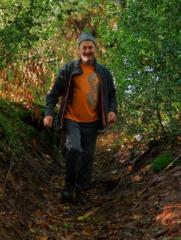
Starting tree planting season.
As the leaves are beginning to change colour, it's time to harvest bare rooted saplings. The first ones are sycamore, often considered a weed tree, it's a good medium sized fast growing Pioneer that will form a woodland in well under ten years. Easy firewood and chipping biomass that's suitable for coppice.


🔥
1 like • 10h
As soon as our pine plantation has been logged I will start planting all my firewood and building wood trees. I am hoping to do a bit of research over the summer to see what our best options are. Our pine plantation area will all go back into native trees (about 45 acres), but once the logging tracks are cut in they will be a good access way for me to plant trees we can fell in future years. Our property is very hilly so anything I do, I need to future plan for easy access and so we don't destroy any surrounding native forests. All my biomass trees are going into my food forest. I have also just started to grow hemp so hoping that becomes an excellent support and chop n drop species for us. In future years I also want to start investigating the medicinal and fibre aspects of it too.
🔥
0 likes • 9h
@Jim Flach I had to look that one up, I’m not familiar with it. 🌼
6d •
87 days of anarchy
It seems likely we will have some catastrophic event between February and 2030, after three days under the kitchen table with only the light and warmth of a candle ,with perhaps a pack of playing cards for entertainment, having eaten all the tins of cold beans, and filled the toilet bucket, we will emerge to a new world order. The army and high rank civil servants are planning to stay in their bunkers for 90 days, so we will be on our own. If you're trapped in a prison, mental institution or hospital, or any area of high population density, the chances are not good. If you were trapped travelling out of urban areas you'll already be toast. I think this may be a planned population reset , like the first two world wars or COVID. World social engineering on this scale , comes from where, and who are these influencers and puppeteers? Sometimes it's enough to suggest a event will occur, to instigate a reaction, or change in public opinion. Especially if we were told to prepare and nothing happened. Believe it , or not, change is in the wind!
🔥
0 likes • 9h
@Phillip Greenwood I would be too! Tell her to keep imagining herself on that trip having the best time - that is where the magick lies and our best way to work towards a positive future. Your wife must be very wise 🌸
🔥
0 likes • 9h
@Phillip Greenwood me too, I've planted 23,000 trees since we moved up to our new property. It makes me ridiculously happy!
2d •
What Does an Herb's Energetic Quality Tell Us?
We have been learning to recognize qualities such as warmth, coldness, dryness, and moisture in ourselves. These same qualities are also used in traditional herbalism to describe how herbs may influence the body. Consider ginger and peppermint. Ginger is traditionally considered warming. Its pungent character and warming sensation make it a familiar choice when someone feels chilled or experiences sluggish digestion. Peppermint on the other hand is generally considered cooling. Its menthol content produces a cooling sensation, and it has a long history of use for digestive discomfort, particularly when cramping or tension is involved. Traditional herbal energetics helps us understand these qualities and how they may influence the body. Warming and cooling are not precise measurements of body temperature, but they are traditional descriptions that help guide herbal selection alongside our understanding of an herb's actions and safety. This brings us to an important relationship between the person and the plant. If someone already experiences excessive warmth, a strongly warming herb may not be the best fit. If someone tends toward coldness, a cooling herb may not provide the balance they are seeking. But we cannot make that decision from one quality alone. A person who generally feels cold may still benefit from peppermint when experiencing digestive cramping because peppermint has actions beyond its cooling quality. Likewise, someone who generally feels warm may find ginger helpful for occasional digestive sluggishness. We look at the particular discomfort, the herb's actions, the person's usual tendencies, and how they respond. An herb is not automatically a poor choice simply because one of its qualities seems opposite to the person's constitution. As we continue learning, we will also encounter drying, moistening, relaxing, and toning qualities in herbs. Together, these descriptions help us understand why an herb might be a good fit for one situation and a poorer fit for another. The goal is not simply to memorize what each herb does, it is to understand why its qualities might fit the person and the conditions we observe.
Poll
5 members have voted
🔥
1 like • 2d
I also use my intuition a lot with things like this. I’m deepening my nature communication practice so I should actually just practice talking to the plants and asking them 🌱 (it’s usually the trees I chat with) 🌳
3d •
Familiar Foods in a Garden Around 1440
If we gathered onions, garlic, leeks, and parsley from our gardens today, we would be bringing together foods named in Mayster Jon Gardener’s instructions preserved from around 1440. The spelling looks different, but several names are recognizable. His opening lines include “leke,” “ownyns,” “garleke,” and “percely.” Across nearly six centuries, these are still familiar garden crops and kitchen ingredients. What interests me is how easily we can picture using them. Onions and garlic might begin a meal in the cooking pot. Leeks could become part of a soup, and parsley could supply leaves for a sauce. Medieval English cooking records also connect these plants with soups, sauces, and other preparations. Mayster Jon gives parsley particular attention. He describes cutting it repeatedly during the season, while leaving plants intended for seed uncut. This was a crop to manage for continued use, with some plants serving the kitchen and others providing seed. That does not mean his parsley or onions were identical to the varieties we buy today. The familiar crop name does not establish the same size, appearance, flavor, or growing behavior. Nor does one gardening text tell us what every household grew or ate. Still, these recognizable foods give us a practical connection with the past. We can begin with something we know, then ask how people grew it, prepared it, and carried it into another season. For our next look at Mayster Jon’s garden, I would like to follow these familiar foods a little further, from the growing bed toward the household table. Which of these four do you grow, and which earns its place most often in your cooking?
🔥
2 likes • 2d
Normally I would do onions, garlic, and leeks but I missed the planting window this year (May). Our climate doesnt' always make growing them easy though, we get really high humidity and rust sets in. I would normally start them a month earlier than what is usually recommended which seems to help. I always have parsley growing.
9d •
The Meal Can Change With Us
A familiar meal may stay on our table for years while the people eating it change. Someone who once spent the day doing physical work may now spend more time sitting. A household that cooked for five may now cook for one. The food is familiar, but what we need from the meal may deserve another look. One important distinction is between energy and nutrients. Calories measure the energy food provides. Protein, vitamins, minerals, and other nutrients have roles in keeping the body functioning. As we age, we may need less energy, particularly when activity decreases, while our need for adequate nourishment continues. Needing fewer calories does not mean needing proportionately less of every nutrient. This helps explain why “just eat less” is an incomplete approach to nourishment in later life. We need to consider both how much we eat and what our food provides. This does not mean every older adult should reduce portions. Needs differ with activity, body size, health, and individual circumstances. There is also a practical side. A meal can offer useful nutrients and still be difficult to shop for, prepare, or enjoy. Cooking for one, a limited budget, or less energy for preparation can change what is manageable. These circumstances are important when we consider how nourishment reaches the person. This week, look at one familiar meal and ask two questions. What nourishment does it provide, and does the way I prepare and serve it still fit my life? You might recognize a useful adjustment, or find that the meal still serves you well. The purpose is to understand the fit before changing it. What has changed most in what you need from a meal over the years? Which change has most affected your everyday meals?
Poll
1 member has voted
🔥
1 like • 3d
@Jim Flach we have a family sit down meal every night - it’s my one non-negotiable. During the day, the wildlings make their own breakfast and lunches. I probably need to figure out the meal prep thing.
🔥
1 like • 2d
@Jim Flach some great ideas 🙏
1-8 of 8

🔥
@helen-harris-2063
On a journey of regeneration, eco-living, syntropy, and spirituality, weaving homesteading and nature-connected living in Northland, NZ. 🧙♀️ 🔥🌿✨
Active 3h ago
Joined Nov 3, 2026
Hikurangi, Northland