Activity
Mon
Wed
Fri
Sun
Jun
Jul
Aug
Sep
Oct
Nov
Dec
Jan
Feb
Mar
Apr
What is this?
Less
More
Owned by Chris
Play your first real simple song in 7 days If guitar has felt confusing, overwhelming, or you didn’t know where to start, you’re in the right place.
Learn, Share, be inspired. Whether you are newly diagnosed as Coeliac, care, know someone or just curious and want to cut out Gluten. This is for you.
Memberships
Guitar Alchemy
442 members • Free
Signal Guitar Skool
37 members • Free
Boring Guitar Club
21 members • Free
Everything Maintenance
16 members • Free
Rock N Blues Fretboard Friends
17 members • Free
Barre Chord Breakthrough
4 members • Free
Roast & Promote 🔥📢
156 members • Free
Skool Made Simple
32 members • Free
✨💜🌎The You World Order🌎💜✨
489 members • Free
58 contributions to Creator Boost Tribe

🔥
2d •
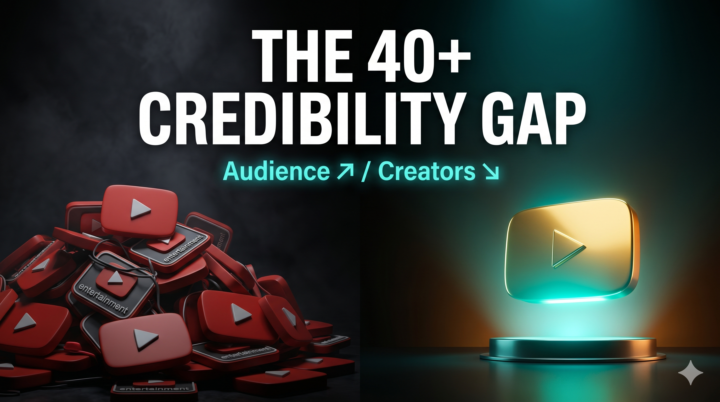
If you're over 40 with real expertise, you're not late to YouTube
There is a version of this conversation that puts people off before they start. The "you should have started five years ago" framing. It sounds motivating but it mostly just makes people feel like they've already lost. Here's what's actually true. The 55 to 64 age group is growing faster on YouTube than any other demographic. That audience is there, it's engaged, and it watches long-form content from people with genuine experience. The creator side hasn't caught up. Most of what YouTube serves that audience is made by people half their age with no real-world track record. The credibility gap is massive and it is not being filled. If you are a professional over 40 with expertise in your field, you are not competing with the algorithm-chasers. You are serving an audience that is actively looking for someone like you and not finding them. The compounding part matters too. YouTube is a library, not a feed. Videos you make now keep working for years. Starting in 2026 means by 2028 or 2029 you have a real asset. The curve doesn't care when you start, only that you do. Not too late. For this audience, probably just right. Where are you in the process right now?

🔥
2 likes • 2d
@Des Dreckett slowly building my channel and showing up to take the action 👍
🔥
0 likes • 2d
@Des Dreckett 👊

6d •
I've Been Building Something 🏗️
I'll tell you all about it on Monday! Come celebrate my 47th birthday and I'll reveal my new project to you all as well! Woohoo let's go! A lot of you have been waiting patiently for this, and I am so excited to share it with you! Come live to find out what it is. :) In the meantime, have a lovely weekend! Happy Friday! -Alexa Link to event on calendar

🔥
1 like • 6d
@Alexa Saarenoja Happy Birthday!
🔥
0 likes • 3d
@Alexa Saarenoja you're welcome 😊
🔥
3d •
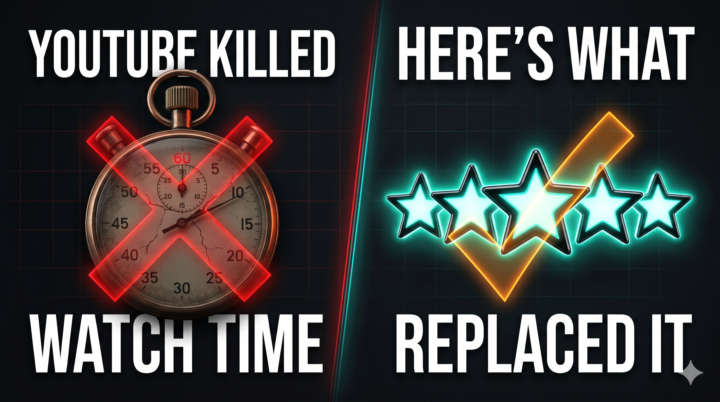
YouTube Killed Watch Time. Here's What Replaced It 👀
For years, the YouTube algorithm had one job. Keep people watching as long as possible. Watch time was the signal that everything else fed into. Build a long video, hold attention, and get recommended. That was the game. That game has changed, and most creators haven't caught up yet. YouTube has been running post-view surveys for years, quietly asking viewers to rate videos after watching. One to five stars. Did this feel worth your time? They collected millions of those responses and trained a machine learning model on them. That model now predicts a satisfaction score for every video on the platform, whether it was ever directly surveyed or not. The shift matters because watch time and satisfaction are not the same thing. A viewer can watch 18 minutes of a 20-minute video out of inertia and register low satisfaction. Another viewer can watch 4 minutes, get exactly what they came for, and immediately search your channel name for another video. That second viewer is worth more to your channel now than the first one. YouTube calls that post-video behaviour return to discovery. When someone finishes your video and searches for more of your content rather than closing the app, your satisfaction score goes up significantly. When someone closes the app, it is neutral to slightly negative. When someone clicks not interested, it is one of the heaviest negative signals in the model. The comment section is also being read. YouTube uses natural language processing to scan comment sentiment. A high ratio of comments expressing genuine value against comments expressing frustration or disappointment feeds directly into the satisfaction calculation. Responding to your first wave of comments matters not just for engagement but because those viewers tend to stay on YouTube longer after watching your video, which strengthens your session signal. Three practical changes worth making now. Deliver on your title promise in the first 30 seconds. Not at the eight-minute mark after a long setup. Viewers who get what they came for quickly are more likely to rewatch, share, and return. All three are positive signals.
🔥
2 likes • 3d
@Des Dreckett
🔥
2 likes • 3d
@Des Dreckett
🔥
4d •
What part of YouTube do you enjoy the most?
Drop your answer in the comments. Curious to see where people are at.
Poll
6 members have voted
🔥
2 likes • 3d
@Des Dreckett Watching it grow with doing no work would be ideal 😂
🔥
1 like • 3d
@Des Dreckett if only!
🔥
7d •
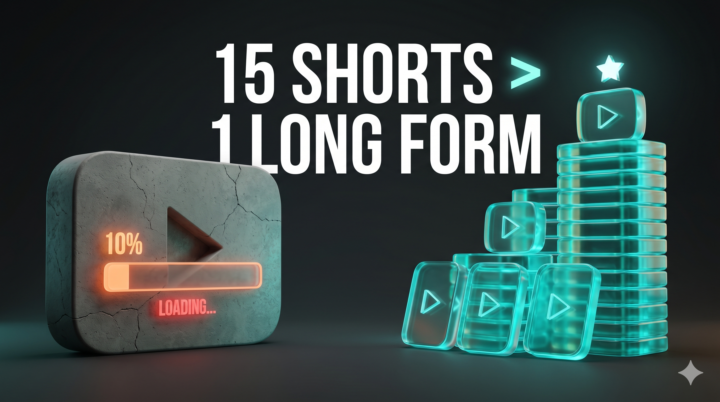
The reps required to get good on camera are higher than most people think
I pulled together some research on what creators actually report about getting comfortable on camera. The numbers are interesting. Most people describe a rough patch that lasts anywhere from 15 to 200 videos. One creator said 2 years. Another got through it in 5 weeks by batching 15 videos fast. The burst approach compressed the timeline considerably. The consistent thread across all of it is that nobody found a shortcut. Volume is the mechanism. The camera stops feeling like a foreign object when you have been in front of it enough times that it becomes background noise. There is a practical angle here with Shorts. Not from a growth strategy perspective but from a craft one. Short form gives you a way to accumulate reps without the overhead of long form production. You can shoot 3 in an afternoon. That kind of repetition builds camera comfort faster than spacing out one long form video a week. The skills transfer directly. The other thing that comes up in the research is the gap between expectation and reality. People expect to feel natural after a handful of videos. When they still feel stiff at video 38 a lot of them start to wonder if they are cut out for it. They are. They just have not hit the threshold yet. The creators who make it through treat the early awkwardness as non-negotiable. Not a problem to solve. Just part of the process. Where are you in the reps right now and what has made the biggest difference so far?
🔥
2 likes • 7d
@Des Dreckett consistency and the drive to power on through and to let go of my buddy perfection, knowing that done is often enough
🔥
1 like • 7d
@Des Dreckett
1-10 of 58
🔥
@guitarforbeginners
Guitar teacher, music lover and dad who cooks Gluten Free recipes, Coeliac aware. I learn, teach and inspire others through music and cooking
Active 2h ago
Joined Aug 10, 2025
London, Bexleyheath
Powered by