Activity
Mon
Wed
Fri
Sun
Aug
Sep
Oct
Nov
Dec
Jan
Feb
Mar
Apr
May
Jun
What is this?
Less
More
Owned by Grumpy
Community for riders to build, maintain & master motorcycles. Share maintenance knowledge, riding skills, gear tips & support each other.
Memberships
The Classic Movies Club
19 members • Free
The Moto BrotherHood
14 members • Free
Small Engine Repair & More
73 members • Free
976BIKE - Your Online BikeShop
15 members • Free
Bikers Hangout Community
55 members • Free
Motorcycle Skool - StuntGrom
39 members • Free
Elbows Out Club
15 members • Free
RideMore Rebuild & Repair
52 members • Free
The Street Rider’s Code
33 members • Free
18 contributions to Small Engine Repair & More

Mar 30 •
Warmer Weather is Here – Time to Put the Snowblower to Bed Properly
Before you park your snowblower for the season, take a few minutes to winterize it the right way so it’s ready to fire up next year without headaches. 🔧 End of Season Snowblower Care: • Remove or treat the fuel Drain the tank completely OR add a quality fuel stabilizer and run the machine to circulate it through the system. • Fog the engine (protect the cylinder) Remove the spark plug and add a small amount of oil into the cylinder. Slowly pull the recoil to coat the الداخل, then reinstall the plug. • Change or top up engine oil Fresh oil prevents internal corrosion during storage. • Inspect & clean Blow off debris, salt, and moisture. Pay attention to the auger housing and chute. • Lubricate moving parts Cables, linkages, and pivot points should all be lightly lubricated to prevent seizing. • Check belts & components Look for wear now so you’re not stuck in the middle of the first snowfall. • Store it right Keep it in a dry place, off concrete if possible, and covered to keep dust out. A little work now saves a lot of frustration when winter comes back swinging. — Lefebvre Performance 🔧

0 likes • Mar 30
Great advice as always Michael.
Mar 17 •
Welcome to LEFEBVRE PERFORMANCE
Most people replace parts… but never understand the problem. At LEFEBVRE PERFORMANCE, we teach you how to diagnose and fix your own small engines — from carburetor cleaning to full rebuilds on both 2-stroke and 4-stroke engines. Stop wasting money on unnecessary repairs.Start building real knowledge, real confidence, and real skills you can actually use. 🔧 Learn at your own pace🔧 Step-by-step training🔧 Real-world mechanical understanding Join the community and take control of your repairs. 👉 LEFEBVRE PERFORMANCE on SKOOL #SmallEngineRepair #DIYMechanic #2Stroke #4Stroke #Carburetor #FixItYourself #LefebvrePerformance

0 likes • Mar 25
Understanding the root cause of problems will keep you out of trouble in the future. Sure, replacing a part gets you going, but why you had to replace the part is far more important. Ex; change a fouled plug - Kool, but why did it foul? That's the real issue.
Jan 3 •
Riding mowers and lawn mowers don’t stop aging just because winter hits.
How they’re stored matters, but climate makes a difference. In colder regions, winter storage isn’t optional. Freezing temperatures, moisture, and long periods of inactivity can create problems that show up months later when it’s time to mow again. Fuel breaks down, condensation forms inside engines, batteries discharge, and internal parts sit without proper lubrication. For cold climates, proper winter storage protects the engine and saves money in the spring. That usually means stabilizing or draining fuel, changing oil if it’s due, cleaning the deck, protecting electrical components, and storing the machine somewhere dry. A mower that’s put away correctly will start easier, run cleaner, and last longer. In warmer climates, the situation is different. If temperatures stay mild and equipment is used year-round or regularly, full winterization may not be necessary. What still matters is fuel quality, clean airflow, and regular use. Long periods of sitting, even without freezing, can still cause fuel issues and corrosion if the machine isn’t maintained. The key isn’t following a one-size-fits-all rule. It’s understanding your climate, how often the mower is used, and how long it will sit. Cold weather demands protection. Warm weather demands consistency. Both require basic care. Good storage habits don’t just prevent problems; they reduce spring headaches, repair bills, and downtime when you actually need the machine. How do you store yours for the off-season, or does it run year-round where you are?
0 likes • Mar 20
Amen!
1 like • Mar 25
@Scott Coulson Best way to go.
Jan 13 •
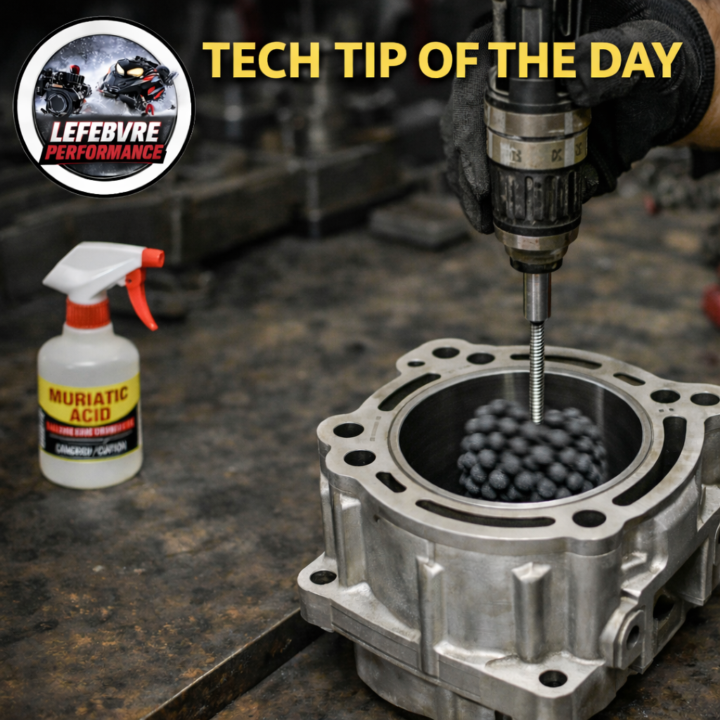
Honing Nikasil Cylinders & Removing Aluminum Transfer Using Muriatic Acid”
If a Nikasil or Cast iron cylinder has not been damaged and has had aluminum from a melted piston that has transferred onto the cylinder for a unknown reason, there is a chance it can be removed using muriatic acid. Once the aluminum is cleaned off, a light ball hone can be used to prep the surface by completing cross hatching for a new piston and rings. This only applies when the Nikasil coating or the cast iron cylinders are still usable.
0 likes • Mar 20
I like to see a 45 degree cross hatch, consistent along the entire length. What do y'all think?
Mar 14 •
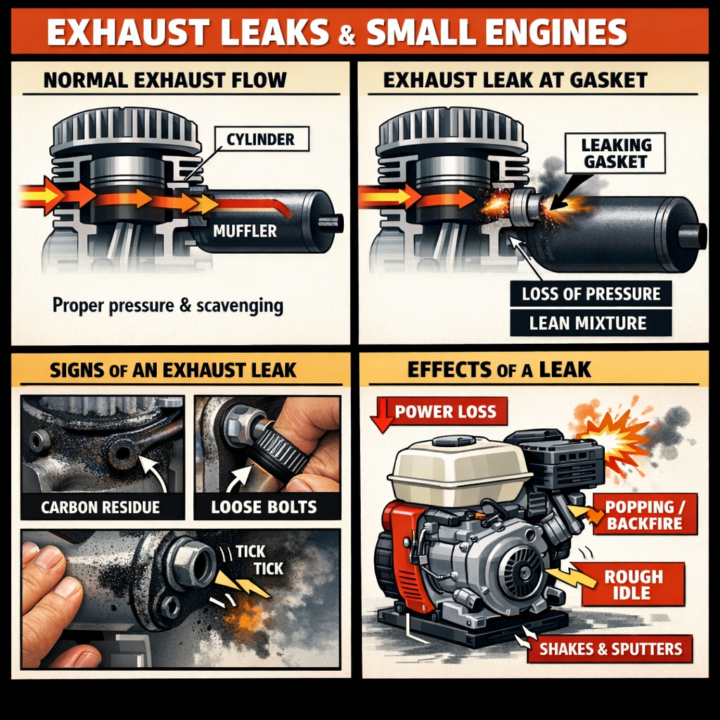
🔧 SMALL ENGINE TIP OF THE DAY – EXHAUST LEAKS 🔧
At Lefebvre Performance we spend a lot of time diagnosing engines that “run rough,” bog down, or seem impossible to tune. One overlooked problem is an EXHAUST LEAK. Most people think exhaust leaks are only about noise, but on small engines they can seriously affect performance. WHY EXHAUST LEAKS MATTER: When an engine runs, the exhaust system helps control pressure leaving the cylinder. On two-stroke engines especially, exhaust pressure helps with scavenging — pushing burnt gases out while helping pull fresh fuel mixture in. If there is a leak at the: • exhaust manifold • cylinder gasket • pipe joint • muffler flange the pressure waves change and the engine may: • lose power • run lean • idle poorly • become difficult to tune • make a ticking or popping sound On four-stroke engines, leaks can also pull fresh air into the exhaust stream, which can cause popping or backfiring during deceleration. HOW TO CHECK FOR AN EXHAUST LEAK: 1️⃣ Look for black carbon marks around the exhaust flange or gasket. 2️⃣ Listen for a sharp ticking sound when the engine runs. 3️⃣ Feel for hot air escaping around the exhaust joint (carefully). 4️⃣ Check bolts — vibration often loosens them over time. At Lefebvre Performance we always inspect the exhaust system before adjusting carburetors or clutching. A properly sealed engine runs smoother, makes better power, and is easier to tune. Small details make big performance differences. – Lefebvre Performance
1 like • Mar 15
Great post! Amazing how many people choose to overlook the sound. Your machine is always telling you a story, dismissing something that sounds different usually turns out expensive.
1-10 of 18