Activity
Mon
Wed
Fri
Sun
Nov
Dec
Jan
Feb
Mar
Apr
May
Jun
Jul
Aug
Sep
Oct
What is this?
Less
More
EnduranceworX
60
$49/m
9 contributions to EnduranceworX
May 28 •
What do you struggle with most in your training?
One thing I see often with amateur triathletes is that the problem is not a lack of hard work. More often it is that too many sessions end up in a similar intensity range, which can make easy days too costly and key sessions less effective. Where do you recognise this most in your own training?
Poll
3 members have voted
2 likes • May 29
@Zoe Newsam Thanks for the insight, Zoe! That is such a good example of where the data can be useful, but still miss the real context. Devices can estimate training load, sleep, HRV etc, but they cannot truly understand the fatigue from shift work, emotional stress, disrupted routines and unpredictable frontline work. Like you mention, that is where communication with a coach and honest trial and error will always beat tech. It sounds like you and Alan are already doing the most important thing: adjusting the plan around the person, not forcing the person to fit the plan. One small thing that might help in your case is using a simple “readiness traffic light” before key sessions or during the warm up: Green = you feel reasonably rested, motivation is normal, warm-up feels as expected, and HR/power/pace roughly match what you would expect. Go as planned. Amber = you feel slightly flat or unusually tired, warm-up feels harder than normal, or metrics are clearly off, for example unusually high or low HR for the effort. Reduce volume, reduce intensity, or turn the session into controlled aerobic work. Red = you feel exhausted, very stressed, unusually heavy, ill, or the warm-up feels wrong from the start. Switch to easy movement or rest. That gives you a quick shared language for the day without overthinking it. Especially with shift work, the same session on paper can be completely different depending on what your body has had to deal with beforehand.
May 12 •
Why FTP-Based Training Zones May Be Holding You Back
Another article for those interested. This time about the science behind FTP and why it doesn't always tell the full story about an athlete's physiology: https://open.substack.com/pub/dorianhorsten/p/why-ftp-based-training-zones-may?r=2dd4wx&utm_campaign=post&utm_medium=web&showWelcomeOnShare=true
0 likes • May 18
@Alan Cardwell Thanks Alan!
0 likes • May 29
@David Jones Thanks David! Let me know if you have any related questions
May 28 •
Are you training with purpose?
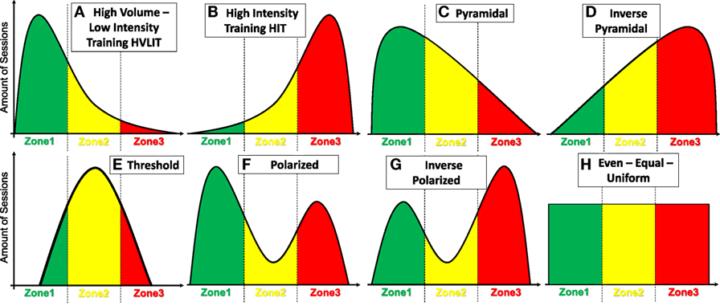
A lot of amateur triathletes do not need to train harder. They need to train with clearer intent. One of the most common patterns I see is this: - Easy sessions become a bit too hard. - Hard sessions become a bit compromised. And suddenly most of the week sits in the same “moderately uncomfortable” place. That does not mean moderate intensity is bad. Threshold work, tempo rides and race-specific intervals can all be very useful, especially in triathlon. The problem is when moderate intensity appears by accident rather than design. A few practical checks: - If it is an easy session, you should finish feeling like you could continue comfortably for much longer. - If it is a hard session, it should hit the intended target, not become an "all out survival" session. - If it is threshold work, it should be controlled, not a disguised time trial. 2-3 reps in reserve is a good guideline. - If you cannot explain the purpose of the session, the training program is probably not precise enough. - If your easy sessions reduce the quality of your key sessions, they are not easy enough. This is why I think the “polarised vs pyramidal vs threshold” debate is often less useful than people think. All three models can work: - A polarised model can be useful when an athlete needs clearer separation between easy volume and hard work. - A threshold-focused model can be very effective when controlled aerobic stress is the priority. - A pyramidal model can be a good balanced default when the athlete is not clearly limited by one specific area. The real question is not which model sounds best but whether your current training distribution lets each session do its job. I wrote a full article about this, including what polarised training actually means, why moderate intensity is often misunderstood, and how amateurs can apply this without blindly copying elite athletes. https://substack.com/@dorianhorsten/note/p-199047158?utm_source=notes-share-action&r=2dd4wx
3
0

May 13 •
Ow speed vs pool speed
3 interesting chats on ths topic so a wee piece on the key differences. Most amateur triathletes record slower times in OW than in the pool ( there are always a few exceptions to prove the rule). This time of year the main issue is rubber overload. Winter suits, rash vests, gloves, hats and booties are all needed when the water temp is sub 10 but basically the more rubber the slower you are. Hats and rash vests provide more buoyancy the wrong side of the hips driving the back end down. Add in boots and the water fill and reduction in ankle flex adds a nice draggy anchor. Strip those away and the wetsuit often produces a positive impact on body position for most. Gloves are interesting. If you have smaller hands and can get tight fitting gloves without them filling up with water then you are swiiming with paddles. If that gives you a hold on the water and lower more powerful pull that can actually be a benefit..which is why they arent allowed in most races. For most though gloves kill your feel for the water and get heavy when wet or full of water. Lets say its 100g per hand...at 60 strokee per minute thats a fatigue inducer right there. So as the temp comes up..shed the rubber. For me thats around 20 secs per 100m. In the pool some people are super slick at button pressing and in short intervals with plenty of recovery...thats 'fake fast' so as the rep distance goes up..the speed is more realistic. When in the pool we are at our fastest when coming off the wall and if you turn well and maximise the momentum that will always be quicker in a pool. If you turn like a supertanker the difference out and in will be less marked. If you think your pool speed is say 1:30 in sessions with reps and you do ow with 500 or 1k stretches and thats 1:40... try swimmimg a 1k in the pool and the times will be closer. Then we have stroke imbalances. If you have a pull to one side then having to correct means more frequent sighting and more disruption to the bodyline. If your sighting technique is poor..thats a double dunt!
1 like • May 18
Great points Alan. For the more advanced/stronger swimmers with no history of shoulder injuries I would also recommend the single arm paddles + pullbuoy drill to build strength, balance out the stroke, work on breathing timing in a challenging position, and core + lat engagement to drive the stroke instead of legs. All important for OW swimming. I would start with short 25-50 m reps and build it up to 200-400 m reps over a few months.
May 18 •
Neck rash
I seem to have started getting wetsuit rash/friction burn on the back of my neck after open water swim sessions. So far I’ve always used Daisy’s Surf Cream to prevent chafing on my neck- but it feels like it’s maybe not cutting it any more. Looking for ideas: what do others do? It’s worse in salt water obviously, but I also had some in fresh water.
0 likes • May 18
@Alan Cardwell agreed, vaseline is the only thing that stays on
1-9 of 9
Active 118d ago
Joined May 8, 2026
Powered by