Activity
Mon
Wed
Fri
Sun
Mar
Apr
May
Jun
Jul
Aug
Sep
Oct
Nov
Dec
Jan
Feb
What is this?
Less
More
Memberships
Peptide Biohack Research Hub
65 members • Free
OPTIMIZE & THRIVE
3.7k members • Free
Peptides4Power
1.2k members • Free
2 contributions to Peptide Biohack Research Hub

Jan 2 •
NAD+
I accidentally refrigerated my unreconstituted NAD+. Should I leave it in refrigerator or remove and put in a dark place.

0 likes • Jan 3
Isn’t NAD supposed to be kept in refrigerator?
Dec '25 •
💪🏻💉🧬 IGF-1 LR3 & PEG-MGF
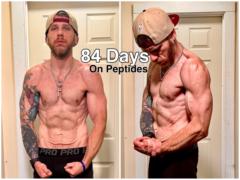
https://youtu.be/ao0kdUySw_s?si=zahaiVdupYgB0A1A IGF-1 LR3 and PEG-MGF Injection Demo: Targeting Biceps and Delts for Growth Hey Peptide Bio Hack Research Hub community! In this video, I’m sharing my site-specific injection routine with IGF-1 LR3 and PEG-MGF, focusing on biceps and delts to test localized muscle growth. As always, these are research peptides—not for human use—so this is for educational purposes only. If you’re new to peptides, let’s break down what they do, why they might help, how they work, and the realities from studies. I’ll tie in my experience over the past month-plus. What is IGF-1 LR3 and Why Use It? IGF-1 LR3 is a modified version of insulin-like growth factor-1, a natural hormone the body produces in response to growth hormone (GH). The “LR3” extension makes it last longer (up to 20-30 hours vs. natural IGF-1’s minutes), allowing sustained effects. It promotes muscle growth by activating satellite cells (stem-like cells that fuse to muscle fibers for repair and enlargement) and boosting protein synthesis—the process where cells build new proteins for tissue. Studies in animal models show IGF-1 LR3 increases muscle mass by 10-20% over 4-6 weeks when injected locally, as it enhances nutrient uptake and cell proliferation right at the site. In human research (limited, mostly anecdotal from bodybuilding), it’s used pre/post-workout to amplify training gains without systemic sides like low blood sugar at low doses (20-50 mcg). Why? It mimics the body’s response to heavy lifting, potentially speeding hypertrophy (muscle size increase) in targeted areas—ideal if you’re addressing imbalances, like my right bicep lagging from a February car accident that sidelined it for months. What is PEG-MGF and Why Use It? PEG-MGF (pegylated mechano growth factor) is a variant of IGF-1 released during muscle stress, like after workouts. The “PEG” attachment extends its half-life (days vs. hours), making it more effective for recovery. It works by stimulating myoblast (young muscle cell) proliferation and reducing inflammation, helping repair micro-tears from training. Preclinical studies on rodents show PEG-MGF accelerates muscle healing by 15-25% post-injury, promoting fiber regeneration through pathways like PI3K/Akt for cell survival. In human contexts (mostly from athlete reports), it’s injected post-workout to localized sites for better rebuild—doses like 100-300 mcg per muscle support this without broad effects. Why? It targets mechanical damage, complementing IGF-1 LR3 for a “repair and grow” combo, potentially yielding 20-30% better gains in stacked protocols per muscle biopsy research.
1 like • Dec '25
Makes sense, thanks.
1 like • Dec '25
This one has always intrigued me. Was confused in its application. Thanks for the video.
1-2 of 2

@don-magnuson-7436
46 y/o old male, retired LE. Recovering from multiple injuries with chronic pain.
Active 43m ago
Joined Dec 29, 2025