Activity
Mon
Wed
Fri
Sun
Oct
Nov
Dec
Jan
Feb
Mar
Apr
May
Jun
Jul
Aug
Sep
What is this?
Less
More
SUPPLE WARRIORS 👁️
913 members • Free
"Train With The Pack"
306 members • Free
JKD Agency - Outbound Mastery
1.5k members • Free
14 contributions to "Train With The Pack"
Dec '25 •
The Foundation of a Great Team is Their Practice Plan
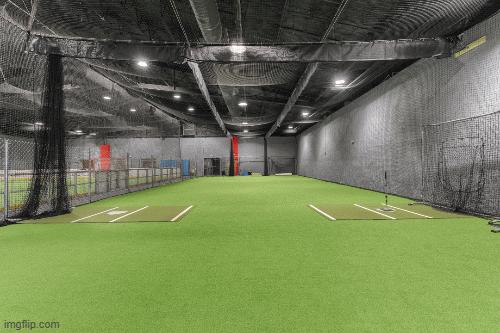
Here’s a framework to help you structure your practices effectively, maximize development, and build a competitive edge with limited resources: 1. Practice Structure Overview (2–2.5 hours max) Here’s a sample practice flow you can adapt based on your needs: A. Dynamic Warm-Up & Throwing Progression (15–20 min) - Prioritize movement quality, quick feet, and arm care. - Add short reactive drills (e.g., cone touches, tag drills) to mentally engage players early. B. Defensive Development (30–40 min) Early week focus: Fundamentals (footwork, glove work, communication)Late week focus: Game speed, situational defense, team defenseStructure: - 10 min: Individual groups (infield, outfield, catchers) - 10–15 min: Partner drills or rotations (e.g., short hops, slow rollers, feeds/turns) - 15 min: Team defense (e.g., bunt defense, 1st/3rd, relays, cuts, double plays) Tip: Use station-based circuits with limited space and rotate groups quickly. Assign leaders or assistant coaches (even student helpers) to run stations. C. Offense & Hitting Progression (40–50 min) Structure: - Front toss or tee work for feel/mechanics - Machine work (if available) or short-overhand BP for speed - Situational rounds: hit-and-run, move runner, bunt for hit, squeeze - Compete at end: live ABs, team challenge rounds (e.g., 21 outs, barrel games) Tip: Run two hitting groups at once: one in the cage, one doing defense or baserunning. Use a whiteboard to post daily hitting focuses so players are accountable. D. Live Play / Controlled Scrimmage (20–30 min) - 6-out innings, start with runners on, or create chaos drills (e.g., 2-outs, bases loaded) - Rotate players into unfamiliar positions occasionally to build depth - Use these reps for lineup assessment and competitive mindset training 2. Weekly Rhythm (3–5 practice days) Monday – High rep defense + fundamentals Tuesday – Offense focus + machine/live hitting Wednesday – Situational defense + small-ball reps + bunting game
1 like • Dec '25
This looks great! Don’t know much about the specifics of baseball practices but from organizational standpoint it looks great!
May '24 •
Welcome to the Pack! 🐺
You made it—welcome to the Pack Baseball & Softball Academy online community! Whether you’re here to level up your game, grow as a coach, or just hang out with fellow baseball and softball fanatics, you’re officially part of the family now. We believe in high-fives, hustle, and helping each other get better every day. This is your space to ask questions, share your wins (big or small), and learn from the best—on and off the field. Welcome to the Pack, coach — quick roll call. Drop 3 quick bullets so we can get you plugged in: - City/State: - Who you coach: (age + baseball/softball) - Your #1 challenge right now: (hitting / pitching / practice plans / parents / culture / recruiting) I’ll reply with one resource or idea for your challenge — and I’m sure other coaches will jump in too.

1 like • Dec '25
@Jason Taylor what time is the call on Wednesday?
1 like • Dec '25
@Jason Taylor sorry I won’t be able to be on
Feb '25 •
My New Podcast
Hi All! I finally dropped a podcast as well. First timer here so any feedback will be greatly appreciated! https://open.spotify.com/episode/1AybFXD2j3Jq7bvlwKX1Ix?si=q8PMu-uQRhqynm5ZX5QjFg
0
0
May '24 •
Live YOUR standards! Be the Example!
ATTACK the work that no one else will do! Live YOUR standard every DAMN day! YOUR daily disciplines will be the difference! Discipline WINS!
1
0
May '24 •
How important is "Visualizing" for the success of your team?
In the competitive world of sports, the difference between winning and losing often boils down to not just physical training but mental preparation. One of the most powerful tools in an athlete's mental toolkit is visualization. It's a technique that transcends the boundaries of the sports field, finding its roots in scientific studies and space missions. As a coach, understanding and applying visualization can significantly elevate your team's performance and foster a winning attitude. Let's delve into the importance of visualization in sports and how it can be a game-changer, drawing insights from NASA's practices and the work of Dr. Warner Vaughn Brohn. ### The Science of Visualization Visualization, or mental imagery, involves creating a vivid and detailed mental image of an activity or performance. This technique is grounded in the principle that the brain and nervous system cannot differentiate between a real event and a vividly imagined one. The efficacy of visualization in enhancing performance was notably demonstrated in a study involving NASA astronauts. The astronauts used visualization techniques to prepare for their missions, mentally rehearsing their tasks. This practice was not only about familiarizing themselves with the procedures but also about embedding a sense of confidence and calmness when executing tasks in the high-pressure environment of space. Dr. Warner Vaughn Brohn, a pioneer in sports psychology, further explored the application of visualization in sports. He discovered that athletes who employed mental imagery experienced significant improvements in their performance. According to Dr. Brohn, visualization activates the same neural networks that are involved in the actual physical performance of the sport, thereby strengthening the muscle memory required for peak performance. ### Implementing Visualization in Coaching As a coach, you can harness the power of visualization to instill a winning attitude among your players. Here's how:

0 likes • May '24
YOU are spot on JT! Visualization is huge in mental and physical performance! I also like to incorporate “I AM” statements where I have clients build mental pathways in the minds for future success of who they will be but begin to believe that is who they are NOW! I use visualization of those I AM statements to make those goals/dreams a reality! It builds confidence and action!
1-10 of 14
@dominic-clegg-7080
I am the founder of A1pha Pack & a Sales Rep at Ben Newman Companies. I'm a mental performance coach that is a former college football coach.
Active 172d ago
Joined May 1, 2024
Powered by