Activity
Mon
Wed
Fri
Sun
Nov
Dec
Jan
Feb
Mar
Apr
May
Jun
Jul
Aug
Sep
What is this?
Less
More
Owned by David
For weather fans, as well as gardeners and farmers: read local forecasts, weather maps, share photos, observations and environments with others.
19 contributions to Has2BGreen

4d •
We have two new members!
Please welcome @Remy Smith and @Mohammed Alashqar . Every new member reminds me to update you on what I am working on. I have been focusing on water stress. Two aspects of it. The first is the changing pattern of rain all over the planet. This is causing all of us to adapt our farming methods and forcing us to work out we handle excess water when the rain is torrential. We need to capture some of this to prevent flooding and then store it for the months that are now drier than they have been. Where I live the issue is the new situation of long dry summers. We are so used to having a distribtion of rainfall throughout the year. This has kept our crops watered and our wildlife alive. Now with less rain we are seeing our hedgerows, trees, rivers and ponds suffer. This year many habitats suffered from drought. Trees were weakened and damaged and if this repeats next year, as the forecasts predict it will, we may lose trees from our countryside. The demand ofr water is so high and our storage facilities so low that there is little we can do. But we can change what we are doing in our towns and cities. We risk losing the joy of trees in our communities. They bring delight and they help cool our environment. But it may come to the stage where we need to consider watering trees. We are used to helping young saplings in the early years, but not to supporting established trees. Even now when I suggest that this might be needed there is incredulity from some of the people I speak to. But in our major public gardens they have begun to take this very seriously. An arboretum that loses 400 trees, as happened in one case, shows how serious a problem this is. It also brings up the question of which tree do you plant? If we plant trees that are used to a climate that no longer exists are you wasting your time? If you don't, what happens to the birds and insects that used to live off them? We are entering strange times.


🔥
2 likes • 4d
Welcome @Remy Smith and @Mohammed Alashqar. I’m glad you’ve joined this excellent group. I’ve learned a lot here.
Dec '25 •
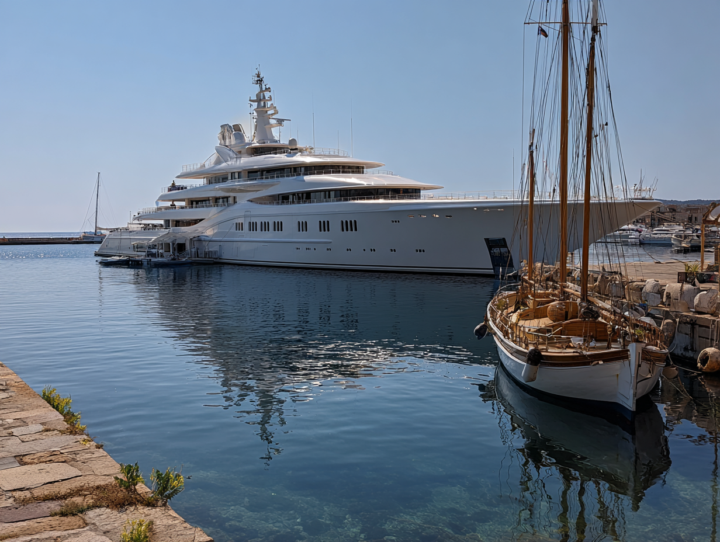
📢 Bonus Lesson: Is Ethical Billionaire Wealth Possible?
Today we’re releasing a special bonus lesson in the billionaire - climate series: Is Ethical Billionaire Wealth Possible? — separating personal virtue from systemic design. This lesson tackles the question that almost everyone asks at some point in the series:“ But what about the good ones?” “What about the generous billionaires?” “Can’t someone be rich and ethical?” This lesson gives a clear and grounded answer — and it reframes the entire conversation. 👉 Start the lesson here: 🔥 What you’ll learn today In this lesson, we explore the difference between personal ethics and system requirements. You’ll learn why billionaire status requires: - global scale - very low marginal costs - labour arbitrage or automation - externalised environmental costs - tax-minimising structures - financial engineering - favourable political conditions …and how each requirement functions like a filter, removing ethical pathways and rewarding extractive ones. The key insight: A person can be ethical. A billionaire cannot be created ethically inside the current system. The system is the issue — not the individual. We also explore what this means for climate justice, democracy, and the future of wealth. 💬 Your Activity for Today Question: Do you think billionaire wealth could ever be ethical — or does the structure of the system make that impossible? Why? You might reflect on: - the role of lobbying - global labour inequality - environmental costs - tax rules - shareholder pressure - monopolies - subsidies and public money - the difference between giving money away and how it was made - Even a short reflection can open up a powerful discussion.
🔥
2 likes • 9d
I have just read the unfortunate comments made by Sir Jim Ratcliffe who reckons Britain is going downhill. Sir Jim voted for Brexit, but now lives in Tax Exile in Monaco. He pays nothing in tax in the UK. He made his fortune by buying up old unfashionable companies with other people’s money, paring costs to the bone and collecting grants and handouts. He unfortunately based some of his businesses on single supplier/raw materials which left him high and dry when that raw material increased exponentially in price. He creamed the profits when times were good, but made no allowances for when the tide turned. He’ll be looking at more concessions/handouts from the government, like he did in Grangemouth. If you want an example of an unethical billionaire, look no further.
🔥
17d •
What 3.0 degC of Global Warming looks like
Here’s a great new video looking at what 1.5, 2.0, 3.0 and 4.0 degC rise in temperature means for the planet and it’s people.
🔥
2 likes • 17d
@Richard Knight My pleasure Richard. Let’s see how it’s received here and at Weather Watchers
🔥
2 likes • 12d
@Elizabeth O'Carroll I try to post factual stuff, non-alarmist. However we really do have to start taking this seriously. It’s no longer a long-shot possibility, it’s now an odds-on certainty.
29d •
Two new members!!
Please welcome @Sophia Garcia and @Kendra Cigdem Hi to both of you and welcome to this strange group. The aim of the group is to provide background data on the Climate Crisis so that you can speak with an informed voice on the subject. The next step is to look at how the crisis is affecting each of us in our different parts of the world. Since I am in the UK I am doing a lot of work to identify how the climate crisis is affectring us in the 6th wealthiest country and, for me in Hampshire, how it affects us in one of the wealthiest counties. I am finding that the effects are all around us. And after five heatwaves over the summer we are seeing changes to our countryside, to our local farmers and to our local wildlife. Changes that are, in some cases, irreversable. As a result of this work I am now contacting local action groups to see how we can identify actions that are impactful. I have two in my sights. The first is that we are running out of water during our summer months. Not only for household use but also for the trees in our towns. The idea of needing to "water" our trees is alein to us. But without doing this, we will lose our Silver Birches, our Beach trees and maybe even our Oak trees. My suggestion is that we build new reservoirs to capture the increased winter rainfall and store it until we need it during our long dry spells in the summer. We don't have the money, reservoirs are not on the local council's radar (especially for trees!) and we do not have the land. If we do not do this we will lose the trees that provide cooling in the summer, the benefits of their air purification and carbon sequestration services. We are planting new trees, beacuse we have been told this is a good idea, but we are not doing enough to protect them during the early years and many are dying. So I have put forward the idea of Eco-Guardians, allocating groups of trees to nearby residents. As water supplies dwindle, the cost of water is increasing. Do we supply these guardians with payments to cover their costs?

🔥
1 like • 29d
Welcome to this excellent community @Sophia Garcia and @Kendra Cigdem. Richard is doing a great job educating people about climate change to a level the media don’t cover. I try to do that with my Weather Watchers community too and like to think we complement each other. I’ll see you around here I hope.
Aug 17 •
Where Has All the Water Gone?
We’ve had plenty of rain. So why are our ponds drying up, streams running low and landscapes becoming increasingly stressed? That question led me to Article 2 of our Water Stress series. The problem isn’t simply how much rain we get. It’s when it falls, how it falls — and what happens to it afterwards. Increasingly, we face an extraordinary contradiction: 🌧️ Too much water in winter. ☀️ Too little water in summer. Heavy rain can rush off dry or saturated land, overwhelm drains and flow downstream. Then, months later, we find ourselves worrying about drought and water supplies. Which leads to a deceptively simple challenge: How do we move water through time? How do we hold onto some of the water that falls during wet periods so it is still available during increasingly hot, dry summers? Reservoirs, wetlands, healthy soils, aquifers, rain gardens, water butts and water recycling are all, in different ways, attempts to answer that question. In Article 2: Where Has All the Water Gone?, I explore what is changing and why our existing water systems may no longer match the climate they were designed for. But I also want your help. 👀 Notice — Where does rain go when it falls where you live? 📣 Speak Up — What are people saying locally about flooding, drought and water supplies? 💡 Suggest Ideas — How could we keep more winter rainfall for the summer? 🌍 Share Stories — Have you seen somewhere else doing this particularly well? Add your observations and ideas below. The solutions we need may already exist somewhere. We just need to find them, connect them — and work out what could work in our own communities. Find the article here 👉

🔥
1 like • Aug 19
Up here in the North East of England, we built Kielder Water, by damming the River North Tyne. It keeps our water supplies secure and it is possible via pipelines to pump water to other northern rivers, such as the Tees and Derwent. The south needs something similar, but it will need 2 or 3 of them to meet demand. Kielder Water flooded an entire valley. It took 2 years to fill it. It will need suitable locations with the right geology to work. They’ll be colossal projects, but as you say, winter water needs to be saved for the summer. https://www.visitkielder.com
1-10 of 19

🔥
@dko
Weather Geek and Traveller. Petsitter and Holiday Cottage host. I love helping people understand weather and climate, that’s why i’m here. 😎
Active 1m ago
Joined Feb 13, 2026
INTJ
Durham UK