Activity
Mon
Wed
Fri
Sun
Jan
Feb
Mar
Apr
May
Jun
Jul
Aug
Sep
Oct
Nov
Dec
What is this?
Less
More
Owned by Christopher
Global therapist community for peer supervision, reflective practice, CPD learning, private practice support, personal and professional growth.
Trauma healing and trauma recovery for survivors of trauma, PTSD, and CPTSD. A safe, trauma-informed support community to heal, learn, and connect.
Memberships
Skoolers
180.8k members • Free
UK Skoolers
198 members • Free
DAfree Awareness Movement
203 members • Free
The Power of Elegance
63 members • Free
Written Identity Journaling
87 members • Free
Relax Change Create
483 members • Free
Collaging with Care
6 members • $20/month
Trauma In Form
11 members • Free
Mystory School
5 members • Free
4 contributions to Trauma In Form
21h •
Welcome!!
Welcome @Matthew O'Brien !!! I am SO excited to have another ESD (now I know what it stands for!!) practitioner on skool!! I am excited to talk "shop" with you and discuss the benefits of self defense as a TRAUMA PREVENTION and INTERVENTION modality!! Can you tell us a bit more about your experience with ESD? How long have you been practicing/teaching? Why did you start? Do you teach classes to all women? Do you teach only physical skills? If it, what else do you teach?
🔥
2 likes • 19h
Welcome @Matthew O'Brien
2d •
Is "challenging behavior" a disciplinary issue?
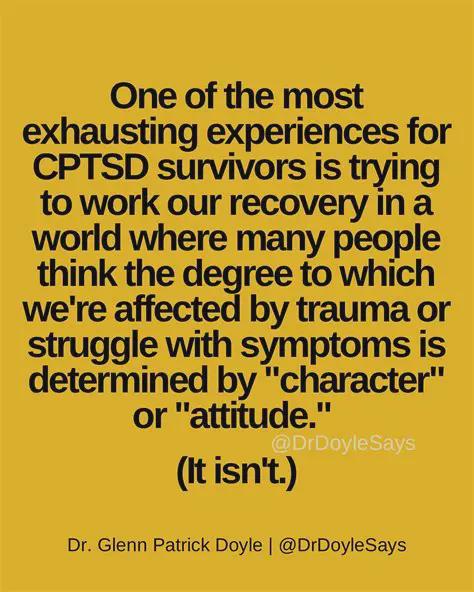
Should children that display "challenging behaviors" be punished? Do children with Oppositional Defiance Disorder or an Emotional/Behavioral Disorder act "bad" on purpose? Often, so often, children that display these characteristics are TRAUMA AFFECTED. When thinking about how trauma causes us to go into SURVIVAL MODE: making us choose to fight/flee/fawn or freeze. Children who show "challenging behaviors" are in FIGHT mode and their BRAIN'S BELIEVE that they are in danger, mortal danger. I will talk more about this and how to address these "behaviors" in my classes and videos. I will say that I also go into FIGHT MODE when my survival instinct is activated, and many people DO consider it a character flaw instead of an issue with my BRAIN not working correctly. Trauma causes BRAIN DAMAGE. The more trauma the more damage. The longer the trauma lasted the more damage.
🔥
2 likes • 2d
I really appreciate the heart behind this and the way you’re centring children’s behaviour in survival, not “badness.” Speaking as an adoptive parent, a trauma survivor, and a trauma therapist, this framing is so important. Many children who present with what gets labelled as “challenging” or “defiant” are not choosing to be difficult — they are communicating distress with the only tools their nervous system has available. From a therapeutic parenting perspective, behaviour is communication. trauma response behaviours often emerge when a child’s early experiences taught them that adults, closeness, or unpredictability are unsafe. Their brain isn’t asking “What’s the right thing to do?” — it’s asking “How do I survive this moment?” Punishment, especially when it relies on fear, withdrawal of connection, or shame, often confirms the child’s core belief: “I’m not safe. I’m not understood. I’m alone with this.” That doesn’t mean there are no boundaries — but boundaries work best when they are relational, regulating, and predictable, rather than punitive. Trauma certainly impacts brain development, integration, and nervous system regulation — sometimes profoundly — but the brain also remains plastic and responsive to safety. I’ve seen, both personally and professionally, how consistent, attuned relationships can support real healing and reorganisation over time. Many adults — myself included — were once those children in survival mode, later judged as having character flaws rather than nervous systems shaped by experience. Reframing this isn’t about excusing behaviour; it’s about responding in ways that actually help children move out of survival and into connection. I’m grateful you’re bringing this conversation forward. Children don’t need more control — they need more safety. I can tell I am going to enjoy this community 🙏🏻
🔥
2 likes • 2d
@Tonya Valadez 🫶🏻
4d •
Victim Blaming as Lack of Trauma Information
What I have found, as a survivor, and as someone who works with Trauma Affected children; people tend to put accountability and responsibility on the VICTIM rather than the ABUSER. I think this comes from societal misunderstandings of Trauma and how it affects the brain of the VICTIM. Trauma changes the Structure and Function of many areas of the brain: the amygdala, the hippocampus and the pre-frontal cortex. Memory, emotional regulation, executive functioning and other key functions can be damaged and disabled by on-going/regular trauma.
🔥
1 like • 2d
This really resonates. So often, survivors are expected to show control and responsibility in the very areas trauma has most impacted, while the focus shifts away from the abuser’s responsibility. Trauma changes how the brain and nervous system function. When survival systems are activated, expecting calm reflection or “better choices” isn’t realistic — it’s harmful. Accountability belongs with the abuser. Healing requires safety and compassion, not blame. Thank you for naming this so clearly.
2d •
Welcomes
I am not sure if I've given a proper Welcome to new members: @Serena DAfree @Christopher Whitehead-Baines @Laura Mendez I am so grateful that you are here. Let's make a better world together!!!

🔥
2 likes • 2d
Wonderful to be here 🫶🏻
1-4 of 4

🔥
@christopher-whitehead-baines-7655
Lived Experience Global Trauma Psychotherapist and Clinical Supervisor. Proud Adoptive Father and Therapeutic Parent.
Online now
Joined Dec 17, 2025
Blackpool UK