Activity
Mon
Wed
Fri
Sun
May
Jun
Jul
Aug
Sep
Oct
Nov
Dec
Jan
Feb
Mar
Apr
What is this?
Less
More
Memberships
Flock University
9 members • Free
The Healthy Coop Collective
46 members • Free
Zero to Homestead
14 members • Free
Regenerative Gardening
203 members • Free
HH
Homestead Hero
51 members • Free
Homesteading Made Simple
91 members • Free
Craft & Connect
1.9k members • Free
Journaling with Kayleigh
97 members • Free
Rooted In Home
28 members • Free
6 contributions to The Healthy Coop Collective

4d •
🥬 Forage Crops for Poultry: Nutritional Value of Various Greens
We seem to be on a feed and nutrí kick this week and many are starting their gardens, so I figured I would keep it going! Want to grow nutritious greens for your flock? Not all forage is equal! Let’s explore what research tells us about the best options. Why Forage Matters: 🌱Provides vitamins, minerals, antioxidants 🌱Supports gut health and digestion 🌱Enriches yolk color naturally 🌱Reduces feed costs (supplemental only!) 🌱Behavioral enrichment Top Forage Crops by Nutritional Value: LEGUMES (Highest Protein): 🍀 Alfalfa: 15-20% protein, calcium-rich, vitamins A, K 🍀Clover: 15-18% protein, palatable, fixes nitrogen in soil 🍀Field peas: High protein forage option BRASSICAS: 🥦Kale: Vitamins A, C, K; calcium; antioxidants 🥦Turnip greens: Nutrient-dense, fast-growing 🥦Cabbage: Good winter storage option 🥦Broccoli leaves: High in vitamins GRASSES: 🐥Wheat grass: Vitamins, chlorophyll, easy to grow 🐥Rye grass: Hardy, quick-establishing 🐥Oat grass: Palatable, good nutrition OTHER EXCELLENT OPTIONS: 🥬Swiss chard: Vitamins A, K, C; minerals 🥬Lettuce: Lower nutrition but high palatability Dandelion: Vitamins A, C, K; often free! 🥬Plantain (herb): Anti-inflammatory properties 🥬Comfrey: High protein, minerals (feed in moderation) Nutritional Highlights: 🐓VITAMIN A: Dark leafy greens (kale, spinach, alfalfa) 🐓CALCIUM: Alfalfa, clover, kale, dandelion 🐓PROTEIN: Legumes (alfalfa, clover) 🐓ANTIOXIDANTS: Colorful greens, herbs Growing Tips: ✓ Rotate plantings for continuous harvest ✓ Protect young plants from flock access ✓ Consider chicken-safe “salad garden” ✓ Perennials (comfrey, alfalfa) = less replanting Important Reminders: 🐔Forage = SUPPLEMENT, not complete diet 🐔Limit high-oxalate greens (spinach) to moderation 🐔Avoid treated lawn clippings 🐔Introduce new greens gradually Your turn: ❓What’s your flock’s favorite green—the one they devour first? 🥬 ❓Do you grow anything specifically for your chickens? What works best? 🌱

2 likes • 3d
We have kale, alfalfa, comfrey, heaps of herbs, blueberry, grapes and passion fruit all growing inside their run. They can eat anything growing thru the wire but not dig it up. I love all the greens in their run. We also have flowers calendula, dandelions, and others that came in a chicken safe flower mix. So healthy for not just the chickens but us too!
6d •
🫧 Fermented Feed for Poultry: Nutritional Changes, Benefits & Egg Effects
You asked, so I did some digging! What IS Fermented Feed? Feed soaked in water for 3-4 days, allowing beneficial bacteria (primarily Lactobacillus) to multiply and create lactic acid fermentation—similar to sauerkraut! Nutritional Changes During Fermentation: INCREASES: 🦠Beneficial bacteria (natural probiotics!) 🦠B vitamin content 🦠Enzyme activity 🦠Protein digestibility 🦠Mineral bioavailability (reduced phytic acid) DECREASES: 🦠Harmful bacteria (acidic environment inhibits pathogens) 🦠Anti-nutritional factors 🦠pH (becomes acidic: 3.5-4.5) Research-Backed Benefits: GUT HEALTH: 🌾Increased beneficial gut bacteria 🌾Reduced Salmonella and E. coli colonization 🌾Improved intestinal integrity FEED EFFICIENCY: 🌾Better nutrient absorption 🌾Some studies show improved feed conversion 🌾Birds may eat less (higher digestibility) FLOCK HEALTH: 🩺Enhanced immune function 🩺Reduced pathogen load in digestive tract Does It Change Eggs? RESEARCH SUGGESTS: 🥚Potential for slightly stronger shells (improved mineral absorption) 🥚Some studies show reduced Salmonella in eggs 🥚No significant changes to taste or appearance 🥚May support more consistent laying More research needed—results vary by study! How to Ferment Safely: BASIC METHOD: 1. Cover feed with dechlorinated water (1:2 ratio) 2. Stir daily 3. Ferment 3-4 days at room temperature 4. Should smell tangy/sour (like yogurt), NOT rotten 5. Feed wet, make fresh batches continuously SAFETY CRITICAL: ✓ Use clean containers ✓ Keep feed submerged (prevents mold) ✓ Discard if moldy, smells “off,” or slimy ✓ Don’t ferment medicated feed! ✓ Summer = faster fermentation, watch closely Your turn: ❓Have you tried fermenting feed? Thumbs up or too much hassle? 👍👎 ❓Did you notice any changes in your flock or eggs after switching? 🥚
0 likes • 5d
One thing you do need to make sure of is that you use the correct feed. Everyone told us scratch feed was good, and it was not. Even with the apple cider vinegar added it didn’t ferment properly. We gave up fermenting and now just do an overnight soak of their mash. Works fabulously in the hot Aussie summer because I make up the mash and freeze it. Cools the ladies down, hydrates and feeds them all in one go.
Jan 12 •
Welcome to The Healthy Coop Collective! 🐔
Hi everyone! I'm Dr. Nisana, and I'm thrilled to launch this community dedicated to helping you raise healthier, happier backyard flocks. A bit about me: I'm a Doctor of Veterinary Medicine specializing in avian and poultry health through my practice, Covenantal Wings Veterinary Services. My background includes working in commercial poultry, and now I focus on bringing that professional veterinary expertise to backyard poultry keepers like you. I live on an 80-acre homestead in Oklahoma with my husband and daughter. What to expect here: I created The Healthy Coop Collective because I saw too many backyard keepers struggling with conflicting information online and limited access to poultry-savvy veterinarians. This community bridges that gap. Here's what's coming: ✅ Daily Engagement - Tips, discussions, case studies, and community support to keep your knowledge growing ✅ In the Premium plan: Weekly Educational Resources - In-depth guides, protocols, and tools on disease prevention, nutrition, biosecurity, and wellness management ✅ In the VIP plan: One Private 1-on-1 Veterinary Video Consultation Per Month - Personalized flock health guidance from me directly This is a space for learning, asking questions without judgment, and building confidence in your ability to care for your birds. Whether you're brand new to poultry or have years of experience, you belong here. Let's get started! Drop a comment below and tell me: - What type of poultry do you keep? - What's your biggest flock health challenge right now? - What topics do you most want to learn about? I can't wait to get to know you and your flocks. Here's to healthier coops and thriving birds! 🌿 —Dr. Nisana
1 like • Feb 21
Hi all, my name is Christina and I live on 1/4 acre homestead that we are turning into our idea of paradise. 40 fruit trees/vines a chicken coop with eventually 25 hens and 2 roosters, and a fully enclosed garden run that the chickens will have access to along with their regular run. Sadly we can't free range competely due to the wildlife here in Australia. We currently have 19 chickens ranging in age from 5 weeks to 24 weeks. I have an issue with loving to incubate, but another problem of incubating mostly boys. haha. Photos of a few of my chicks/hens...
1 like • Mar 4
@Dan Goulet currently eggs and breeding. Thinking of going into meat birds so we could fill our fridge. But I’m not sure if I have it in me anymore since even chicks I should cull I don’t. I tend to spend a crazy amount of time hand feeding sickly chicks. Odd enough they wind up being some of my strongest flock members. Like my blind in one eye chick that I had to help hatch, she is number two in pecking order only because no one messes with Ninja. Haha
Feb 23 •
Dust Bathing Behavior: Purpose & Creating Appropriate Areas
Ever seen your chickens “freaking out” in the dirt, flapping and rolling around? They’re not having a seizure—they’re dust bathing! Let’s understand this essential behavior. What IS Dust Bathing? A natural maintenance behavior where chickens work fine particles (dust, dirt, sand) into their feathers, then shake it out. It’s not just fun—it’s critical for health! Why Chickens NEED to Dust Bathe: PARASITE CONTROL 🪳Smothers and removes external parasites (lice, mites) 🪳Fine particles clog parasites’ breathing apparatus 🪳Helps dislodge eggs and nymphs from feathers FEATHER MAINTENANCE 🪶Removes excess oil and debris 🪶Distributes preen oil throughout plumage 🪶Keeps feathers clean and functional SKIN HEALTH 🐥Removes dead skin cells 🐥Absorbs excess moisture 🐥Maintains healthy skin condition The Dust Bathing Process: 1. Bird scratches shallow depression in loose material 2. Squats down, works material into feathers with vigorous movements 3. Flaps wings, rolls side to side 4. Shakes vigorously to remove particles 5. Preens feathers back into place Typical session: 20-30 minutes! What Makes Good Dust Bathing Material: BEST OPTIONS: ✓ Fine, dry dirt/soil ✓ Sand (play sand or construction sand) ✓ Wood ash (cool, from untreated wood) ✓ Mixture of dirt + sand + ash PARTICLE SIZE MATTERS: 🐤Too coarse = doesn’t penetrate feathers well 🐤Too fine (like flour) = respiratory irritation 🐤Ideal = fine sand consistency Creating Dust Bathing Areas: OUTDOOR: ☀️Dry, sheltered spot (under roof overhang, tree) ☀️Loose, fine soil ☀️12+ inches deep ☀️Protected from rain INDOOR (for confined flocks): 🐔Large container (tire, kiddie pool, wooden box) 🐔Fill 8-12 inches deep with sand/dirt mixture 🐔Place in dry area of coop 🐔Refresh when compacted or soiled Behavioral Importance: Research shows dust bathing is a HIGHLY MOTIVATED behavior. Birds denied access show increased stress and frustration—they NEED this outlet! Signs of Inadequate Dust Bathing: ❌ Increased external parasite loads
1 like • Feb 23
I didn't make anything special for mine, but my soil is a mix of Australian red dirt, sand, and clay. They dug down in the corner and made themselves a nice big dust bath so I just added a decorative edging to that one corner and it's the spot for them now. :) I figured if I made them one they probably wouldn't use it, but if I let them make one they'd use it. Not sure if that was the best method since they chose a corner I really wanted to put a plant in, but hey, it's theirs now. :)
0 likes • Feb 24
@Nisana Miller I was originally going to move my large rosemary to that spot. It gets a nice dappled sun. Probably why they chose it.
Feb 21 •
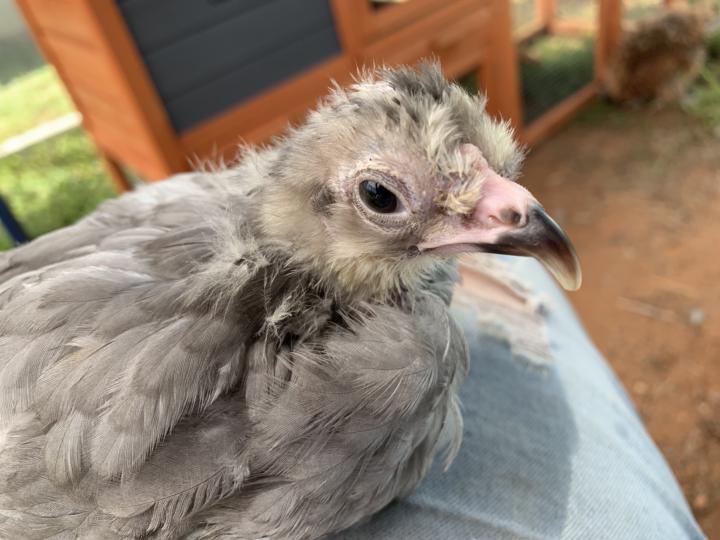
Parrot Beak
I have a little one who is currently 7 weeks old. He/She has what I've found out to be called Parrot Beak. When it was 3 weeks old I noticed it was very lethargic and didn't seem to be eating well. I started hand feeding it, and as it grew I noticed that it's beak was curved. I started doing some research and found that it's called Parrot Beak. I'm curious if that is a genetic trait and will be passed down to any offspring, or if it is just a simple birth defect. I have no clue if it's a male or a female, and I don't really care because I'll be keeping this little one since it's so sweet and comes when I call it's name. My Lil Bit is here to stay. It's molting bad in the photo I'm attaching and it's about 5 weeks there, so you can see what I'm talking about. I have started using a dog nail trimmer on the beak and it's quite content to sit and have it's beak trimmed. I use the sander style that makes no noise. In the image the beak is still long, but it had been trimmed back by then.
1-6 of 6

@christina-condy-4065
I'm an American living in Australia raising chickens and homesteading. I love to read, I write, and journal. An avid gamer and enjoy meeting people.
Active 1d ago
Joined Feb 20, 2026
Powered by