Activity
Mon
Wed
Fri
Sun
Mar
Apr
May
Jun
Jul
Aug
Sep
Oct
Nov
Dec
Jan
Feb
What is this?
Less
More
Owned by Ruby
We are a company striving to improve lives through the use of alternative health education, practices, and concepts focused on longevity and vitality.
Memberships
Aurum Vitality
5 members • Free
Optimized Living
2.2k members • Free
Biohackers Buyers Club
110 members • Free
Peptide Price
8.9k members • Free
Skoolers
190.1k members • Free
RNS-Ravens Nest
5.4k members • Free
5 contributions to Peptide Price

🔥
Jan 3 •
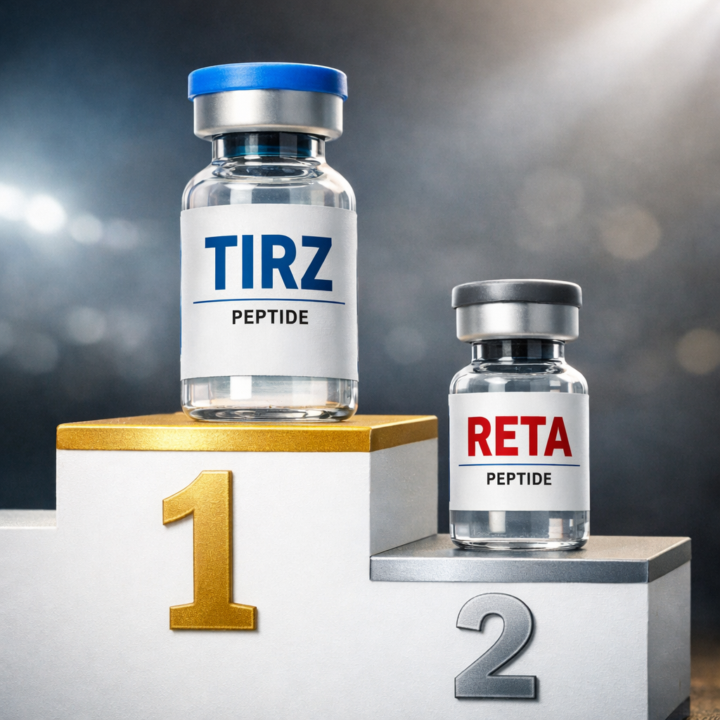
Changing My Stance: Why Tirzepatide Might Beat Retatrutide for Most People
Disclaimer: Research peptides only. Educational purposes. Not medical advice. Talk to your doctor. I've always said: research with whatever allows you to stay on plan and keeps you in a deficit. But after experimenting with both extensively, I need to rethink this. My Experience: Tirzepatide → food noise basically gone while still being able to eat Retatrutide + cagri → still thinking about food way too much Even adding cagrilintide to reta hasn't given me the same mental freedom as tirz. And that's making me question whether reta's theoretical advantages are actually worth it for most people. What the Clinical Data Shows: Tirzepatide (SURMOUNT trials): Participants consistently reported serious appetite suppression. Many said they basically stopped thinking about food between meals. Retatrutide (Phase 2 trials): Weight loss was impressive (24% at 48 weeks), but appetite control was hit-or-miss. Some people experienced it, others didn't. The pattern is clear: tirz delivers consistent appetite suppression for almost everyone. Reta is more variable. The Part Everyone Overlooks: Yeah, reta might burn slightly more fat because of glucagon receptor activation. But here's the reality— Most researchers don't have their diet and training dialed in yet. And getting THOSE fundamentals right will do way more for fat loss than reta's glucagon effect ever will. You can replicate reta's fat-burning advantages through: - Increased cardio - Lipo-C injections - L-carnitine supplementation - Fasted training sessions - Consistent resistance training Here's my honest take: If you dial in nutrition, training, and sleep, you'll get comparable results with tirz—without fighting hunger all day. Reta's edge only matters if everything else is already optimized. For most people, it's not. What I'm Seeing: This pattern keeps repeating: researchers switch from tirz to reta, then come back—not because tirz made everything effortless, but because it made staying on plan manageable.

1 like • Jan 3
@Bill Rod in all actuality, if you dive deeper into WHAT GLP is and the effects of all of them, people shouldn’t be stopping GLP at all! GLP’s are a HORMONE! Something that is reduced or destroyed as we age or by environmental and personal factors. Go research the discovery and use of insulin for a diabetic. Insulin is the same style of hormone that GLP is. A type 1 diabetic must have insulin to live and must manage their dietary intake in order to be in control of their insulin levels. Good eating habit result in little to no use of insulin, poor habits result in higher and more frequent doses. GLP is the same. GLP is a REPLACEMENT hormone like testosterone, estrogen and progesterone. It’s not just about weight loss… it does so much more for our whole body! Cardiovascular benefits, neurological benefits etc… people need to find a maintenance dose for their GLP dose (reduction of dose along with separation of dosing schedule) in order to MAINTAIN their weight loss. This is the same concept of ALL peptides, repair, replenish, replace broken and damaged peptide chains. Cycling as you need them.
1 like • Jan 3
This goes back to learning how to eat right.. controlling your hunger isn’t the end all to be all regarding maintaining your health. Learning to eat right while controlling a defunct GUT that is deficient of GLP is the goal. My maintenance dose is minuscule and is taken every 4-6 weeks, and I have maintained my weight loss for 3 years now. Longer than I ever have before with any other type of weight loss program.

0 likes • Nov '25
Feel free to reach out to me.
🔥
Sep '25 •
Should You Refridergate Your Liquid Blends?
I got the question recently wether or not to refrigerate your liquid blends after pericing the rubber stopper for the fist time. Ive seen so many different opinions online but, this is my thought process and there are some unique cases. Once you pierce it you have the possibility for bacterial growth and degradation to occur because you are breaking that sterile environment. I always store them in the fridge after first use to prevent the build up of bacteria. There are always gonna be some blends that can be left at room temp such as blends containing l-carnitine Let me know your thoughts and expirences below 👇 Compare blends and other products: https://peptideprice.store
1 like • Sep '25
@Derek Pruski Refrigeration can sometimes cause precipitation or crystallization, especially with concentrated solutions (like cysteine or tyrosine, which have lower solubility at cold temps). Condensation from refrigeration can increase the risk of contamination if vials are opened/pierced multiple times. The solutions are buffered and pH-balanced to remain stable without refrigeration. Amino acids are not typically blended with BAC water.
0 likes • Sep '25
@Paul Naleid see my reply below to Derek.
🔥
Sep '25 •
🚨 When to Throw Away Your Peptides: Degradation vs Bacterial Buildup
🔬 Understanding the Difference Peptide Degradation - What happens: Natural breakdown of peptide bonds over time - Causes: Heat, light, pH changes, freeze-thaw cycles, oxidation - Result: Peptide becomes less potent or completely inactive - Safety: Not dangerous - just expensive placebo water - Timeline: Gradual process over days/weeks Bacterial Contamination - What happens: Harmful bacteria multiply in your peptide solution - Causes: Poor sterile technique, contaminated water, dirty supplies - Result: Bacteria produce toxins that can seriously harm you - Safety: EXTREMELY DANGEROUS - can cause life-threatening infections - Timeline: Can happen within hours at room temperature 🚩 Visual Red Flags - Toss Immediately: Clear Signs of Contamination: - Cloudiness or haziness (was previously crystal clear) - Floating particles, debris, or "floaters" - Color changes - yellowing, browning, or any discoloration - Clumping or precipitation that wasn't there before - Gelling or thickening of solution - Film or residue on vial walls - Bubbles that don't dissipate (gas from bacterial fermentation) What Normal Degradation Looks Like: - Solution stays clear but may be less effective - No visible changes in most cases - Sometimes slight yellowing in growth hormones (but still concerning) 🧪 The Science Behind Breakdown How Peptides Degrade: 1. Hydrolysis: Water molecules break peptide bonds 2. Oxidation: Amino acids like methionine get damaged 3. Deamidation: Chemical changes alter peptide structure 4. Aggregation: Peptides clump together, losing bioactivity Degradation Accelerators: - Temperature above 8°C (39°F) - pH outside 6.0-8.0 range - Light exposure (especially UV) - Metal contamination from needles - Agitation or shaking How Bacteria Multiply: - Double every 20-30 minutes at room temp - Produce endotoxins that cause inflammation - Create biofilms that protect them from immune system - Some produce gases (why you see bubbles)

0 likes • Sep '25
Just a note… Good quality NAD+ is also know to be a brownish yellow color. It doesn’t meant it’s bad
🔥
Sep '25 •
🔥 Lipo C Blend Breakdown
Ever wonder what you're actually injecting when you get that Lipo C Blend? Let me break down this popular lipotropic blend ingredient by ingredient... Ingredient List (Per mL) B5 (Dexpanthenol) – 25mg B6 (Pyridoxine) – 25mg B12 (Methylcobalamin) – 1mg L-Arginine – 20mg L-Carnitine – 100mg L-Methionine – 25mg L-Inositol – 50mg Choline Chloride – 50mg Lidocaine – 1% Benzyl Alcohol (preservative) – 1% Sterile Water THE ENERGY TRIO 🚀 - B5 (25mg) - Your adrenal glands' best friend. Turns food into actual usable energy - B6 (25mg) - The mood maker. Builds serotonin, dopamine, GABA for better sleep & focus - B12 (1mg) - The methylcobalamin form (not the cheap stuff). Powers your cells + nervous system THE METABOLISM SQUAD 💪 - L-Carnitine (100mg) - Literally shuttles fat into your mitochondria to burn as fuel - L-Arginine (20mg) - Pumps up circulation via nitric oxide boost - L-Methionine (25mg) - Prevents fat buildup in your liver while supporting detox THE FAT-BURNING DUO 🔥 - Inositol (50mg) - Makes your cells more insulin sensitive (hello, better fat loss) - Choline (50mg) - Teams up with the others to break down stubborn fat deposits THE "COMFORT" ADDITIONS - Lidocaine (1%) - So you don't cry during injection 😅 - Benzyl Alcohol (1%) - Keeps everything sterile - Sterile Water - The delivery vehicle Bottom line: This isn't magic - it's strategic nutrient delivery that your body actually uses for energy production, fat metabolism, and liver support. https://felixchem.is/product/lipo-c-10ml/ https://ameanopeptides.com/product/lipo-c-with-b12-10ml/?ref=Derek15 Anyone else using these? Drop your experience below 👇

1 like • Sep '25
@Elizabeth G yes… 50 units twice a week is usually plenty or 20 units 5 x a week. I suggest finding a MIC blend and taking one injection of each weekly so that your don’t raise your B-12 levels too high.
0 likes • Sep '25
@Dorsey Oliver Coulter in all honesty… I know a lot of people say that there is a short life span on most of these products, but I find that to be untrue. I don’t believe in wasting product and there generally is nothing that can become toxic, unless the consumer has contaminated their product somehow. So I would use a broad expiration of 12 months.
1-5 of 5

Online now
Joined Sep 7, 2025