Activity
Mon
Wed
Fri
Sun
Nov
Dec
Jan
Feb
Mar
Apr
May
Jun
Jul
Aug
Sep
What is this?
Less
More
Karate4Dogs Learning Hub
413
5.0
Free
Easy Dog Academy
229
$500/m
Redirect K9s
99
Free
Truffle Dog Club
454
5.0
$7/m
The Detection Dog Lab
940
5.0
Free
11 contributions to Redirect K9s
Jul 19 •
Bouvier des Flandres
Thank you for your patience in my delay of my weekly Breed of the Week post. Today’s breed comes at the request from @Paul Bunker. The Bouvier des Flandres originated in the northern regions of France and Belgium, particularly the Flanders region. This breed was very versatile in their abilities to farmers. They herded cattle by directing the lead cow, pulled carts, turned mills and is an exceptional guard dog. As far as how this breed came to be one source says they were bred with the Griffon, Beauceron and Sheepdogs and another says the monks of the Ter Duinen monastery were responsible by breeding them with imports of Irish Wolfhounds and Scottish Deerhounds with local farm dogs. It does not stop there as these mystery mixes did not produce the Bouvier des Flandres we know today but instead gave way to two to three types of Bouvier type dogs: Bouvier des Ardennes, Bouvier des Roulers and Bouvier des Paret (extinct). With these three variations a uniformity was not established. The Bouvier des Roulers was tall with a deep chest and came in black, brindle or dark gray. The Bouvier des Paret being slightly shorter and more barrel chested and coat colors the included true fawn to sorrel, charcoal gray and brindle. One source states that a combination of these three produced the Bouvier des Flandres and another says that the Bouvier des Flandres was the preferred variety. Let’s get back to the breed of the week now. Since the Bouvier des Flandres was a working dog and part of their work was helping to turn a mill their tails were docked when they were very young to reduce the chance of injury and their ears were cropped since non-working dogs were taxed at the time and only working dogs had cropped ears. The Bouvier des Flandres much like the Hungarian Vizsla and a couple other of breeds we have covered WWI and WWII were incredibly difficult on them and they nearly became extinct. This happened either because they were abandoned and died or were acquired and used for war efforts and were killed or otherwise died while enlisted. It is also said that the Bouvier des Flandres were shot on sight but that due to the efforts of a few people the Bouvier des Flandres was kept from extinction. During both world wars the Bouvier des Flandres were used to pull carts for ambulance and supplies, find the wounded in the battle field that were still alive and sound alarms.


1 like • Jul 19
As a teenager my neighbors had a beautiful pair of Bouvier. Very nice dogs.
1 like • Jul 19
@Christina Brewster I’ve never been a large dog owner, but in that household with active teenage boys they were great. And I’m only now learning the joys of having a dog that need grooming. Ugh.
Jul 18 •
In regards to today’s post…
Hello everyone, I haven’t forgotten about the breed of the week post that is due today. It’s been another busy day. I did not get a lot of sleep last night and my left arm is currently in a lot of pain. On top of all of that I need to be up earlier than normal tomorrow for a workshop this weekend. I do have a breed picked out for this week’s post but have not written it yet. I’m hoping to do so tomorrow. Thank you for your patience and understanding, Christina
1 like • Jul 19
Hope you are feeling better!
Jun 30 •
Alternative Therapies
I wanted to talk about something a little bit different today and not completely on the nose for predation but aids in a strong foundation for any dog depending on their needs. I recently have had a veterinarian (DVM) come out to do acupuncture on my youngest dog Káosz for these mysterious bumps on his head and eye discharge and to do chiropractic work on my other two, Lucas and Csili. I had acupuncture done on Lucas many years ago to help with his allergies by a different DVM who unfortunately has passed away. Holistic veterinarians are already difficult to find so losing the one I did trust was difficult not just professionally but also personally as we got on very well. Fast forward to this year, at the prompt of a good friend @Katie Schobel, I looked into finding another veterinarian that has this skill set for my middle dog’s, Csili, social/life skill issues. Her biggest obstacle for life skills is being anxious in relation to a vehicle and/or kenneling. I have made a lot of progress with her but we are at a plateau currently so I decided to try chiropractic adjustment for her. She has only had one session so far, and this is by no means the only method of approach I am taking for her, but it is an important piece of the puzzle. I do also have her on some supplements to help relax the overactive part of her brain associated with anxieties. I do try and avoid pharmaceuticals as much as I can which means that the more natural approaches can take longer to go in effect, but, in my opinion, is healthier and therefore worth it in the long run. I can update in a few months on her progress. My oldest dog Lucas is also getting chiropractic work done as well and as he is older he gets them a little more often than Csili does. He so far has had two and I am very glad I had his most recent one done because apparently his ribs were slightly out of place! I suspect this is from slipping on the stairs going up into my RV. I do not use the stairs that come with the RV itself but some wooden ones that @Paul Bunker helped me put together (or rather I helped him). They may just be a little too steep for the old boy so that will need to be upgraded soon. In the meantime, I do help him up the stairs as a guide/catch in case he needs it. I still want him to use his muscles as much as he can and also have the confidence to do stuff. This apparently works because after his last chiropractic appointment I was helping the DVM load up her vehicle and Lucas tried jumping in the back of her SUV! I thankfully caught him and he was not hurt. His attempt was with gusto but I think the vehicle was too tall for him to actually make it in his old age.
1 like • Jun 30
I’m on the same wavelength as you. I took a mini workshop on facia release for pets this weekend. My young dog seems to enjoy it and has presented me with her hips a couple times since. We also visit a naturopath for supplements. Acupuncture helped a previous dog. It’s all good!
1 like • Jun 30
@Christina Brewster Check out wholeenergybodybalance dot com. Based in Australia but he supposedly has great info.
Jun 17 •
Setting Up Your Yard to Mitigate Hunting Practice
This week I would like to talk about something that has become very much on the forefront of my mind especially as of late and that is setting up your yard to keep your dog from practicing unwanted behaviors. I will explain my living situation/set up with my dogs and what I plan to do to help with my specific concerns. As you may know I have 2 vizslas, Csili and Káosz, who are young and full of energy plus a pitbull named Lucas who is 12 years old. The vizslas each have their own thing that they “care” about the most. Káosz has a thing for lizards and Csili has a thing for birds (Káosz does as well but his is more for larger birds as we don’t see those ones as often so less practice to counter condition). We live in an RV where we are blessed to be able to have a little fenced yard and a dog door was able to be installed in the storage chute of my RV. Thanks to @Paul Bunker for his help with the dog door installation and the building of the platform so they can safely go in and out! My current fence started out as just 4ft tall livestock fencing supported with some posts and a gate but soon Káosz learned that lizards were ripe for being stalked just beyond the fence. This then turned into him hunting for them with no decompression available so his mind was not able to quiet. Even being out of the yard was no help since the lizards are everywhere on property and their existence consumed his mind. A solution was needed to block his view so now the whole fence is wrapped with garden fabric (double layer) to keep him from being able to look out and have his attention be expended on seeking lizards as this made even going on walks difficult let alone training. Unfortunately, an upgrade is needed due to Káosz learning that a 4ft tall fence is not tall enough to keep him in (thankfully this only happened about 3-4 times and I was on property for all but 2 of them. Both times he was quickly collected and returned home without having gone far). With this newfound information on his athletic skills Paul and I are going to upgrade the fence to a 6ft tall chain link fence with a proper privacy cover (it is from Alion Home if anyone needs some. If you have questions their customer service was very good and quick to respond. Will update on privacy cover once installed if anyone would like to know).
0 likes • Jun 17
I have Chickens, which means we have rats. In the evening, my dog tours the backyard. There are three distinct. spots that she hunts for rats. It’s quite entertaining to watch her survey. The property zigzagging back-and-forth between these locations. Hopefully her surveillance will decrease the rat activity. She’s never caught anything but was quite fascinated when we came across a roadkill rat. It was as if she finally had a look at what she’s been smelling. I was thinking this was a decent activity to engage her hunting instincts. But from reading your post, I’m wondering is it something I should be distracting her from? She also herds the chickens, which is fun to see.
1 like • Jun 18
@Christina Brewster I’ve been pondering! 1 year old Lagotto Training for allergen detection, otherwise a companion dog She’s bored living with us senior citizens so is self entertaining in the back yard. She will recall off the hunting behavior relatively easily. I think it gives her more activity and engagement. She’d also like to chase birds but I don’t let her do that on walks. Yes I could take up Barnhunt or scent work or agility, but this is a nightly routine. I think it’s probably ok to let her continue.
May 22 •
Turkish Pointer
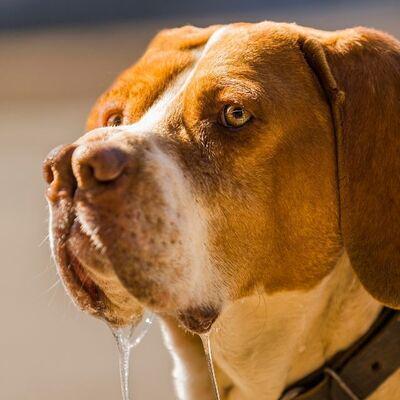
This weeks Breed of the Week is thanks to @Katie Schobel The Turkish Pointer is an exceptionally rare pointing breed that is found almost exclusively in the Tarus region of Turkey. They are one of three breeds with the split nose genetic trait which leaves the nose appearing as if it was split in two with one nare each. Some of their other names are Turkish Split Nose Pointer, Turkish Fork Nosed Dog, Catalburun and Tarus Catalburun just to name a few. Due to this breed only being recently discovered by those outside of the region the ancestry is currently unknown. According to one source there are only around 200 individual dogs which means that inbreeding is high whether or not it is accidental. Even though inbreeding probability is higher due to the smaller gene pool the Turkish Pointer does not have many health issues outside of hip dysplasia, hypothyroidism and allergies. Sometime around the early 1900s this breed became known outside of its homeland but no one knows when they arrived to the area. The breed could go back centuries and might be indigenous to the area. Some speculated that the breed may be part of the origin story of other pointer breeds such as the English Pointer and German Shorthaired Pointer but I have done posts on those and did not see that reflected. This is also pointed out in the sources for today’s post. The Turkish Pointer is used to hunt small birds and rabbits and are quite agile hunters despite being smaller and heavy bodied compared to other pointers. They are also resilient, have great stamina, committed and intuitive with a well boned and muscular body. All great attributes to have in a working hunting breed. Now let’s talk about their nose. Their nostrils are divided by a cleft which gives the illusion of two noses with a single nare each. In some individuals this cleft can continue all the way to the top of their head under the skin (you won’t see it). This cleft nose is considered a genetic defect and can also be seen with a cleft lip and/or cleft palate.
1 like • May 22
What a nose!!
1-10 of 11