
Mar 11 (edited) • Predation Tidbits
How To Train Calm Behavior
Training a calm behavior in our dog starts at home. If a dog is unable to be the calm we are looking for at home then it is unfair to expect them to be the calm we are looking for out of the home.
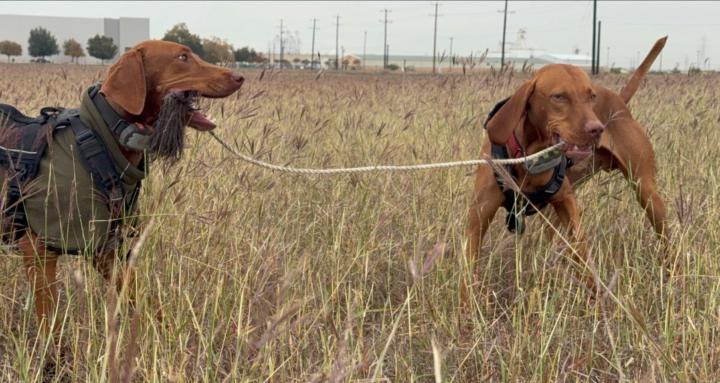
I currently live with one retired cadaver pit bull named Lucas McCain who is 12 years old, an oil detection vizsla named Káosz who is 2 years old and a bed bug detection vizsla named Csili that is 4 years old. The vizslas, as you can imagine, are quite wild not just because of their ages but also because of their breed. We live together in an RV where we are blessed to have a yard.
So many people with high energy dogs feel compelled to satisfy that energy, that drive and find them jobs. Don’t get me wrong I think jobs for dogs are great and I am a huge advocate for it but unfortunately we don’t make our living with just dogs. Life doesn’t stop for that. We still have bills, groceries, laundry, dishes, vehicle maintenance, house maintenance, etc and so our high energy dog may not always get to go run around and “be crazy”.
The good news is being calm is a behavior and behaviors can be taught. One thing to remember that, as humans, we tend to notice the “negative” behavior ignore the positive behavior that we do want. Often times our dogs are performing the behavior that we want when we want but we ignore them. Then the dog misbehaves and we respond with a verbal, leash or physical correction (not hitting but maybe a tap in a strategic spot to try and get their attention). Some dogs may misbehave on purpose since that is when he get the most interaction from you and that is all he want. This is where we need to make sure of a few things:
- We are not on our phones particularly during training
- We know what we are looking for not just what we don’t want
- We set our dogs up for success and don’t push it to far
- We use the appropriate reward (something that will elicit a maintenance of calmness but do have higher value for certain situations)
- Have a plan and adjust as needed based on your dog
So how do we begin teaching our dogs to be calm? You do so by capturing it at home. It may be a good idea for you and your dog to put it on a cue. You can use “calm”, “relax”, “ssh” or anything else you want along with a gentle touch/pet. A good way to capture this would be when your dog is naturally relaxed [at home] with you. Perhaps your dog is asleep on the floor or on the couch - this is when, without being invasive in a way that is stressful to your dog, you can go sit next to them, give the gentle touch/pet and start saying the cue word you want to use.
**You don’t have to add the touch if you don’t think that would be helpful for your specific dog**
One thing to note is that tone with the cue word is important as well so pick something that is calming that you will be able to remember to use when you and your dog go outside your home.
Once outside the home
It is important to know what your dog finds exciting from least to most that way you have, to the best of your ability, a way to set your dog up for success. For example, let’s say your dog finds bicycles distracting, but not to overly exciting, and the nearby park has quite a few attendees that ride bicycles. I would recommend finding a bench of some kind, if available, that is in a spot that gives you and your dog the appropriate distance between your dog and the bicycle and park yourselves there. If there is not much going on you can play a calm game at the bench with your dog of sniffing for treats in a small area on the ground for a little bit so he finds the area rewardable. After a bit see if your dog will settle down next to you and when he does, and ideally there isn’t a bicycle going by yet, you can begin saying your cue to relax for a few seconds that way your dog begins to learn that it applies out of the home as well.
Ok now a bicycle has finally started to coast by you and your dog. Ideally you see it first and begin to use the cue word [and touch] that way your dog is already “lulled” into the established calmer mindset. The bicycle has now gone by and your dog picked his head up but still stayed by your side and was relatively relaxed. Yay! You are welcome to sprinkle some treats in front of your dog calmly or just tell your dog he did good and continue to sit there calmly with him.
**Very important**
This calming cued behavior is like a battery and it will need to be “recharged”. Your dog will only have a finite amount of “battery” per day or couple of days depending on what is going on so make sure you read your dog well. End on a good note as it is better to end it a little early while it is going well than to “one more” it because it is going well and then it all falls apart.
Something else to note: if you progress to quickly or something higher on your dog’s excitement list pops up and you start cuing your dog to relax you may inadvertently cue your dog the relaxing cue to mean an exciting thing is happening and to be on the lookout for that instead. Dopamine is a very strong hormone and is difficult to “fight” against. Be smart when working on calmness with your dog. In situations like this it may be a good idea to either leave the area before your dog sees the more exciting stimulus, hide behind an object such as a tree and distract your dog while the exciting stimulus goes by or just overall add as much distance as necessary then return to your spot. If your dog does see the stimulus, unless there is a danger to you and your dog, do not drag your dog away. Add as much distance as you can and reward when your dog looks at you (markers are great for situations like this). If you have high value treats (or toy if your dog is not a treat dog) use those if your dog will take them. If your dog will not take even the high value treats still mark when he looks at you and either pat on the head or just tell them him are a good dog (calmly) that way your marker does not become watered down. After some time, your dog should start to pay attention to you more. Once he does you may leave the area and being exciting while leaving the area should help keep your dog engaged with you. You may also use treats or a toy if your dog will have it while leaving the area. This way there is engagement and dopamine associated with you and not stimuli.
5
8 comments
How To Train Calm Behavior
powered by
skool.com/beyond-the-leash-9053
Go beyond obedience! Build engagement, reliability, and a deeper bond through canine psychology and proven force free methods.
Suggested communities
Powered by